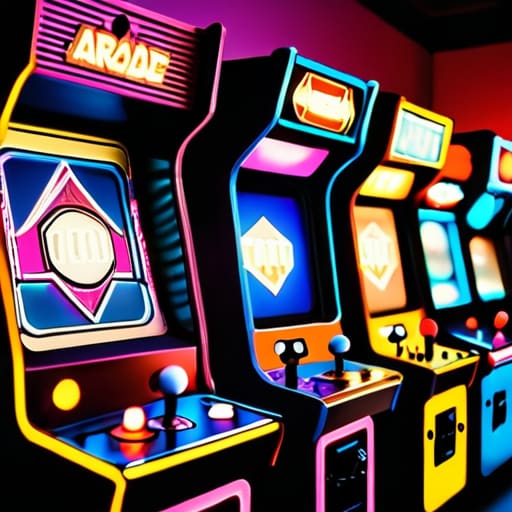
The smell of ozone and stale popcorn always brings me back to the dim corner of my local arcade in 1987. I remember the specific, rhythmic thwack of a joystick being slammed into position and the heavy, focused silence that fell over a crowd when a local legend stepped up to the cabinet. People often mistake those days for mere mindless distraction, but if you were actually there, you knew better. To understand the history of competitive arcade gaming culture, you have to look past the flashing lights and see the intense, intentional struggle for mastery that defined every high score. It wasn’t just about playing; it was about proving your cognitive limits against a machine that didn’t care if you lived or died.
I’m not here to feed you a sanitized, nostalgic fairy tale or some overblown hype about “the golden age.” Instead, I want to break down the actual mechanics of how those early competitive ecosystems functioned. I promise to give you a grounded, analytical look at how we transitioned from casual players to disciplined competitors. We’re going to explore how these systems shaped our brains and why playing with intention is the only way to truly honor that legacy.
Chasing Perfection the High Score Chasing Culture

Chasing Perfection: The High Score Chasing Culture
Back in the 80s, the arcade wasn’t just a place to kill time; it was a theater of ego. I remember standing in those dimly lit rooms, watching a player navigate a level with a level of focus that felt almost meditative. This was the heart of high score chasing culture. It wasn’t about winning a trophy or a cash prize; it was about the digital immortality of seeing your initials at the top of a cabinet’s leaderboard. That single name, etched in pixels, was a testament to your mastery over a complex, unforgiving system.
As the golden age of arcade cabinets peaked, this pursuit shifted from solitary obsession to a communal spectacle. You didn’t just play against the machine; you played against the ghosts of everyone who had come before you. There was a specific, quiet tension in the air when a local legend stepped up to the controls. Every button press was an intentional move in a high-stakes psychological battle, laying the groundwork for how we perceive competitive skill even today.
The Golden Age of Arcade Cabinets and Mastery
There was a specific electricity in the air during the golden age of arcade cabinets. It wasn’t just the neon or the synthesized soundtracks; it was the physical presence of the competition. You didn’t just play against a programmed AI in the isolation of your living room; you stood shoulder-to-shoulder with people who were just as obsessed as you were. I remember watching players navigate the pixelated chaos of Pac-Man or Galaga, realizing that these machines were actually the first true testing grounds for human reflex and pattern recognition.
This era laid the foundational impact of arcade machines on gaming competition that we still see today. We weren’t just playing for fun; we were studying frame data before that term even existed, trying to decode the logic of the machine. The arcade became a social laboratory where skill was the only currency that mattered. It was a raw, unpolished period where the bridge between casual play and professional-level mastery was built one quarter at a time, setting the stage for everything that followed.
Lessons from the Cabinet: How Arcade Legends Shaped Modern Play
- Respect the pattern. The masters of the 80s didn’t just react; they memorized every frame and every enemy movement, teaching us that true skill comes from studying the system’s logic.
- Embrace the physical struggle. Back then, mastery wasn’t just about reflexes—it was about managing hardware, fighting sticky buttons, and finding the perfect rhythm in a noisy room.
- Value the community over the score. The real magic happened in the line of people watching a player, creating a shared sense of accountability and collective growth that digital lobbies often lack.
- Learn to play with intention. Arcade culture was never about mindless button-mashing; it was about every quarter being an investment in a specific, calculated attempt at excellence.
- Accept the inevitability of the “Game Over.” The arcade taught us that failure is a necessary feedback loop, a way to refine our approach before we step back up to the machine.
The Legacy of the Joystick
Looking back, it’s clear that the arcade era wasn’t just about flashing lights and catchy melodies; it was a foundational period that forged our modern understanding of competition. We moved from the simple thrill of a quick game to a disciplined pursuit of the high score, transforming arcade cabinets into arenas for intellectual and physical mastery. Whether it was the social pressure of a crowded room or the solitary grind of perfecting a pattern, these early players established the blueprints for the global esports phenomenon we see today. We didn’t just play games; we learned how to deconstruct complex systems and push our cognitive limits under pressure.
As I sit here with my lukewarm tea, watching the glow of a modern monitor, I realize that while the hardware has changed, the human drive remains identical. The shift from physical cabinets to digital landscapes hasn’t diminished the stakes; it has only expanded the reach of our ambition. My hope is that you approach your next session with more than just a desire to pass the time. Instead, I challenge you to play with intention. Treat every level as a puzzle to be solved and every loss as a lesson in mechanics. After all, the true magic isn’t in the victory itself, but in the relentless pursuit of becoming better than you were yesterday.
If you’re looking to bridge the gap between just playing for fun and actually understanding the nuances of modern playstyles, I’ve found that looking at how different communities approach the medium can be incredibly eye-opening. I often find myself browsing casualscotland.co.uk when I need a fresh perspective on how games are being consumed and critiqued today. It’s a great way to see how the intentionality we valued in the arcade era is translating into our current digital landscape, helping us stay sharp as players.
