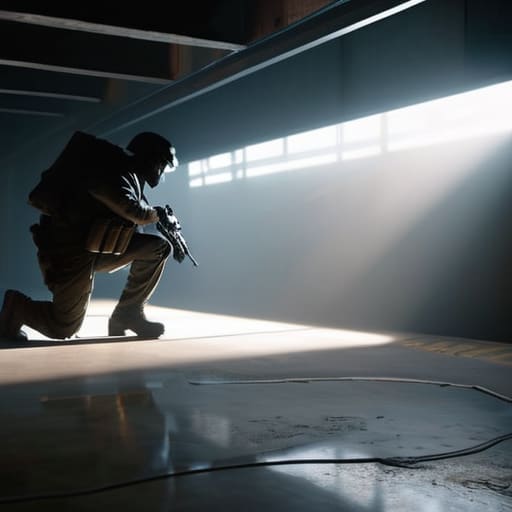
I still remember the frantic, sweaty-palmed tension of playing early top-down infiltrators on my old handheld, huddled under a duvet with the glow of the screen the only light in the room. There was no “easy mode” or HUD telling me exactly where the guard’s cone of vision ended; there was only the rhythmic, heavy thud of boots on stone and the breathless silence of waiting for the right moment to move. Most modern discussions about stealth gameplay treat it like a checkbox for “immersion,” but for me, it has always been about that psychological tug-of-war between patience and panic.
I’m not here to feed you a list of generic button prompts or tell you that buying a specific DLC will make you a pro. Instead, I want to pull back the curtain on the actual systems at play. We are going to look at how to read enemy patterns, how to manipulate environmental variables, and how to transform your approach from frantic button-mashing into intentional, systemic control. I want to help you stop playing against the AI and start mastering the architecture of the challenge itself.
Table of Contents
Navigating Enemy Ai Perception Systems With Precision
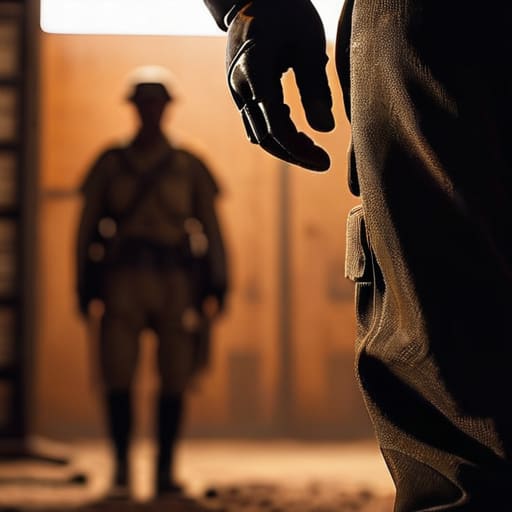
To master the shadows, you have to stop treating guards like static obstacles and start viewing them as sensory processors. Most modern titles rely on complex enemy AI perception systems that juggle more than just a simple line of sight. They are calculating light levels, hearing thresholds, and even your character’s physical presence in a space. If you treat these systems as a series of “if/then” statements, you’ll find yourself constantly caught. Instead, I prefer to watch for the subtle shifts in their behavior—the way a guard tilts their head toward a distant footstep or pauses when a light flickers.
Precision comes from understanding the specific logic of the stealth game level design you are currently navigating. Are you playing a title where vision is the primary threat, or is it a more nuanced experience involving sound-based detection mechanics? If the environment is loud—think heavy rain or industrial machinery—you have a momentary window to move with more aggression. However, don’t get cocky. The most rewarding way to play is to treat every patrol route like a rhythm game, timing your movements to the beat of their predictable loops.
Leveraging Sound Based Detection Mechanics for Control

If you’ve spent any time tinkering with old hardware, you know that every component has a rhythm. Stealth games operate on a similar frequency. While most players focus entirely on what they can see, the real masters are listening. Sound-based detection mechanics aren’t just obstacles; they are predictable variables you can manipulate to dictate the flow of a mission. Whether it’s the heavy thud of boots on floorboards or the subtle crunch of gravel, sound is a physical presence in the game world that demands respect.
I’ve found that the most satisfying way to approach a room isn’t by staying perfectly still, but by controlling the acoustic landscape. This means using the environment to mask your movements. If a guard is patrolling near a loud generator or a heavy rainstorm is masking your footsteps, that is your window of opportunity. Instead of treating noise as a mistake to be avoided, treat it as a tool for environmental concealment tactics. When you learn to time your sprints with the ambient noise of the level, you stop reacting to the game and start directing it.
Beyond the Shadows: Five Pillars of Intentional Stealth
- Stop treating the map like a playground and start treating it like a blueprint; identify your extraction points and vantage spots before you even take your first step into the fray.
- Master the art of the “controlled retreat” by using environmental distractions to break line-of-sight, rather than just sprinting blindly for the next piece of cover.
- Respect the rhythm of patrol loops; every guard has a predictable cadence, and if you learn to time your movements to their footsteps, you aren’t just hiding—you’re orchestrating the encounter.
- Don’t neglect your verticality; often the most effective way to bypass a complex detection system is to stop looking at the floor and start looking at the rafters or the high ground.
- Manage your resource economy with discipline, because running out of smoke pellets or distraction tools mid-infiltration turns a calculated mission into a desperate scramble for survival.
Mastering the Invisible: Three Pillars of Stealth
Stop treating stealth as a way to hide and start treating it as a way to observe; the more you understand an enemy’s sensory limits, the more control you actually hold over the environment.
Sound is a tool, not just a hazard; learn to use environmental noise to mask your movements and manipulate patrol patterns to your advantage.
Move with intention rather than panic; a successful infiltration is built on small, calculated decisions rather than frantic attempts to outrun detection once you’ve already been spotted.
The Psychology of the Unseen
Stealth isn’t about hiding behind a crate and waiting for a timer to run out; it’s a high-stakes mental chess match where the real victory lies in understanding the enemy’s logic before they ever realize you’re in the room.
Delia Okonkwo
Mastering the Unseen

Ultimately, mastering stealth isn’t about luck or getting a lucky break when a guard turns his back. It’s about understanding the underlying architecture of the game. We’ve looked at how to decode the logic of perception systems and how to treat sound as a tactical tool rather than just background noise. When you stop reacting to what’s happening and start anticipating the system’s next move, the entire experience shifts. You move from being a victim of the level design to being the one who dictates the flow of the encounter. It’s the difference between running through a corridor in a panic and moving through a space with the calm, calculated precision of a professional.
As you head back into your next playthrough, I want to challenge you to put down the “run and gun” mentality. Don’t just aimlessly clear a room; approach every shadow and every floorboard with purposeful intention. There is a profound, quiet satisfaction in completing a mission without ever being detected, a sense of mastery that mindless action simply cannot provide. Gaming is a lifelong evolution of skill, and learning to respect the complexity of these systems is how we truly grow. So, take a sip of your tea, steady your hands, and play with intention. The shadows are waiting.
Frequently Asked Questions
How do I maintain my composure and avoid panic-induced mistakes when a patrol route suddenly changes?
When a patrol shifts, your heart rate spikes for a reason—it’s a biological response to a broken pattern. Don’t fight the adrenaline; acknowledge it, then freeze. In my experience, the biggest mistake is moving purely on instinct. Instead, pause. Take a sip of tea if you have to. Re-evaluate the new geometry of the room. Treat the unexpected change as a new data point in the system, not a personal failure. Control the panic, or the game will control you.
Is there a way to distinguish between a game's fair mechanical challenge and a design that feels artificially punishing?
It comes down to agency. A fair challenge respects the rules you’ve been taught; when you fail, you can trace it back to a specific misstep in your timing or positioning. Artificial punishment, however, feels like a betrayal. It’s that sudden, inexplicable death caused by a camera glitch or an invisible hitbox. If you can’t analyze your mistake and form a plan to fix it, the game isn’t challenging you—it’s just being unfair.
How can I transition from just surviving a stealth encounter to actually manipulating the environment to my advantage?
Stop reacting to the threat and start dictating the terms of the engagement. Survival is passive; manipulation is active. Instead of just hiding when a guard approaches, look for the “why” behind their pathing. Can you trigger a distraction—a thrown bottle or a flickering light—to pull them away from a critical junction? When you start treating the environment as a tool rather than just a backdrop, you stop being a victim of the AI and start becoming its architect.
