
I remember sitting on my bedroom floor in 1992, the glow of a heavy CRT television warming my face while I stared blankly at a screen full of incomprehensible stats. I wasn’t playing; I was just calculating. There is this pervasive, exhausting myth that to truly enjoy a game, you have to treat rpg mechanics like a second job or a mathematical dissertation. We’ve reached a point where “complexity” is often used as a mask for bad design, forcing players to navigate layers of bloated menus and arbitrary math just to feel a sense of progression. It’s frustrating because it turns what should be a flow state into a chore of mindless spreadsheet management.
I’m not here to sell you on a new meta or a way to exploit a glitch to skip the grind. Instead, I want to pull back the curtain on how these systems actually interact with your decision-making. My goal is to help you look past the numbers and understand the intentional design behind the curtain. We’re going to break down how to master these systems so you can stop reacting to the UI and start playing with actual purpose.
Table of Contents
The Art of Precision in Combat Systems Design

When we talk about combat systems design, it’s easy to get lost in the flashy particle effects or the sheer scale of an encounter. But if you look closer, the real magic lies in the tension between player agency and the underlying math. I’ve spent many late nights analyzing how a game handles the friction of a fight. A well-designed system doesn’t just ask you to click faster; it demands that you understand the rhythm of the encounter. Whether you are navigating the calculated pauses of turn-based vs real-time mechanics or reacting to a boss’s telegraph, the goal is the same: intentionality.
True mastery comes when you stop reacting blindly and start predicting. You begin to see the combat not as a chaotic brawl, but as a series of predictable, solvable puzzles. When a developer nails this, the combat feels earned rather than gifted. You aren’t just surviving by luck; you are winning because you’ve decoded the logic of the encounter. That moment of clarity—where the mechanics finally click and your strategy aligns perfectly with the game’s rules—is exactly why we play.
Calculating Success Through Dice Roll Probability

There is a specific kind of tension that only exists when you’re staring at a digital d20, waiting for the math to settle. It’s that moment where your carefully planned strategy meets the cold, hard reality of dice roll probability. I’ve spent many late nights, tea cooling on my desk, realizing that the most engaging games don’t just let you win; they force you to negotiate with chance. When a system uses randomness, it isn’t just “luck”—it’s a psychological tool that tests your ability to manage risk under pressure.
To truly master these systems, you have to look past the frustration of a missed critical hit and start seeing the underlying architecture. High-level play is about understanding how your stat allocation and leveling choices buffer those inevitable low rolls. If you’ve built a character that relies entirely on a single high-variance roll, you aren’t playing a strategy game; you’re just gambling. The real skill lies in building a toolkit that remains effective even when the dice decide to be unkind.
Beyond the Stat Sheet: Five Ways to Play with Intention
- Stop treating your character build like a checklist. Instead of just chasing the highest numbers, look at how your stats actually interact with the game’s core systems; a well-rounded build often survives longer than one that’s just a glass cannon of pure damage.
- Learn to read the “math” behind the curtain. When you understand whether a game favors additive or multiplicative scaling, you stop guessing which gear is better and start making calculated decisions that actually move the needle.
- Respect the economy of your resources. Whether it’s mana, stamina, or limited-use consumables, the best players don’t just use them when they’re low—they manage them so they never reach that point of desperation in the first place.
- Don’t ignore the “flavor” mechanics. Sometimes a seemingly useless skill or a niche attribute provides the exact situational utility you need to bypass a difficult encounter entirely, turning a grueling fight into a clever tactical win.
- Observe the feedback loops. Pay attention to how the game rewards your specific playstyle; if the mechanics are punishing you for being too aggressive, don’t just mash harder—adjust your rhythm to match the system’s internal logic.
Moving Beyond the Numbers
Stop viewing mechanics as obstacles to overcome; instead, start seeing them as the language the game uses to communicate its challenges to you.
True mastery isn’t about memorizing stat spreadsheets, but about understanding the underlying logic so you can make intentional decisions when the pressure is on.
When you stop playing on autopilot and start engaging with the system’s rhythm, the game shifts from a mindless grind into a deeply rewarding intellectual exercise.
## Systems Over Stats
“Stop looking at your character sheet as a list of numbers to increase, and start seeing it as a map of possibilities; once you understand how these mechanics actually interact, the game stops being a grind and starts being a dance.”
Delia Okonkwo
Beyond the Numbers: Finding the Rhythm
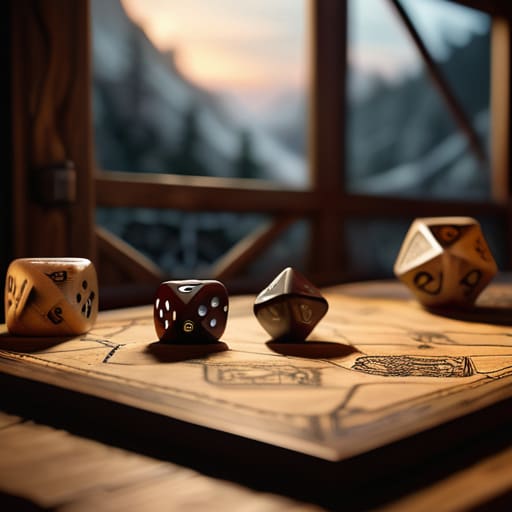
When we pull back the curtain, we see that RPG mechanics aren’t just math problems to be solved or obstacles to be bypassed. Whether you are navigating the high-stakes tension of a precision combat encounter or learning to respect the inherent chaos of a dice roll, these systems are the language the game uses to speak to you. By understanding how these layers—combat, probability, and progression—interact, you move from being a passive consumer to an active participant. You stop fighting against the game and start playing within its logic, which is where the true depth of the experience finally reveals itself.
At the end of the day, I don’t want you to just “beat” the game; I want you to understand why it works. There is a profound, quiet satisfaction in seeing a complex system click into place, much like the feeling of finally getting a vintage handheld to power up after weeks of tinkering. Don’t let the complexity intimidate you. Instead, embrace it as a puzzle designed to challenge your mind and reward your growth. Play with intention, look for the patterns, and remember that every mechanic is an invitation to master something new.
Frequently Asked Questions
How do I balance my character's build without falling into the trap of just following a meta-guide?
Stop treating builds like math problems to be solved by a stranger on a forum. To avoid the meta-trap, start by identifying your “core fantasy”—how do you actually want to feel when the combat starts? Once you have that, look at the internal synergy of your stats. If a specific gear piece breaks your intended rhythm, toss it, even if a guide says it’s “optimal.” True mastery comes from understanding the system, not just copying it.
At what point do complex math systems stop being engaging and start feeling like a chore?
It happens the moment the math stops serving the fantasy and starts demanding a spreadsheet. When I’m playing, I want to feel the weight of a critical hit or the tension of a narrow escape, not feel like I’m filing my taxes. If you’re spending more time staring at stat modifiers than interacting with the world, the system has failed. Complexity should deepen the immersion, not act as a barrier to the actual joy of play.
How can I recognize when a game is subtly manipulating my dopamine response through its reward mechanics?
Look for the “near-miss” effect. If a game consistently gives you a flashing light or a triumphant sound effect right when you almost win, it’s likely tugging at your dopamine receptors. It’s that itch to try “just one more time” because the reward feels imminent, even if it isn’t. When the loop feels less like mastering a system and more like chasing a slot machine, take a sip of tea and step back.
