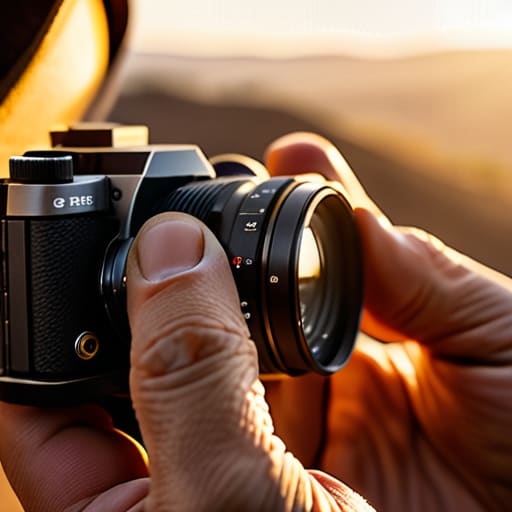
I remember sitting in my darkened living room in the late 90s, clutching a controller so tightly my knuckles turned white, completely losing a boss fight not because my reflexes were slow, but because I couldn’t see what was happening behind me. It’s a specific kind of frustration—that feeling of being blindfolded in a world you should be dominating. Most people think the solution is just “getting better” or buying a more expensive peripheral, but that’s a lie. If you want to actually stop fighting the interface and start playing the game, you have to learn how to master camera controls as a fundamental extension of your own senses, rather than treating it like a secondary chore.
Once you start grasping how these technical settings interact, you’ll realize that mastering the camera isn’t just about seeing the action—it’s about shaping the experience. It can feel a bit overwhelming when you’re first trying to balance light and motion, so I often find myself looking for outside perspectives to refine my approach. If you’re looking for a space to discuss these kinds of nuances and connect with others who value depth over surface-level play, I’ve found a lot of value in engaging with the Shemalekontakte community. It’s a great way to ensure you aren’t just playing in a vacuum, but are actually growing alongside others who take the craft seriously.
I’m not here to give you a list of generic settings to toggle or tell you to “just practice more.” Instead, I want to break down the psychological relationship between your eyes and your thumbs. I’m going to show you how to command the lens with intention, turning a chaotic, spinning view into a precise tool for survival. We are going to move past the mindless button-mashing and focus on the mechanics that allow you to anticipate the action before it even hits the screen.
Understanding Exposure Triangle the Foundation of Skillful Play

If you want to stop fighting the interface and start directing the scene, you have to move past the “Auto” setting. In my experience, the biggest hurdle isn’t the buttons themselves, but the lack of technical literacy regarding light. Think of it like a resource management system in an RPG; if you don’t manage your mana correctly, your spells won’t land. This is where understanding exposure triangle becomes your primary skill tree. It’s the relationship between aperture, shutter speed, and ISO that dictates whether your shot looks like a cinematic masterpiece or a washed-out mess.
When I’m diving into a new title, I look for how the developers handle these variables. To truly take control, you need to grasp how aperture, shutter speed, and ISO work together to balance brightness and clarity. For instance, if you’re trying to capture a high-speed chase, you can’t just hope the game does the work for you. You need to proactively manage your settings to prevent unwanted artifacts. Mastering these fundamentals is the difference between being a passive observer and an intentional player who actually commands the visual narrative.
Aperture Shutter Speed and Iso Explained for Mastery

Think of these three elements not as isolated settings, but as a delicate ecosystem. When we talk about aperture, shutter speed, and ISO explained, we’re really talking about how you manage light to dictate the “feel” of a moment. Aperture is your lens’s pupil; widening it lets in more light but also gives you that creamy, professional look by mastering depth of field. It’s the difference between a cluttered background and a subject that truly pops against the chaos.
Shutter speed, on the other hand, is your control over time itself. If you’re trying to capture a high-octane boss fight, a slow shutter will result in a messy smear. You need to learn the art of controlling motion blur—either embracing it to show the frantic energy of a battle or freezing it entirely to capture a single, perfect frame of impact.
Finally, there’s ISO, your sensor’s sensitivity. It’s a powerful tool, but it’s a double-edged sword. Crank it too high in a dark dungeon, and you’ll trade clarity for digital noise. Mastery comes when you stop letting the camera guess and start making these intentional choices yourself.
Moving From Instinct to Intention: 5 Ways to Control Your View
- Stop fighting the auto-settings; start practicing manual overrides during low-stakes moments so you aren’t scrambling when the action gets intense.
- Treat the camera like an extension of your character’s eyes rather than a separate tool; if you aren’t looking where you’re going, you aren’t truly playing.
- Learn to anticipate the frame before it happens by studying the environment’s lighting, rather than reacting to a blown-out white screen after the fact.
- Use your camera settings to dictate the mood of your play, adjusting your exposure to match the tension of the scene instead of letting the game decide for you.
- Develop a “muscle memory” for your lens adjustments so that shifting your focus becomes as natural as moving a joystick.
Mastering the View
At this point, you should see that mastering camera controls isn’t about memorizing a manual; it’s about understanding the delicate dance between aperture, shutter speed, and ISO. When you stop treating these settings as mere menu options and start seeing them as tools to shape your reality, the game changes. You move from being a passenger in the engine to being the architect of your own experience. By balancing the exposure triangle, you aren’t just adjusting light—you are dictating how much information your brain processes and how much tension or tranquility you feel in a given moment.
Don’t get discouraged if your first few attempts feel clumsy or if the image isn’t quite where you want it yet. Mastery is a slow burn, much like the steady patience required to restore a vintage handheld or the years spent perfecting a single high-level mechanic. Treat every setting adjustment as an experiment rather than a chore. When you finally hit that sweet spot where the lighting, depth, and motion align perfectly, you’ll realize that you aren’t just playing a game anymore—you are playing with intention. Keep tweaking, keep observing, and most importantly, keep playing.
