I was hunched over my workbench last Tuesday, the smell of isopropyl alcohol and old solder filling the air, trying to coax a flickering screen back to life on a 1989 handheld. As I worked, I found myself scrolling through endless tech forums, seeing the same breathless hype cycles surrounding the latest gaming hardware trends. It’s exhausting. Everyone is screaming about teraflops and ray tracing as if a higher number automatically translates to a deeper experience. We’ve reached a point where the industry treats us like consumers to be fed a constant stream of “next-gen” shiny objects, rather than players seeking mastery over a complex system.
I’m not here to help you chase every fleeting marketing gimmick or empty spec sheet. My goal is to cut through the noise and look at what these shifts actually mean for your connection to the game. I want to discuss how current gaming hardware trends impact your ability to actually feel the rhythm of the mechanics you’re trying to learn. We’re going to analyze these developments through a lens of intentionality, ensuring that your gear serves your skill, rather than just draining your bank account.
Table of Contents
The Ssd Speed Impact on Gaming Performance
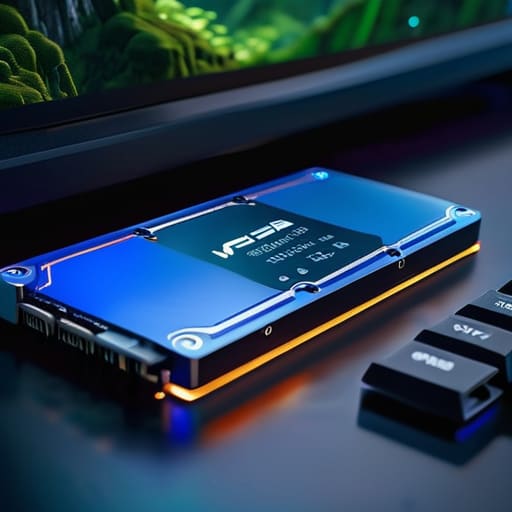
When I was restoring my old Game Boy Color last month, I was reminded of how much patience is required when data has to travel through limited, sluggish channels. In modern gaming, we’ve moved far beyond those long loading screens, but the SSD speed impact on gaming is about much more than just saving a few seconds of my time. It’s about the seamless transition between environments. When you’re playing an open-world title, a fast NVMe drive allows the game engine to stream assets in real-time, preventing that jarring “pop-in” effect that pulls you right out of the immersion.
If we view games as complex systems, then data throughput is the nervous system of that experience. A slow drive creates bottlenecks that can undermine even the most sophisticated ray tracing technology advancements, as the hardware struggles to keep up with the visual complexity being rendered. To play with intention, you need your hardware to stay out of your way. By prioritizing high-speed storage, you aren’t just chasing a spec; you are ensuring that the rhythm of your gameplay remains uninterrupted and fluid, allowing you to focus entirely on mastering the mechanics at hand.
Ray Tracing Technology Advancements for Visual Mastery
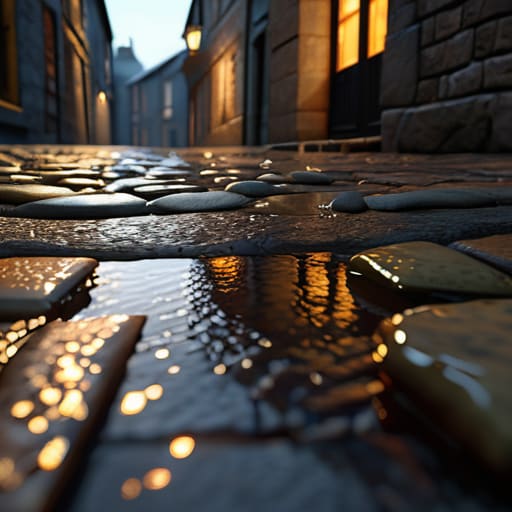
When we talk about ray tracing technology advancements, it is easy to get lost in the sheer spectacle of it all. As someone who spent my childhood staring at the pixelated, flat lighting of 8-bit sprites, seeing light bounce realistically off a wet cobblestone street feels almost surreal. But for me, the interest isn’t just about the “wow” factor; it’s about how these lighting models provide better spatial awareness. When shadows behave predictably and light sources feel grounded, our brains can more easily map the environment, allowing us to focus on tactical positioning rather than squinting through visual clutter.
However, we have to be careful not to let visual fidelity become a distraction. There is a fine line between immersive realism and a hardware bottleneck that ruins your rhythm. If you’re pushing these heavy lighting effects, you need to ensure your setup can handle the load without sacrificing fluidity. Pairing advanced ray tracing with high refresh rate monitors is essential to maintain that sense of presence. If the frame rate stutters while the light is dancing, the psychological immersion breaks, and you’re no longer mastering the game—you’re just fighting your hardware.
Practical Strategies for Navigating the Hardware Hype
- Stop chasing the highest frame rates if your monitor can’t actually display them; focus on finding the sweet spot where visual clarity meets the refresh rate your eyes can comfortably track.
- Prioritize input latency over raw graphical power, because a game that looks like a movie but feels sluggish will never help you master its mechanics.
- Don’t let “next-gen” marketing dictate your upgrades; evaluate whether your current setup is actually creating a bottleneck in your cognitive flow or if it’s just a matter of vanity.
- Invest in ergonomic peripherals that support long-term play, treating your physical interface as a vital component of your technical skill set rather than an afterthought.
- Build for modularity rather than perfection, choosing components that allow you to upgrade incrementally as technology evolves, much like how we refine our own playstyles over the years.
Finding Your Focus Amidst the Hype
Stop treating hardware upgrades like a checklist of numbers; prioritize the specific technologies—like SSD speeds or ray tracing—that actually deepen your immersion and connection to the game’s systems.
Avoid the trap of “spec chasing” for the sake of vanity; true mastery comes from having a stable, responsive setup that disappears into the background so you can focus entirely on your performance.
View your gear as an extension of your intent, choosing components that serve your personal playstyle rather than just following the loudest trends in the industry.
## The Trap of the Infinite Upgrade
We need to stop treating hardware like a treadmill of endless specs and start seeing it as a tool for precision; the goal isn’t to own the fastest machine on the market, but to own the one that removes the friction between your intent and your performance.
Delia Okonkwo
Finding Your Rhythm in the Tech Race
When we look at the landscape of modern hardware, it’s easy to get lost in the sheer velocity of change. From the seamless transitions enabled by high-speed SSDs to the breathtaking, lifelike depth provided by ray tracing, these aren’t just flashy bells and whistles. They are tools that fundamentally alter how we interface with digital worlds. However, the real takeaway isn’t just about having the fastest drive or the most powerful GPU; it’s about understanding how these advancements reduce friction between your intent and the game’s execution. When the technology works perfectly, it disappears, leaving you alone with the mechanics and the challenge.
As someone who spent my youth squinting at low-res pixels on an old arcade cabinet, I’ve learned that the gear is secondary to the experience. Don’t let the endless cycle of upgrades become a source of anxiety or a mindless pursuit of “more.” Instead, approach your setup with the same intentionality you bring to a difficult boss fight. Choose the tools that allow you to lose yourself in the flow state, and remember that the most important component in any system is your own curiosity. At the end of the day, we don’t play to own the hardware; we play to master the game.
Frequently Asked Questions
Is the jump in ray tracing performance actually worth the investment for someone focused on competitive play rather than just visuals?
If your goal is competitive mastery, honestly? Skip the ray tracing investment for now. While the lighting is beautiful, it’s a resource hog that often sacrifices frame stability and raw input latency—two things that matter far more when you’re playing for skill. I’d rather have a rock-solid, high refresh rate than a gorgeous shadow that makes my reaction time feel sluggish. Focus your budget on the specs that keep your gameplay fluid and responsive.
With SSD speeds increasing, are we reaching a point where hardware bottlenecks will finally stop being the limiting factor in game design?
We’re getting closer, but I wouldn’t call it the finish line. Faster SSDs have effectively solved the “loading screen” bottleneck, allowing developers to build seamless, dense worlds that weren’t possible a decade ago. However, we’re just shifting the goalposts. As storage speeds catch up, the pressure moves to CPU processing and memory bandwidth. We aren’t eliminating bottlenecks; we’re just evolving them into more complex, subtle constraints within the system.
How much of these new hardware trends are genuine advancements in mechanics, and how much is just marketing fluff designed to drive upgrades?
It’s a fine line to walk. Some trends, like SSD speeds, fundamentally change how we experience game pacing and world-building, making them genuine mechanical leaps. Others, however, feel like window dressing. If a feature like ray tracing looks stunning but doesn’t change how you interact with the system, it’s often just marketing fluff. Don’t let the hype cycle dictate your upgrades; ask yourself if the tech actually deepens your connection to the play.
