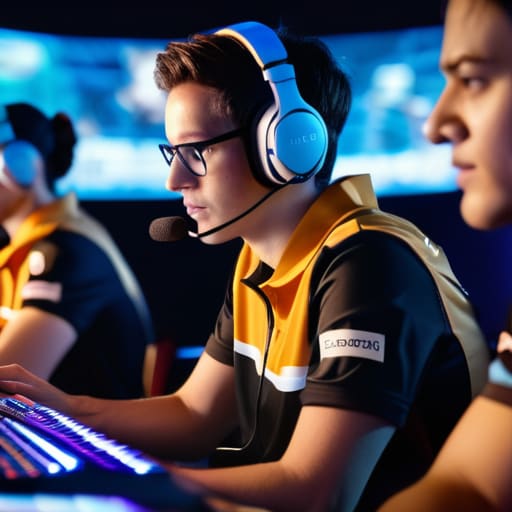
I remember sitting in a dimly lit basement in 1992, staring at a flickering CRT screen, trying to coordinate a raid with three friends over a crackling headset. We weren’t using “synergistic frameworks” or “agile workflows”; we were just shouting over the sound of explosions, trying to figure out who was actually covering the flank. It’s funny how, even decades later, the corporate world tries to dress up team communication in expensive, jargon-heavy software and complex protocols that feel more like obstacles than solutions. Most of these tools are just shiny distractions that fail to address the core mechanic: human connection and clarity.
I’m not here to sell you on another productivity app or a list of buzzwords that will be obsolete by next quarter. Instead, I want to strip away the fluff and look at the underlying systems of how we actually exchange information. I’m going to share my perspective on how to treat your group like a high-level raid party—where every piece of data matters and every voice has a role. My promise to you is no-nonsense, experience-based strategies designed to help you stop reacting to chaos and start playing with genuine intention.
Table of Contents
- Implementing Effective Workplace Communication Strategies
- Improving Group Dynamics Through Intentional Playbook Design
- The Player's Guide to Seamless Team Coordination
- Mastering the Team Meta: Final Takeaways
- The Mechanics of Connection
- Mastering the Final Boss of Collaboration
- Frequently Asked Questions
Implementing Effective Workplace Communication Strategies

To get these systems running smoothly, you have to stop treating communication like a side quest and start treating it like the core engine of your workflow. I’ve found that the most successful groups don’t just talk more; they talk better. This starts with establishing clear asynchronous communication best practices. When you aren’t all in the same room—or even the same time zone—relying on instant replies creates a frantic, reactive energy that kills deep work. Instead, lean into structured updates and documentation. It’s about moving from a state of constant interruption to one of intentional information exchange.
Once the framework is set, the focus shifts to the players themselves. You can have the best software in the world, but if you aren’t prioritizing active listening in professional settings, the system will eventually glitch. I see this often in high-pressure environments: people are so busy preparing their next “move” that they miss the subtle cues from their teammates. By slowing down and truly processing what is being said, you begin improving group dynamics from the ground up. It’s much like mastering a complex boss fight; you have to observe the patterns before you can execute a winning strategy.
Improving Group Dynamics Through Intentional Playbook Design

In gaming, a team without a shared playbook is just a group of individuals clicking buttons in the same direction. The same applies to your professional life. To move beyond mere cooperation and toward true synergy, you need to treat your workflow like a well-designed strategy guide. This means moving away from reactive, chaotic messaging and toward improving group dynamics through structured, intentional frameworks. When everyone understands their role and the “rules of engagement,” the friction that usually slows down progress begins to melt away.
This design process requires more than just picking the right software; it requires a commitment to active listening in professional settings. If your team is constantly talking over one another or misinterpreting tone, even the best remote team collaboration tools will feel like dead weight. You have to build a culture where silence is as valued as speech, and where feedback is treated as a mechanic for improvement rather than a personal critique. When you design your team’s interaction model with this level of intention, you aren’t just managing tasks—you are mastering the system.
The Player's Guide to Seamless Team Coordination
- Stop the “Chat Spam” and Define Your Channels. In any high-stakes raid, you don’t want every player shouting different commands in the global chat. Apply that logic to work: designate specific channels for urgent pings, project updates, and casual banter. If everything is treated as a high-priority alert, nothing actually is.
- Build a Shared Glossary of Terms. Nothing breaks a team’s rhythm faster than semantic confusion. If half the team thinks “ASAP” means within the hour and the other half thinks it means by Friday, your sync is broken. Establish a common language for your project milestones so everyone is reading from the same manual.
- Implement Post-Match Debriefs. In gaming, we analyze the replay to see where the formation broke down. Do the same with your team. After a major deadline or a failed launch, hold a low-pressure “debrief” to discuss what worked and what lagged. It’s not about pointing fingers; it’s about optimizing the system for the next round.
- Master the Art of Asynchronous Communication. You don’t need a live voice chat for every single interaction. Respect your teammates’ “deep work” states by using well-structured, written updates that they can digest on their own time. Think of it as leaving clear, actionable notes for a co-op partner rather than constantly interrupting their gameplay.
- Watch for the Silent Players. In a group setting, the loudest voices often dominate the strategy, but the most critical data often comes from the quietest members. Make it a habit to actively solicit input from those who aren’t pushing the mic. You might find the winning strategy was sitting right there in the silence.
Mastering the Team Meta: Final Takeaways
Stop treating communication as a chore and start viewing it as a core mechanic; when you refine your protocols, you reduce friction and increase your collective output.
Design your team’s interaction like a well-balanced game system—intentional, structured, and built to support every player’s ability to contribute.
Constant iteration is the only way to stay ahead; treat every communication breakdown as a bug to be patched rather than a permanent flaw in your squad.
The Mechanics of Connection
“Think of your team’s communication not as a series of status updates, but as the underlying engine of a complex system; if the data transfer is laggy or the signals are misinterpreted, even the most brilliant strategy will fail at the first boss encounter.”
Delia Okonkwo
Mastering the Final Boss of Collaboration

At the end of the day, improving team communication isn’t about finding a single “cheat code” that solves every conflict. It’s about the cumulative effect of implementing structured strategies and designing a playbook that actually works for the people using it. We’ve looked at how intentionality transforms a chaotic group into a cohesive unit, much like how a well-designed game mechanic turns a series of random inputs into a masterful performance. When you stop treating communication as an afterthought and start treating it as a core system to be optimized, you move from merely surviving the workday to truly mastering the environment.
As I sit here with my tea, watching the progress on a vintage handheld, I’m reminded that even the most complex systems require patience and constant calibration. Your team is no different. There will be glitches, and there will be unexpected difficulty spikes, but if you approach every interaction with the same curiosity you bring to a challenging boss fight, you will find your rhythm. Don’t just go through the motions of talking; strive to play with intention. When you master the mechanics of how you connect with one another, you don’t just finish the level—you unlock a whole new way to win together.
Frequently Asked Questions
How do we stop the "noise" of constant notifications from breaking our focus and ruining the flow of actual work?
Treat your focus like a boss fight; you can’t win if you’re constantly being interrupted by minor mobs. Those pings and red badges are just environmental noise designed to break your rhythm. To protect your flow state, you need to set boundaries. Switch to “Do Not Disturb” modes during deep work sessions and batch your notification checks. If you aren’t playing with intention, the system is playing you. Control the inputs to master the output.
When a team's communication style starts to feel more like mindless reaction than intentional strategy, how do we reset?
When the noise takes over, you have to hit the pause button. In gaming, if you’re just button-mashing, you aren’t playing; you’re just reacting to stimuli. The same applies to your team. To reset, strip away the constant pings and implement a “cooldown period.” Force a tactical timeout where everyone stops reacting to the latest fire and instead reviews the core objective. You can’t build a strategy if you’re stuck in a frantic loop of micro-management.
Can we actually apply game-theory mechanics to resolve conflicts without making the workplace feel artificial or forced?
The trick is to stop treating people like NPCs and start looking at the underlying rules of the interaction. You aren’t “gamifying” the office; you’re identifying the friction points in the system. Instead of forced rewards, focus on transparency and clear win-conditions for conflict resolution. When everyone understands the mechanics of how a disagreement is settled, the “game” becomes a predictable, fair framework that lowers anxiety rather than adding artificial layers of competition.
