I remember sitting in my darkened living room in the late nineties, the blue glow of a CRT monitor reflecting off my glasses, while the low-frequency hum of a survival horror soundtrack made the hair on my arms stand up. I wasn’t just playing a game; I was trapped in a psychological space where every floorboard creak felt like a personal threat. That visceral sense of horror game immersion isn’t something you can buy with a high-end headset or a 4K monitor. It’s a delicate, often fragile, psychological state that happens when the mechanics of the game stop being “inputs” and start feeling like survival instincts.
I’m not here to sell you on expensive gear or tell you that lighting settings are the secret to fear. Instead, I want to pull back the curtain on how these systems actually manipulate your brain to keep you on edge. We are going to look at how sound design, pacing, and even your own cognitive biases work together to build—or break—that sense of dread. My goal is to help you move past mindless play and teach you how to truly inhabit the terror, ensuring that every jump scare is earned and every shadow feels heavy with meaning.
Table of Contents
Decoding Environmental Storytelling in Horror

When I’m diving into a new title, I often find myself slowing down, ignoring the obvious jump scares to look at what the developers left in the corners. This is where environmental storytelling in horror truly shines. It’s not just about a blood-stained note on a desk; it’s about the way a room is arranged to suggest a frantic struggle. When a game uses its setting to whisper a narrative without saying a word, it forces you to engage your brain rather than just your reflexes. You aren’t just a spectator; you become a detective piecing together a tragedy.
The real magic happens when these visual cues are paired with subtle auditory shifts. I’ve noticed that the most effective games use spatial audio in gaming to make the environment feel alive—or perhaps, predatory. A floorboard creaking behind you in a hallway that looks perfectly normal creates a dissonance that is far more unsettling than any monster model. It’s about that psychological weight, where the space itself feels like it’s closing in on you, making the dread feel personal and inescapable.
Visual Fidelity and Dread Seeing the Unseen
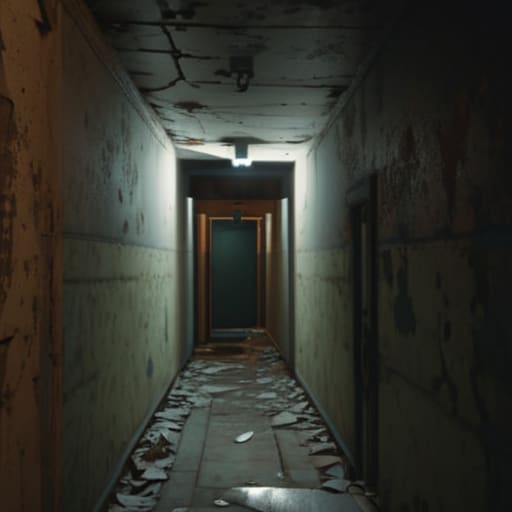
We often mistake high-end graphics for mere eye candy, but in the realm of psychological tension, visual fidelity and dread are inextricably linked. It isn’t about how many polygons are on screen; it’s about how those polygons manipulate your perception of depth and shadow. When a developer uses advanced lighting to cast long, jittery shadows in a narrow corridor, they aren’t just showing off a rendering engine—they are weaponizing your brain’s natural tendency to fill in the blanks. I’ve found that the most effective games use high fidelity to create a sense of tactile reality, making the grime on a wall or the flicker of a dying bulb feel dangerously close to home.
This visual precision works most effectively when it plays with your sense of scale. In many modern titles, particularly those utilizing a first-person perspective horror lens, the ability to see minute details—the way dust motes dance in a flashlight beam or the subtle tremor in a character’s hand—grounds you in a physical space. This grounding is what makes the sudden absence of light so terrifying. When the visuals are sharp and consistent, the moment they fail or distort, the psychological impact is doubled.
Five Ways to Lean Into the Terror
- Curate your sensory environment. If you’re playing a psychological thriller, don’t let a stray notification or a bright kitchen light break the spell; dim the lights and use high-quality headphones to ensure the soundscape—the subtle creaks and distant whispers—becomes your entire reality.
- Stop rushing the mechanics. It’s tempting to sprint through a hallway to get to the next objective, but true immersion comes from moving with the character’s perceived weight and caution, letting the slow pace build the very tension the developers intended.
- Practice active observation. Instead of just looking for loot or enemies, treat the environment like a psychological puzzle; look at the placement of a discarded toy or a bloodstain not as a texture, but as a piece of a narrative that demands your mental presence.
- Embrace the vulnerability. One of the biggest mistakes players make is trying to “conquer” a horror game like an action title; instead, accept that being scared and feeling powerless is a core part of the system you are trying to master.
- Manage your cognitive load. If you find yourself getting frustrated by a jump scare or a difficult encounter, take a moment to breathe and recalibrate; you can’t find the rhythm of the dread if your brain is stuck in a state of pure, unthinking panic.
Summary: Mastering the Psychological Landscape
True immersion isn’t about the graphics; it’s about how the environment uses sensory cues to manipulate your sense of safety.
Stop looking for the jump scare and start paying attention to the details in the architecture—the stories are often hidden in what’s left behind.
To master horror, you must stop resisting the tension and instead learn to use that psychological pressure to inform your gameplay decisions.
## The Psychology of Presence
True immersion in horror isn’t about the jump scare that makes you gasp; it’s about that heavy, unsettling realization that the game’s mechanics have successfully bypassed your logic and started talking directly to your nervous system.
Delia Okonkwo
Finding the Rhythm of Fear
At the end of the day, true immersion in horror isn’t just about a high frame rate or a sudden jump scare that makes you drop your controller. It is the cumulative effect of how a game uses its environment to whisper secrets to you, and how its visual language builds a sense of unrelenting tension. When we stop viewing these games as mere obstacles to be overcome and start seeing them as intricate psychological landscapes, we change the way we play. We move from being passive observers to active participants in the dread, learning to read the shadows and respect the silence.
As I sit here with my cooling tea, looking back at how far game design has come since the pixelated corridors of my childhood, I’m reminded that horror is one of the most profound ways we can test our own limits. Don’t just play to finish the level; play to master the experience. Embrace the discomfort, lean into the atmosphere, and let the mechanics guide your pulse. Whether you are navigating a modern masterpiece or a retro relic, remember that the most powerful scares are the ones that linger in your mind long after the screen goes dark.
Frequently Asked Questions
How much does the actual difficulty of a game impact my ability to stay immersed in the horror experience?
It’s a delicate balance. If a game is too easy, the tension evaporates because you feel untouchable; you aren’t truly afraid if there’s no consequence to your mistakes. But if the difficulty spikes into pure frustration—constant deaths due to clunky mechanics—the dread breaks. You stop being a character in a nightmare and start being a player fighting a broken system. True immersion lives in that “sweet spot” where the threat feels real, but the agency remains yours.
Are there specific ways to adjust my hardware or setup to better lean into the psychological tension of these games?
It really comes down to sensory deprivation. If you want to lean into the psychological weight, you need to eliminate your connection to the physical world. Use high-quality, closed-back headphones to create a private sonic space; sound design is often more terrifying than the visuals. I also recommend dimming your lights or using a single, low-intensity warm lamp. It forces your eyes to work harder, making every shadow feel like it’s shifting.
At what point does a game's atmosphere stop being immersive and start feeling like it's just cheap jump scares?
It crosses that line when the tension breaks. True immersion relies on a sustained psychological state—that heavy, lingering dread that follows you through a corridor. When a developer relies on a sudden, loud noise or a monster popping out of nowhere just to get a reaction, they aren’t building atmosphere; they’re exploiting your startle reflex. If the fear comes from a sound cue rather than the environment itself, the system has failed.
