
I remember sitting in front of a flickering CRT monitor in the late 90s, nursing a cup of tea that had gone cold, feeling that specific, mounting frustration of a player who knew exactly why they were losing but couldn’t articulate it. Most people think that improving your game is about having faster reflexes or more expensive gear, but they’re missing the point entirely. They treat scouting techniques like some magical, high-level secret reserved for the pros, when in reality, it’s just about disciplined observation. If you’re just clicking buttons and hoping for the best, you aren’t playing the game; you’re just reacting to it, and that is a waste of your potential.
I’m not here to sell you on some flashy, overnight shortcut or a complicated spreadsheet you’ll never use. Instead, I want to pull back the curtain on how to actually read the battlefield and your opponents with intention. I’m going to share the practical, experience-based scouting techniques I’ve refined over decades of analyzing game systems, moving past the hype to focus on what actually works. My goal is to help you stop guessing and start decoding the patterns so you can play with the precision you deserve.
Table of Contents
- Reconnaissance Mission Planning Designing Your Intentional Approach
- Terrain Analysis for Scouts Decoding the Digital Battlefield
- The Scout’s Toolkit: Five Ways to Read the Game Before It Reads You
- Mastering the Scout’s Mindset
- ## The Core of Intentional Observation
- Beyond the Map: Turning Intel into Mastery
- Frequently Asked Questions
Reconnaissance Mission Planning Designing Your Intentional Approach

Before you even touch the controller, you have to treat your session like a professional operation. Most players jump straight into the fray, reacting to whatever the screen throws at them, but that’s just mindless consumption. If you want to actually master the system, you need to embrace reconnaissance mission planning. This means setting a specific objective before the match begins. Are you there to map out enemy patrol routes, or are you testing the limits of a specific character’s mobility? Without a predefined goal, you aren’t playing; you’re just drifting.
I’ve found that the most effective way to sharpen your field observation skills is to treat your first few rounds as pure data collection. Don’t worry about your K/D ratio or winning the match right away. Instead, focus on the patterns. Watch how the AI reacts to certain stimuli or how the environment dictates player movement. By prioritizing terrain analysis for scouts, you begin to see the map not as a playground, but as a series of strategic advantages and vulnerabilities. It’s about moving from a state of reaction to a state of controlled, intentional observation.
Terrain Analysis for Scouts Decoding the Digital Battlefield
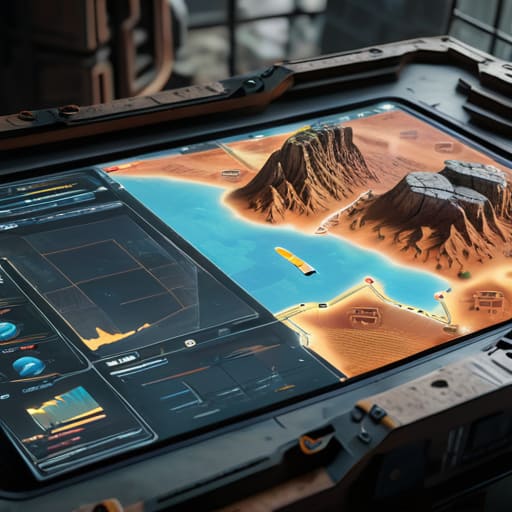
Once you’ve mapped out your general approach, you have to look closer at the environment itself. In my experience, most players treat the map as a static backdrop, but a true scout sees it as a living, breathing obstacle course. When I’m performing terrain analysis for scouts, I’m not just looking at where the walls are; I’m looking at sightlines, choke points, and how the geometry of the level dictates player flow. You need to identify the “high ground” not just physically, but strategically—where can you sit that gives you a psychological edge over an opponent?
This requires sharpening your field observation skills to notice the subtle details that others ignore. It’s about understanding how light, shadow, and even sound bounce off specific surfaces to inform your positioning. If you aren’t accounting for how the environment affects your visibility, you aren’t really scouting; you’re just wandering. By treating the digital landscape as a series of tactical variables, you turn the map from a mere setting into your most powerful ally in the pursuit of mastery.
The Scout’s Toolkit: Five Ways to Read the Game Before It Reads You
- Stop watching the chaos and start watching the patterns. Instead of tracking where the enemy is right now, look for the rhythm of their movement. Are they pushing aggressively every three minutes, or are they playing a slow, defensive game? Once you identify the cycle, you aren’t just reacting; you’re anticipating.
- Learn to read the “negative space” of a map. In my experience, what isn’t happening is often more telling than what is. If a high-traffic lane is unnaturally quiet, don’t assume it’s safe—assume it’s a trap or a setup for a rotation. Silence in a game is rarely empty; it’s usually heavy with intent.
- Treat your mini-map like a psychological profile, not just a GPS. I like to look at the positioning of enemy icons to gauge their mental state. Are they clustered together in a way that suggests fear, or are they spread thin to bait you into an overextension? The map tells you how they are thinking.
- Audit your own visibility. A good scout knows exactly how much of themselves they are revealing to the opposition. Before you commit to a deep reconnaissance dive, ask yourself: “If I were them, what would I see right now?” If the answer is ‘too much,’ pull back and reset your positioning.
- Collect data, not just impressions. It’s easy to say, “They seem strong,” but that’s a feeling, not a fact. Note the specific cooldowns, the exact timing of their ultimate abilities, or the specific resource they are hoarding. Turning vague observations into concrete data points is what separates a casual player from a master of the system.
Mastering the Scout’s Mindset
Stop reacting to what happens on screen and start predicting it by studying the underlying mechanics of the environment.
True scouting requires patience; you have to be willing to sit in the shadows and observe patterns before you ever commit to an action.
Treat every piece of gathered intelligence as a building block for a larger strategy, rather than just a collection of isolated facts.
## The Core of Intentional Observation
“Scouting isn’t about collecting data points like a machine; it’s about developing the intuition to see the patterns in the chaos. You aren’t just watching what a player does—you’re learning to predict why they do it.”
Delia Okonkwo
Beyond the Map: Turning Intel into Mastery
At this point, you should see that scouting isn’t just about spotting an enemy through a bush or checking a minimap; it is about building a mental framework of the game’s logic. We’ve covered how to plan your reconnaissance with purpose and how to treat the digital terrain as a living, breathing system rather than just a backdrop. When you combine intentional mission planning with a deep understanding of environmental mechanics, you stop reacting to the game and start anticipating it. You move from being a player who is simply surviving the encounter to a strategist who is shaping the outcome before the first shot is even fired.
As I sit here with my tea, watching the light fade on my desk, I’m reminded that the most profound victories aren’t found in fast reflexes alone, but in the quiet moments of observation that precede them. Gaming is a lifelong evolution of how we perceive and interact with complex structures. Don’t let the rush of the action blind you to the patterns beneath the surface. Approach your next session with a sense of curiosity rather than just a desire to win. If you learn to read the system, you will find that the greatest joy in gaming isn’t just reaching the end of the level, but mastering the art of the approach.
Frequently Asked Questions
How do I balance the time spent scouting with the actual time needed for practice and mechanical execution?
It’s easy to fall into the “analysis paralysis” trap—spending hours watching replays while your muscle memory stagnates. I call this the observer’s fallacy. Think of scouting as your blueprint and practice as the construction. A good rule of thumb? The 70/30 split. Devote 30% of your session to intentional scouting and 70% to mechanical execution. If you aren’t applying what you’ve learned to the controller, you’re just watching a movie, not mastering a system.
Can these reconnaissance techniques be applied to single-player games, or are they strictly for competitive multiplayer environments?
That’s a common misconception, but the short answer is: absolutely. While the stakes feel different, the cognitive process is identical. In a multiplayer match, you’re scouting opponents; in a single-player campaign, you’re scouting the game’s internal logic. Whether you’re mapping enemy patrol patterns in a stealth game or analyzing boss telegraphs, you’re still decoding a complex system. Intentionality doesn’t require an opponent—it just requires a willingness to look beneath the surface.
How do I avoid "analysis paralysis" where I spend so much time decoding the system that I lose the intuitive flow of the game?
The trick is to treat your analysis like a pre-game ritual, not a mid-match loop. I’ve found that once I’ve mapped the mechanics, I have to consciously “close the book.” If you’re stuck in your head, you’re no longer playing the game; you’re just studying it. Set a timer for your research, then force yourself into the flow. Trust the patterns you’ve decoded and let your muscle memory take the wheel.
