
I remember sitting in my bedroom in the late 80s, the low hum of a CRT television the only sound in the house, clutching a controller like a lifeline while the world outside felt impossibly distant. Back then, people looked at kids like me and saw a problem to be solved, assuming that the link between gaming and loneliness was a straight line from digital escapism to social decay. But they were looking at the surface, missing the nuance of how we were actually building our own internal architecture of competence and connection. It wasn’t about hiding from the world; it was about finding a space where the rules actually made sense.
I’m not here to give you a lecture on “digital wellness” or some sanitized, clinical way to manage your social life. Instead, I want to talk about how we can move past mindless consumption and start using these complex systems to build intentional connections. I’m going to share what I’ve learned—from both a psychological perspective and a lifetime of playing—about how to turn your hobby into a bridge rather than a barrier. We aren’t just going to talk about why you feel isolated; we are going to master the mechanics of socially purposeful play.
Table of Contents
- Navigating Gaming as a Coping Mechanism With Intention
- Understanding the Impact of Multiplayer Games on Mental Health
- Moving Beyond the Solo Campaign: 5 Ways to Play with Purpose
- Mastering the Balance: Key Lessons for Intentional Play
- ## The Intentional Player's Perspective
- Finding Your Balance in the Digital Realm
- Frequently Asked Questions
Navigating Gaming as a Coping Mechanism With Intention

There is a fine line between using a game to recharge and using it to hide. When I was younger, I’d dive into a single-player campaign to drown out the noise of a stressful week, but I eventually realized that mindless escapism often leaves you feeling more hollow once the screen goes dark. Using gaming as a coping mechanism isn’t inherently bad, but it becomes a problem when it turns into a way to avoid reality rather than a way to process it. The goal is to move from passive consumption to active engagement.
Instead of retreating into a solitary vacuum, I’ve found much more psychological value in seeking out intentional connection. This is where we see the true virtual social interaction benefits of modern play. When you join a guild or coordinate a raid, you aren’t just clicking buttons; you are participating in a shared social contract. By shifting your focus toward these collaborative systems, you transform a solitary habit into a way to build community, ensuring that your time spent online actually nourishes your sense of belonging.
Understanding the Impact of Multiplayer Games on Mental Health
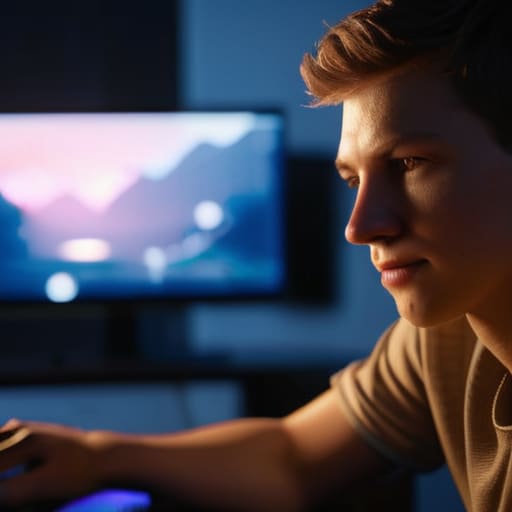
When we look at the mechanics of a raid or a high-stakes competitive match, we aren’t just looking at pixels; we are looking at a complex social ecosystem. The impact of multiplayer games on mental health is often misunderstood as purely sedentary, but for many, these digital spaces provide a vital sense of belonging. When you are working toward a shared goal in a team-based shooter or a cooperative dungeon crawl, the brain isn’t just processing combat loops—it’s navigating social hierarchies, practicing communication, and fostering a sense of collective efficacy.
However, the quality of these interactions matters immensely. It is easy to fall into the trap of toxic lobbies, which can exacerbate feelings of alienation. To truly leverage the virtual social interaction benefits of gaming, we have to move beyond superficial chat logs and aim for something deeper. Whether you are building meaningful relationships in MMOs or finding your rhythm in a structured clan, the goal is to transform a digital encounter into a genuine connection. It’s about shifting from being a passive participant to an active, intentional member of a community.
Moving Beyond the Solo Campaign: 5 Ways to Play with Purpose
- Curate your social circle by prioritizing consistent groups over random matchmaking. Finding a stable guild or a dedicated Discord community transforms a fleeting interaction into a reliable social ritual.
- Shift from passive consumption to active participation. Instead of just playing through a level, join a forum or a subreddit to discuss mechanics; turning a solitary hobby into a shared intellectual pursuit bridges the gap between players.
- Set boundaries on “autopilot” gaming. If you find yourself playing just to numb the silence, step away. Use that time to reflect on whether you’re seeking genuine connection or just trying to drown out your own thoughts.
- Leverage cooperative mechanics to build empathy. Games that require high-level coordination—where your success depends on another person’s timing—force a level of communicative intimacy that few other mediums can replicate.
- Use gaming as a bridge to real-world interests. If a game sparks a passion for history, art, or technical systems, follow that thread outside the screen. Let the digital world be the spark, not the destination.
Mastering the Balance: Key Lessons for Intentional Play
Distinguish between “numbing” and “engaging”; use gaming as a tool for mental rejuvenation rather than a way to simply drift through the hours.
View multiplayer spaces as social laboratories where you can practice communication and connection, rather than just digital voids.
Approach game systems with a learner’s mindset to transform passive consumption into a sense of mastery and genuine accomplishment.
## The Intentional Player's Perspective
“Loneliness often creeps in when we use games to simply disappear; the real magic happens when we use them to show up—engaging with the systems, the community, and the challenge to find a sense of belonging that feels earned, not just escaped.”
Delia Okonkwo
Finding Your Balance in the Digital Realm
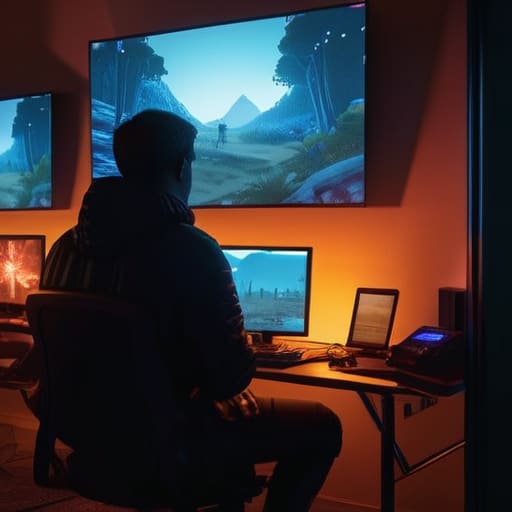
At the end of the day, gaming isn’t a monolith; it can either be a hollow escape that deepens your isolation or a sophisticated tool for connection. We’ve looked at how to move past mindless consumption, how to navigate the psychological traps of coping mechanisms, and how to harness the social architecture of multiplayer spaces. It isn’t about avoiding the screen, but about understanding the systems you are engaging with. When you approach a game with intention—whether you are soloing a difficult dungeon or coordinating a raid—you are no longer just a passive consumer. You are an active participant in a digital ecosystem that, when used correctly, can actually bolster your sense of agency and belonging.
As I sit here with my lukewarm tea, watching the glow of my handheld, I’m reminded that our relationship with play changes as we age, but the need for connection remains constant. Don’t let the digital divide fool you into thinking your online interactions are any less significant than your offline ones. Use these worlds to build skill, to find community, and to rediscover the joy of mastery. Gaming is a lifelong pursuit, and if you play with purpose, it can be one of the most rewarding ways to navigate the complexities of being human. Now, go pick up that controller and play with intention.
Frequently Asked Questions
How can I tell the difference between using gaming for healthy decompression and using it as a way to avoid my real-world problems?
It comes down to how you feel when you finally put the controller down. If you’re stepping away feeling refreshed, like you’ve actually processed a day’s stress, that’s decompression. But if you’re feeling heavy, anxious, or even more drained because you’ve been using a digital world to outrun a real one, you’re likely avoiding. Pay attention to that post-game comedown; it’s the most honest feedback your brain will give you.
Are there specific types of game genres that are better for building genuine social skills compared to others?
It really depends on the level of cooperation required. If you want to practice high-stakes communication, look toward tactical shooters or complex MMO raids; these demand precise, real-time coordination. For something more nuanced, cooperative builders or social simulators allow for slower, more empathetic interactions. I’ve found that “co-op” is a spectrum. Don’t just play to win; play to understand the rhythm of your teammates. That’s where the actual skill—and connection—lives.
How do I manage the "social burnout" that sometimes comes from trying to maintain connections in high-pressure multiplayer environments?
It’s a real phenomenon, and honestly, it’s easy to let the pressure of a “raid night” or a competitive ladder dictate your mood. To manage it, you have to treat your social energy like a finite resource. If the high-stakes environment is draining you, pivot. Switch to a low-pressure single-player game or a cozy co-op title where the mechanics don’t demand perfection. Don’t let the pursuit of connection become another chore on your list.
