
I remember sitting on my bedroom floor in 1989, the hum of a heavy CRT television warming the air, staring at a screen that didn’t tell me where to go or how to win. There were no glowing waypoints or checklists screaming for my attention; there was just a vast, digital void and the sheer, terrifying freedom of sandbox gaming. Most people today mistake that freedom for “endless content,” but they’re wrong. They treat these open worlds like massive, unorganized toy boxes where you just wander aimlessly, hoping something interesting happens to trigger a dopamine hit. To me, that isn’t play; it’s mindless consumption.
I’m not here to give you a list of the most popular titles or hype up every shiny new open world that hits the market. Instead, I want to teach you how to look under the hood. We are going to move past the superficial “exploration” and start analyzing these environments as the complex, interlocking systems they truly are. My goal is to help you stop wandering and start playing with intention, so you can master the mechanics and find the genuine skill hidden within the chaos.
Table of Contents
- Mastering Non Linear Gameplay Mechanics for Intentional Play
- The Impact of Player Agency and Autonomy on Mastery
- Beyond the Sandbox: 5 Strategies for Intentional Exploration
- Beyond the Sandbox: Three Pillars of Intentional Play
- The Architecture of Agency
- Beyond the Sandbox: A Call to Intentionality
- Frequently Asked Questions
Mastering Non Linear Gameplay Mechanics for Intentional Play
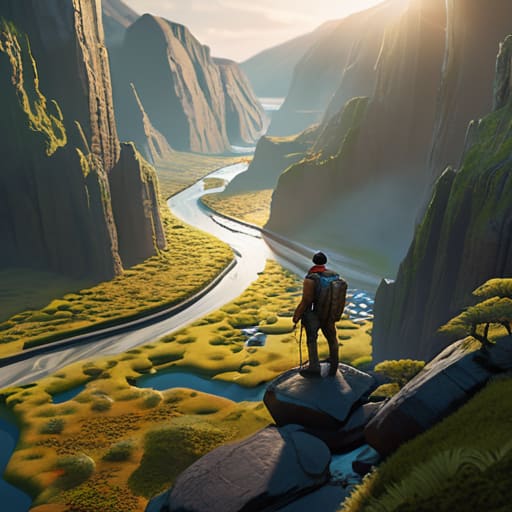
To truly master these environments, you have to shift your mindset away from the “quest marker” mentality. In traditional titles, you’re often following a breadcrumb trail laid out by a designer, but in a true sandbox, the path is yours to carve. This is where player agency and autonomy become your most valuable tools. Instead of asking “where do I go next?”, start asking “what systems can I manipulate?” Whether it’s managing resources or understanding how different factions interact, intentional play means looking for the levers that move the world.
I often find that players get lost in the sheer scale of modern open world game design, mistaking movement for progress. It’s a common trap. To avoid it, treat the map not as a playground, but as a series of interconnected variables. If you encounter a barrier, don’t just wait for a level-up; analyze the mechanics. Can you use the environment to your advantage? Can you exploit a specific crafting loop? When you stop reacting to the game and start interacting with its underlying logic, that’s when the real mastery begins.
The Impact of Player Agency and Autonomy on Mastery

When we talk about player agency and autonomy, we aren’t just talking about the ability to walk in any direction. We are talking about the psychological weight of a choice. In a strictly guided experience, your success is a reaction to the developer’s script. But in a true sandbox, your success is a result of your own intellectual architecture. When a game gives you the tools to solve a problem in a way the designers didn’t explicitly dictate, it shifts the experience from simple participation to true mastery.
This is where the distinction between sandbox vs linear games becomes most apparent. In a linear title, you are mastering a sequence; in a sandbox, you are mastering a system of possibilities. This autonomy can be daunting—some players mistake the lack of a clear path for a lack of direction—but that’s where the real growth happens. You have to stop asking “What does the game want me to do?” and start asking “What can I make this system do for me?” That shift in mindset is the bridge between being a casual player and an intentional one.
Beyond the Sandbox: 5 Strategies for Intentional Exploration
- Stop treating the map like a checklist. In a sandbox, the “objective” is often a suggestion rather than a command. Instead of rushing to the next waypoint, pause and ask yourself how the environment’s physics or resource systems actually function. Mastery comes from understanding the rules of the world, not just following the breadcrumbs.
- Embrace the “Systemic Loop.” Every sandbox game is a collection of interlocking systems—weather, AI behavior, economy, or crafting. Don’t just react to what happens; look for the patterns. If you know how a certain elemental effect interacts with the terrain, you aren’t just playing; you’re engineering a solution.
- Document your own discoveries. Because these games lack a rigid structure, your personal progress can feel nebulous. I’ve found that keeping a mental (or literal) log of what works and what fails helps transform aimless wandering into a structured study of the game’s mechanics.
- Set self-imposed constraints to sharpen your skill. If a game gives you total freedom, it’s easy to become complacent. Try a “minimalist” run or limit yourself to a specific set of tools. This forces you to engage with the game’s deeper mechanics rather than relying on brute force or overpowered gear.
- Learn to value failure as data. In a non-linear environment, you will inevitably trigger a cascade of events that leads to disaster. Don’t see this as a “Game Over”; see it as a diagnostic tool. Analyze exactly which system you failed to account for, and use that insight to refine your next approach.
Beyond the Sandbox: Three Pillars of Intentional Play
Stop treating open worlds like aimless playgrounds; instead, approach them as interconnected systems where every mechanic is a tool for your mastery.
Real agency isn’t just about having options—it’s about the cognitive satisfaction that comes from making deliberate, high-stakes choices that actually shape your experience.
Mastery in a sandbox environment requires shifting your mindset from mindless consumption to active observation, learning to read the game’s logic rather than just reacting to it.
The Architecture of Agency
“A sandbox isn’t just a wide-open map; it’s a sophisticated set of interlocking gears. If you approach it with a passive mindset, you’re just drifting. But if you stop to study how those systems react to your input, you stop being a tourist and start being an architect of your own experience.”
Delia Okonkwo
Beyond the Sandbox: A Call to Intentionality

Ultimately, sandbox gaming shouldn’t be viewed as a lack of direction, but rather as a test of how we navigate complexity. We’ve looked at how mastering non-linear mechanics and embracing true player agency can transform a chaotic digital space into a structured playground for growth. When you stop treating these worlds as mere backdrops for mindless consumption and start seeing them as interconnected systems, your relationship with the game changes. It shifts from simply passing time to actively engaging with a machine that responds to your specific logic and choices. To truly master a sandbox, you must embrace the friction that comes with total freedom.
As I sit here with my tea, watching the light fade over my workbench, I’m reminded that the best games don’t hold our hands; they offer us a set of tools and a question: What will you do with this? Whether you are building a sprawling empire or perfecting a single, complex mechanic, remember that the goal isn’t just to reach the end, but to understand the “why” behind every action. Don’t just play to win; play to understand. The sandbox is yours to shape, so make sure you are playing with intention.
Frequently Asked Questions
How do I avoid the feeling of "choice paralysis" when a sandbox game gives me too many directions at once?
Choice paralysis happens when we treat a sandbox like a buffet instead of a toolkit. When the map feels overwhelming, stop looking at the “what” and start looking at the “why.” Pick one specific system—maybe it’s resource management or terrain traversal—and commit to mastering just that for an hour. By narrowing your scope to a single mechanical goal, you turn a chaotic expanse into a series of solvable, intentional puzzles.
Is there a way to find genuine mastery in a sandbox if the game doesn't provide a traditional skill ceiling or end goal?
Mastery in a sandbox isn’t about hitting a final boss; it’s about shifting your metric of success from “completion” to “efficiency and elegance.” When the game stops giving you objectives, you have to invent them. I find my flow by imposing my own constraints—trying to build a specific machine with limited resources or optimizing a resource loop until it runs like clockwork. Mastery here is the transition from playing the game to manipulating its underlying systems.
How can I distinguish between a sandbox that offers true systemic depth and one that is just an empty, procedurally generated map?
Look for the “reaction chain.” In a deep sandbox, systems should talk to one another. If I set a fire, does the wind carry it? Does the NPC react with fear or use it to their advantage? If the world only reacts to your direct input, it’s just a pretty backdrop. True systemic depth means the environment has its own logic that you can learn, predict, and eventually manipulate.
