
I remember sitting in front of a flickering CRT monitor in the late 80s, losing my mind over a boss fight that felt mathematically impossible. I spent hours thinking I just needed faster reflexes or a better controller, only to realize I was actually just standing in the wrong damn place. Most modern guides will try to sell you on complex, high-level “pro” rotations or expensive gear to fix your mistakes, but they’re ignoring the core truth: you can have all the mechanical skill in the world, but if you haven’t mastered your positioning fundamentals, you’re just a very fast way to lose.
I’m not here to give you a lecture filled with theoretical fluff or “meta” nonsense that will be obsolete by next Tuesday. Instead, I want to strip these systems down to their psychological bones so you can understand why certain spaces on a map hold more value than others. My promise to you is simple: we are going to look at this through a lens of intentionality. I’ll show you how to stop reacting to the chaos and start dictating it, turning the map from an obstacle into your greatest tactical advantage.
Table of Contents
Optimizing Rotation Timing for Systemic Advantage

Optimizing Rotation Timing for Systemic Advantage
Timing isn’t just about moving from point A to point B; it’s about understanding the rhythm of the match. If you rotate too early, you’re likely just feeding the enemy team information and resources. If you wait too long, you’re reacting to a crisis rather than dictating the flow of the game. To truly master this, you have to develop better map awareness techniques to predict when a lane is about to collapse or when a power spike is imminent. I’ve found that the most effective players don’t just react to the map; they anticipate the shifts in pressure before they even happen.
The goal is to find that sweet spot of optimal rotation timing where you arrive at a new objective just as the previous engagement concludes. This requires a disciplined approach to minimizing exposure risk during the transit. You shouldn’t be sprinting blindly through open territory; instead, you should be threading your movement through corridors that offer cover and obscure your intent. When you treat movement as a calculated transition rather than a frantic scramble, you stop being a victim of the map and start becoming its architect.
Vision and Sightlines Seeing the Games Hidden Logic
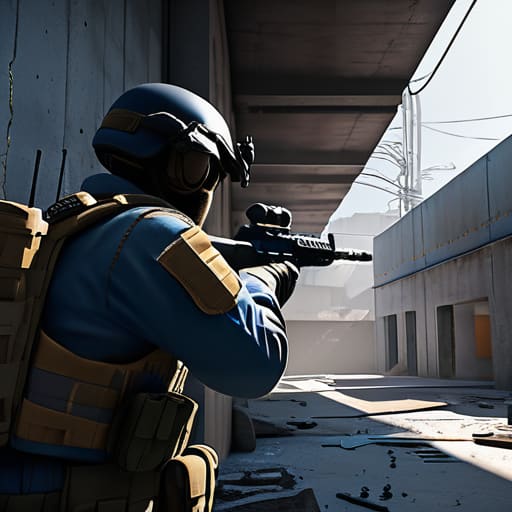
Most players treat sightlines as mere corridors where enemies might appear, but if you want to play with intention, you have to view them as mathematical variables. It isn’t just about looking around corners; it’s about understanding the geometry of the environment to maximize your information gain while minimizing exposure risk. When I’m analyzing a match, I look for players who aren’t just reacting to what they see, but are proactively using vision to dictate the flow of the encounter.
Effective vision and sightlines management is where the psychological aspect of gaming meets pure mechanics. You aren’t just looking for a target; you are looking to deny the opponent their own clarity. By mastering specific tactical movement patterns, you can manipulate what the enemy perceives, essentially forcing them into a state of uncertainty. This isn’t about luck or “getting lucky” with a peek; it’s about systematically stripping away your opponent’s ability to make informed decisions. When you control the information, you control the system.
Beyond the Joystick: Five Ways to Play with Intentional Geometry
- Stop treating cover like a temporary shield; treat it like a structural part of your strategy. If you’re just popping out to shoot and then ducking back, you aren’t using the environment—you’re just hiding. True positioning means understanding how the geometry of the map dictates your window of opportunity.
- Learn to respect the “dead zone.” Every map has those awkward, open stretches where you have zero tactical advantage. If you find yourself sprinting through a field without a plan to reach the next piece of hard cover, you aren’t playing the game; you’re just waiting to be a target.
- Use your teammates as anchors, not just companions. In any system, stability comes from how components interact. If you’re constantly drifting too far from your group, you’re breaking the formation and making yourself an easy outlier to exploit. Position yourself to support the line, not to wander off it.
- Master the art of the “offset.” Never stand directly behind your teammate or in a straight line with them. If an opponent has a clear shot at one of you, they have a clear shot at both. Staggering your positions creates multiple angles of engagement and forces the enemy to make much harder decisions.
- Anticipate the “flow” of the encounter. Don’t just react to where the enemy is; position yourself where they are going to be once they realize they’ve lost the initial advantage. It’s about thinking one step ahead in the system’s logic, rather than just reacting to the immediate visual stimulus.
The Core Lessons of Intentional Positioning
Stop treating movement as a way to get from A to B; start treating every step as a way to control the space around you.
Mastery isn’t about having the fastest reflexes, it’s about having the best sightlines so you never have to rely on them in the first place.
Timing your rotations isn’t a suggestion—it’s the difference between being the predator in a system and being the prey.
## The Psychology of Space
“Positioning isn’t just about where your character is standing on a digital map; it’s about where you are forcing your opponent to be mentally. When you control the space, you aren’t just playing the game—you’re dictating the terms of the engagement.”
Delia Okonkwo
Moving Beyond the Map

At the end of the day, mastering positioning isn’t about memorizing a static map or following a rigid checklist of coordinates. It is about synthesizing everything we’ve discussed—the precision of your rotation timing, the strategic use of sightlines, and the ability to read the game’s underlying logic. When you stop reacting to the chaos and start anticipating the system, you move from being a participant to a strategist. You aren’t just moving a character from point A to point B; you are actively manipulating the environment to favor your success. This shift from mindless movement to intentional placement is what separates those who simply play from those who truly master the mechanics.
As I sit here with my tea, watching the patterns emerge in my own sessions, I’m reminded that skill is a moving target. The way we approach a map today might change as the meta shifts or as our own cognitive approaches evolve, but the principle of intentionality remains constant. Don’t get discouraged if you find yourself caught out of position; instead, treat every mistake as a data point in a larger psychological puzzle. Games are complex, beautiful systems, and they reward those who take the time to study the architecture of the fight. Play with purpose, keep refining your perspective, and you’ll find that the joy of the game grows alongside your skill.
Frequently Asked Questions
How do I know when I'm just being overly cautious versus when I'm actually positioning with intent?
It comes down to the “why” behind your movement. If you’re hovering in a corner because you’re afraid of losing a life or a point, that’s just fear-based hesitation—it’s reactive, not proactive. True intentional positioning is about controlling the variables. If you can articulate exactly which sightline you’re holding or which rotation you’re preparing for, you’re playing the system. If you’re just waiting for something to happen, you’re playing scared.
Can these principles be applied to single-player games where I'm not fighting against other players' decision-making?
Absolutely. In fact, applying these principles to single-player games is where you truly begin to master the system’s underlying logic. Whether it’s a Souls-like or a tactical RPG, the “enemy” is still a set of programmed rules. If you stop reacting blindly and start positioning yourself to manipulate those rules—controlling sightlines or timing your movements to exploit an AI’s predictable patterns—you aren’t just playing; you’re deconstructing the game’s architecture.
At what point does studying these systems start to kill the "flow state" or the actual joy of playing?
It’s a fine line, isn’t it? In my psychology studies, we talk about the “Goldilocks zone” of cognitive load. If you’re constantly over-analyzing every single micro-movement, you’re stuck in your head, not in the game. You lose that visceral connection to the mechanics. The trick is to move from conscious competence to unconscious mastery. You study the system until the logic becomes muscle memory, allowing the analysis to fade into the background so the flow can actually take over.
