
I remember sitting on my bedroom floor in 1988, the glow of a heavy CRT television washing over me, completely oblivious to why I kept losing. I was so hyper-focused on the flickering sprites on the screen that I completely ignored the subtle, rhythmic click-clack of an approaching enemy behind me. It took years of tinkering with vintage handhelds and studying how our brains process sensory input to realize that I wasn’t just playing a visual game; I was playing an auditory one. Most players treat sound cues as mere background noise or atmospheric fluff, but that’s a massive mistake. If you’re only looking at the pixels, you’re essentially playing with one eye closed.
I’m not here to sell you a fancy new headset or promise some magical “pro-gamer” secret. Instead, I want to help you deconstruct the sonic architecture of your favorite titles so you can stop reacting and start anticipating. We are going to move past mindless button-mashing and learn how to listen with intention. By the time we’re done, you’ll understand how to turn every beep, hum, and distant footstep into a tactical advantage that sharpens your focus and elevates your play.
Table of Contents
The Science of Auditory Perception in Gaming
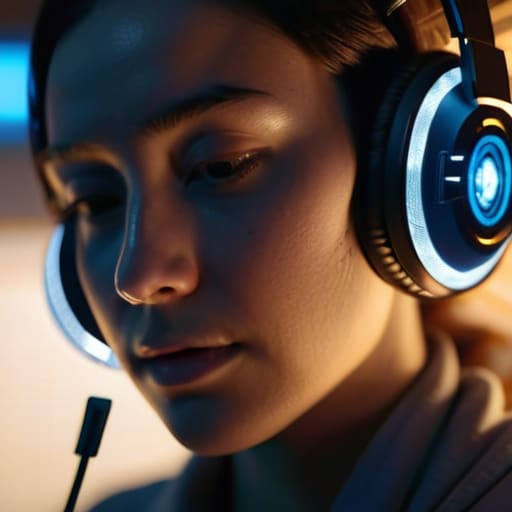
To understand why a sudden footstep makes your heart race, we have to look at how our brains process auditory perception in gaming. It isn’t just about hearing a noise; it’s about how our cognitive architecture interprets spatial data. When a developer uses sophisticated 3D audio positioning, they aren’t just adding “flavor”—they are feeding your brain precise mathematical data that allows you to map the environment without even looking. Your subconscious is constantly working to triangulate the source of a sound, turning raw decibels into a mental blueprint of the room around you.
This isn’t just a trick of the ears; it’s a deep psychological engagement. When a game utilizes high-quality sonic feedback mechanisms, it bridges the gap between your physical body and the digital avatar. A heavy thud when you land a jump or the subtle shift in reverb when you enter a cavern provides a sense of presence that visual graphics alone can’t achieve. By mastering these signals, you stop reacting to what you see and start anticipating what is coming, moving from a state of mere observation to one of true, intentional mastery.
Harnessing Sonic Feedback Mechanisms for Mastery

Once you understand the biology behind it, the next step is moving from passive listening to active utilization. To truly master a game, you have to stop treating audio as mere background noise and start treating it as a primary data stream. This means leaning into sonic feedback mechanisms to refine your reaction times. When a boss prepares a heavy strike, there is often a specific, high-frequency chime or a low-frequency rumble that precedes the animation. If you’ve trained your brain to recognize these patterns, you aren’t just reacting to what you see on the screen; you are anticipating the game’s logic before it even manifests visually.
This level of intentionality becomes even more vital when you leverage 3D audio positioning in competitive or high-stakes environments. In many modern titles, the spatial accuracy of a footstep or a distant reload can tell you exactly where an opponent is lurking, long before they enter your field of view. Don’t just play by sight. If you want to bridge the gap between a casual player and a master, you need to treat the soundscape as a tactical map. Use it to build a mental model of the world around you.
Five Ways to Turn Audio into Your Competitive Edge
- Stop relying solely on your eyes; train your brain to identify the specific frequency of a reload or a footstep before you even see the enemy on screen.
- Invest in a decent pair of open-back headphones to widen your soundstage, allowing you to pinpoint exactly how far away a threat is rather than just knowing it’s “somewhere to the left.”
- Learn to recognize the “rhythm of failure” by listening to the subtle audio shifts that happen right before a boss enters a new phase or a trap is triggered.
- Don’t treat your volume slider as a binary choice; find that sweet spot where environmental ambiance is present but doesn’t drown out the critical, high-frequency cues that signal incoming danger.
- Practice active listening during your warm-up sessions, treating the game’s soundscape like a musical score that you need to learn by heart rather than just background noise.
Key Takeaways for Intentional Listening
Stop treating game audio as background noise; treat it as a vital stream of data that can predict enemy movements and environmental changes before they appear on screen.
Train your ears to recognize specific patterns in sonic feedback, turning reactive instinct into proactive mastery of the game’s rhythm.
Use audio as a tool for cognitive focus, allowing you to reduce visual clutter and play with a more deliberate, calm sense of intention.
Beyond the Visual Noise
We often get so caught up in the visual spectacle that we treat audio like background noise, but if you want to truly master a system, you have to stop watching and start listening; the most critical information isn’t always on the screen, it’s in the rhythm of the soundscape.
Delia Okonkwo
Beyond the Visual Noise
At the end of the day, mastering sound cues isn’t about memorizing a checklist of noises; it’s about shifting your entire approach to the game. We’ve looked at how our brains process these signals and how you can turn that raw auditory data into a tactical advantage. By moving away from purely visual reliance and leaning into the sonic landscape, you stop reacting to what’s on the screen and start anticipating what’s about to happen. It turns a chaotic firefight or a tense platforming section into a structured, predictable system that you can finally control with intention.
As I sit here with my lukewarm tea, watching the glow of a refurbished Game Boy, I’m reminded that gaming evolves alongside us. We move from the frantic button-mashing of our youth to a more nuanced, cerebral way of playing. Don’t just let the game happen to you; listen to what it is trying to tell you. When you start playing with your ears as much as your eyes, you realize that the true depth of a game isn’t just in its graphics, but in the symphony of mechanics waiting to be understood. Go back to your favorite title, turn up the volume, and play with purpose.
Frequently Asked Questions
How can I train my brain to distinguish between background ambience and critical gameplay cues without getting overwhelmed?
It’s easy to let the sensory overload drown you out. To fix this, stop trying to listen to everything at once. Start by isolating variables. Play a session with the focus solely on one specific cue—like the distinct click of a reload or a specific enemy footstep—and ignore the rest. You’re essentially training your brain to filter noise through repetition. Once that sound becomes an instinctual trigger, you can layer in the next one.
Does playing with high-fidelity headphones actually provide a measurable advantage over standard stereo speakers in competitive play?
It’s a fair question, and the short answer is yes—but it’s about spatial awareness, not just “better sound.” While speakers are fine for immersion, high-fidelity headphones give you that crucial directional precision. In a competitive setting, being able to pin-point the exact elevation or distance of a footstep through a stereo field is a massive advantage. If you want to stop reacting and start anticipating, investing in a solid pair of headphones is non-negotiable.
Are there specific ways to adjust in-game audio settings to prioritize tactical information over immersion?
If you’re looking to move from immersion to tactical precision, stop treating your audio settings like a “set it and forget it” feature. First, switch your output to “Headphones” mode—it’s non-negotiable for spatial awareness. Next, dive into the EQ settings if the game allows; try boosting the mid-high frequencies to sharpen footsteps and reloading sounds, while dampening the heavy bass that muddies the mix during explosions. It might feel less “cinematic,” but you’ll play with much more intention.
