
I was elbow-deep in the guts of a 1989 Game Boy last Tuesday, trying to clear out decades of battery acid corrosion, when it hit me: we treat our planet exactly like a piece of hardware we expect to run forever without ever checking the internal components. Most people approach environmental awareness as if it’s some massive, insurmountable boss fight that requires a million-dollar subscription or a complete lifestyle overhaul overnight. They get lost in the noise of performative activism and expensive “green” gadgets that are really just more plastic for the landfill. It’s exhausting, and frankly, it’s inefficient.
I’m not here to sell you on a utopian fantasy or a list of impossible chores. Instead, I want to look at our relationship with the Earth through the lens of a complex system—one that requires intentionality rather than just mindless consumption. I promise to provide you with a practical, no-nonsense framework for understanding how our small, daily mechanics contribute to the larger game state. We aren’t going to chase perfection; we are going to focus on mastering the systems we actually have control over.
Table of Contents
Developing Tactical Situational Awareness in the Wild

When I’m out on a trail, I find myself falling into the same cognitive patterns I used to use when studying boss patterns in old-school RPGs. You aren’t just walking through scenery; you are interacting with a live, breathing system. Developing tactical situational awareness in the wild means moving beyond seeing a forest as a backdrop and starting to see it as a series of variables. I’ve learned that the moment you stop scanning your surroundings is the moment you lose your edge. It’s about training your eyes to recognize the subtle shifts in the landscape—the way a sudden silence in bird calls can signal a change in the environment or a predator nearby.
To truly master this, you have to treat your movement like a form of terrain analysis techniques. Instead of just following a path, I look at the slope of the land, the density of the undergrowth, and the potential for obstacles before I even step toward them. This isn’t about being paranoid; it’s about intentionality. By practicing constant environmental threat assessment, you turn a chaotic hike into a structured exercise in observation. You stop being a passive observer and start becoming an active participant in the ecosystem.
The Art of Navigating Natural Environments With Intent
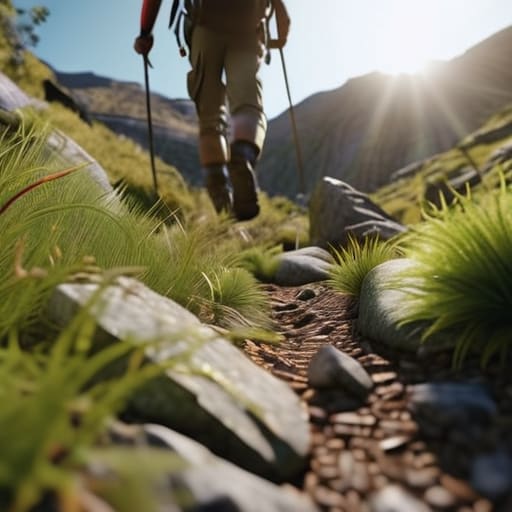
When I’m out on a trail or just exploring a local park, I find myself applying the same mental framework I use when dissecting a complex RPG map. We often treat the outdoors as a passive backdrop, but if you want to truly engage with it, you have to treat it as an active system. This means moving beyond mere observation and leaning into navigating natural environments with a sense of purpose. It’s about reading the landscape not just for its beauty, but for its underlying logic—understanding how a slope affects your energy expenditure or how a change in vegetation might signal a water source nearby.
Mastering this requires a level of spatial awareness in nature that most people completely overlook. In a game, you learn to recognize patterns in level design to avoid traps; in the real world, you’re doing the same thing through constant, subtle feedback loops. You start to notice the way the wind shifts through a canopy or how the terrain dictates your movement. It isn’t about being a survivalist; it’s about playing the environment with intention rather than just stumbling through it.
Mastering the Mechanics: 5 Ways to Sharpen Your Environmental HUD
- Treat your senses like a high-refresh-rate monitor. Don’t just look at a landscape; observe the subtle shifts in light, the way wind moves through specific types of foliage, and the patterns of local wildlife. Real awareness comes from noticing the “frame rate” of the natural world.
- Practice the “Low-Impact Playthrough.” In any complex game, we try to minimize collateral damage to preserve resources. Apply that same logic here. Before you move, assess the terrain to ensure you aren’t inadvertently disrupting a delicate ecosystem or leaving a permanent footprint.
- Map your surroundings mentally. Just as you’d memorize a dungeon layout to avoid getting lost, try to build a mental map of your local environment. Recognizing the landmarks, water sources, and seasonal changes turns a chaotic space into a structured system you can actually understand.
- Audit your “Inventory” and its impact. Every piece of gear we bring into nature has a lifecycle. Ask yourself if the tools you’re using are sustainable or if they’re just “disposable loot” that will eventually clutter the level. Aim for high-durability, low-impact choices.
- Listen for the background audio cues. In gaming, sound design tells us when an enemy is approaching or when a mechanic is about to trigger. In the wild, the sudden silence of birds or the change in insect noise is your environmental feedback loop. Learn to read those cues.
Mastering the Mechanics of Stewardship
Stop treating nature like a background asset; start observing it as a complex, interactive system where every action triggers a reaction.
Shift from mindless consumption to intentional engagement by applying the same tactical awareness to your surroundings that you would to a high-stakes boss fight.
True environmental mastery isn’t about dominating the landscape, but about learning its rules and playing within them to ensure the game remains playable for everyone.
## The Mechanics of Connection
“We often treat the natural world like a background asset in a game—something pretty to look at while we focus on our own objectives—but true environmental awareness requires us to stop playing on autopilot and start reading the terrain as the complex, living system it actually is.”
Delia Okonkwo
Mastering the Final Level
We’ve spent this time looking at the world not as a backdrop, but as a complex, interactive system that requires our full attention. Whether we are practicing tactical situational awareness in the brush or learning to move through a landscape with genuine intention, the goal is the same: to stop being passive observers and start becoming active participants. Just like mastering a difficult boss fight or deciphering a complex skill tree, environmental awareness requires us to move past mindless consumption and begin observing the subtle patterns of the world around us. It is about recognizing that every action we take has a mechanical consequence on the ecosystem we inhabit.
At the end of the day, the Earth isn’t a game we can simply reset when we make a mistake. However, we can approach our relationship with nature with the same discipline and curiosity we bring to our favorite digital worlds. If we commit to playing with intention, we find that the rewards are far greater than any high score or rare loot drop. I want you to walk out your door today and look at the landscape not as scenery, but as a system waiting to be understood. The level is open, the mechanics are intricate, and the opportunity to truly master your connection to the wild is entirely in your hands.
Frequently Asked Questions
How can I start practicing situational awareness in nature without it feeling like a chore or a survivalist training exercise?
Think of it as shifting from “passive observer” to “active player.” Instead of drilling survival drills, treat your hike like an exploration mode in an open-world RPG. Don’t aim for perfection; just try to identify three distinct sounds or textures every ten minutes. When you stop viewing nature as a backdrop and start seeing it as a dynamic system with its own rules and feedback loops, the awareness becomes a game of discovery rather than a chore.
Are there specific "mental HUDs" or frameworks I can use to better track my environmental impact while I'm out exploring?
Think of a “mental HUD” as a real-time overlay for your conscience. I use a “Leave No Trace” framework, but I treat it like a resource management mini-game. Every time I step off a trail or pack out trash, I’m checking my “Impact Meter.” Another useful framework is the “Observe, Assess, Act” loop: pause to scan your surroundings for disruption before you move. It turns mindless walking into a deliberate, high-level playthrough.
How do we balance the need for deep, intentional observation with the simple, mindless joy of just being in the woods?
Think of it like the difference between a high-stakes boss fight and a cozy sandbox game. You don’t need to be scanning for survival mechanics every second you’re outside. The trick is to treat observation as a skill you toggle on and off. Spend twenty minutes practicing your “situational awareness”—noticing the patterns in the canopy or the soil—and then, once you’ve mastered the data, let the HUD disappear. Just exist.
