I remember the rhythmic, mechanical whir of my old desktop back in the late 90s—that steady grind of a spinning platter that meant my game was actually loading. It felt like the machine was thinking. But lately, that nostalgia has hit a wall of modern frustration. There is nothing that kills the flow of a deep, immersive session quite like staring at a progress bar while your brain is already halfway into the game world. When you’re weighing the merits of ssd vs hdd gaming, you aren’t just choosing between two types of storage; you’re deciding how much of your mental momentum you’re willing to sacrifice to a loading screen.
I’m not here to feed you the usual marketing hype or tell you that you need the most expensive NVMe drive on the market to be a “pro.” Instead, I want to look at this through a more practical lens. I’m going to break down how these drives actually impact your playstyle and your focus, offering you a no-nonsense roadmap based on how these systems behave in the real world. My goal is to help you build a setup that respects your time and allows you to focus on mastering the game, not waiting for the hardware.
Table of Contents
- The Mechanical Reliability of the HDD
- The Fluid Performance of the SSD
- Understanding Sequential Read Speeds and Gaming Performance Impact
- Overcoming Mechanical Hard Drive Latency for Intentional Play
- Mastering Your Hardware: Final Thoughts on the SSD vs. HDD Divide
- The Rhythm of the System
- Choosing Your Path to Mastery
- Frequently Asked Questions
The Mechanical Reliability of the HDD
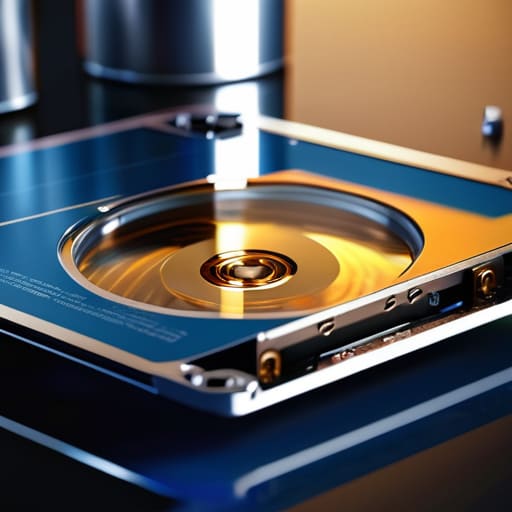
A Hard Disk Drive, or HDD, is a traditional data storage device that utilizes spinning magnetic platters and a moving read/write head to access information. Its core mechanism relies on this physical movement, which allows it to offer massive amounts of storage capacity at a significantly lower cost per gigabyte compared to newer technologies. When we talk about ssd vs hdd gaming configurations, the HDD remains the heavy lifter for long-term archiving and massive libraries.
From my perspective, there is something almost nostalgic about the mechanical hum of a spinning drive, but in a modern gaming context, it requires a specific kind of patience. It’s not about speed; it’s about capacity and scale. If you are building a library of hundreds of titles or storing high-resolution video captures, the HDD is your reliable warehouse. It doesn’t demand the premium price of flash storage, allowing you to invest more in your GPU while still maintaining a vast digital collection that stays tucked away, ready when you have the time to wait.
The Fluid Performance of the SSD
A Solid State Drive (SSD) is a storage medium that uses flash memory to store data electronically, completely eliminating the need for moving parts. Because there are no physical platters to spin up, its primary selling point is near-instantaneous data access and incredibly high transfer speeds. In the ongoing debate of ssd vs hdd gaming, the SSD is the undisputed champion of responsiveness, turning what used to be “wait time” into active gameplay.
I’ve spent years analyzing how friction—both physical and mental—affects our ability to engage with complex systems, and nothing breaks immersion faster than a loading bar. When you switch to an SSD, you aren’t just shortening a timer; you are protecting your flow state. That split second where you transition from a menu to a high-stakes combat encounter becomes seamless, allowing your brain to stay locked into the game’s mechanics rather than drifting toward distraction. It is an investment in uninterrupted mastery.
SSD vs HDD for Gaming
| Feature | SSD | HDD |
|---|---|---|
| Speed/Performance | Extremely Fast (High IOPS) | Slow (Low IOPS) |
| Loading Times | Minimal/Instant | Significant Delays |
| Price per GB | High | Low |
| Durability | High (No moving parts) | Low (Mechanical parts) |
| Noise Level | Silent | Audible spinning/clicking |
| Best For | OS, Main Games, Fast Loading | Mass Storage, Media, Backups |
| Reliability | High (Resistant to shock) | Moderate (Sensitive to movement) |
Understanding Sequential Read Speeds and Gaming Performance Impact
When we talk about sequential read speeds, we aren’t just arguing over arbitrary numbers on a spec sheet; we are discussing the fluidity of your experience. In the context of modern gaming, these speeds dictate how quickly large chunks of data—think massive textures or sprawling level geometry—move from storage into your system’s active memory. If your hardware can’t keep up with the game’s demands, the psychological flow state you’ve worked so hard to achieve is shattered by a stuttering screen.
An HDD handles sequential data like a physical record player; it’s efficient enough when it finds its rhythm, but it lacks the raw velocity required for modern, asset-heavy titles. You’ll often find yourself staring at a loading bar while your brain waits for the world to catch up. An SSD, however, operates on a different plane entirely. By utilizing flash memory, it delivers massive throughput that allows complex environments to stream in almost instantaneously, ensuring the game engine never has to pause to wait for a spinning platter.
For this specific metric, the winner is clear: the SSD is the only choice if you want to respect your time and your focus.
Overcoming Mechanical Hard Drive Latency for Intentional Play
When we talk about intentional play, we aren’t just talking about high frame rates; we are talking about the psychological flow state. Latency is the silent killer of that immersion. If you are constantly waiting for the game to catch up to your mental intent, you aren’t playing the game—you are waiting for it. In the SSD vs HDD debate, latency is often the most overlooked factor in how a game actually feels to inhabit.
A mechanical hard drive is a physical machine, reliant on a spinning platter and a moving actuator arm. When a game requests data, that arm has to physically move to the right spot. This creates a “seek time” delay that can lead to stutters or micro-freezes during asset streaming. It breaks your rhythm and forces your brain out of the zone.
An SSD, however, operates purely through electrical signals. There are no moving parts to wait on, meaning data access is nearly instantaneous. This eliminates the “hiccups” that occur when an HDD struggles to keep up with a complex, open-world environment. For anyone trying to master a system, the seamlessness of an SSD is non-negotiable.
Verdict: SSD
Mastering Your Hardware: Final Thoughts on the SSD vs. HDD Divide
Prioritize an SSD to eliminate the friction between your intent and the game’s response; speed isn’t just about convenience, it’s about maintaining your flow state.
Reserve HDDs for your massive, static libraries of assets and media, but never let a mechanical drive become the bottleneck for the systems you are actively mastering.
View your hardware choice as part of your setup for intentional play—investing in faster storage is an investment in a more seamless, focused gaming experience.
The Rhythm of the System
“When we talk about storage, we aren’t just discussing gigabytes; we’re discussing the friction between you and the experience. A mechanical drive forces you to wait on the machine, but an SSD allows the game’s mechanics to flow at the speed of your own intent.”
Delia Okonkwo
Choosing Your Path to Mastery
When we strip away the technical jargon, the choice between an SSD and an HDD comes down to how much you value your mental flow. An HDD might offer a massive amount of storage for a lower price, making it a decent choice for a library of older titles or media backups. However, if you want to minimize those frustrating pauses and eliminate the mechanical latency that breaks your concentration, an SSD is the only logical path. By investing in faster read speeds, you aren’t just buying hardware; you are investing in seamless immersion and ensuring that your hardware never becomes a barrier to your focus.
At the end of the day, the tools we use should serve our intention, not dictate our limitations. Whether you are restoring a vintage handheld or building a high-end rig, remember that the goal is to engage deeply with the systems we love. Don’t let outdated hardware turn a moment of potential mastery into a lesson in patience. Choose the setup that allows you to play with purpose, and let the technology fade into the background so that only the joy of the game remains.
Frequently Asked Questions
If I upgrade to an SSD, do I actually need to reorganize my entire existing game library, or can I just move the heavy hitters?
You certainly don’t need to undergo a total library overhaul. Think of your storage like a workspace: you don’t need your entire archive on the desk, just the tools you’re using right now. Move your “heavy hitters”—those massive open-world titles or high-fidelity RPGs—to the SSD to eliminate loading friction. Keep the lighter indie gems or older classics on your HDD. It’s about strategic placement, not total reorganization.
Is there a point where an SSD becomes overkill for older titles or indie games that don't demand high-speed data streaming?
It’s a fair question, and from a purely technical standpoint, yes—there is a point of diminishing returns. If you’re revisiting a pixel-art indie title or a classic from the early 2000s, an SSD won’t magically change the game’s internal logic or frame rate. However, I view it differently. Even for older titles, an SSD removes the friction of loading screens. It keeps your momentum intact, allowing you to stay in the flow state rather than waiting on a spinning disk.
How much does the capacity of an SSD affect its long-term reliability compared to a traditional mechanical drive?
It’s a bit of a trade-off between physical mechanics and digital endurance. With an HDD, capacity is mostly about how many platters you can stack before the drive gets heavy or noisy. With an SSD, capacity is your lifeline. Because of how NAND flash works, a larger drive spreads out the wear and tear more effectively. If you buy a tiny SSD and fill it to the brim, you’re essentially shortening its lifespan. Aim for more headroom; it’s an investment in longevity.
