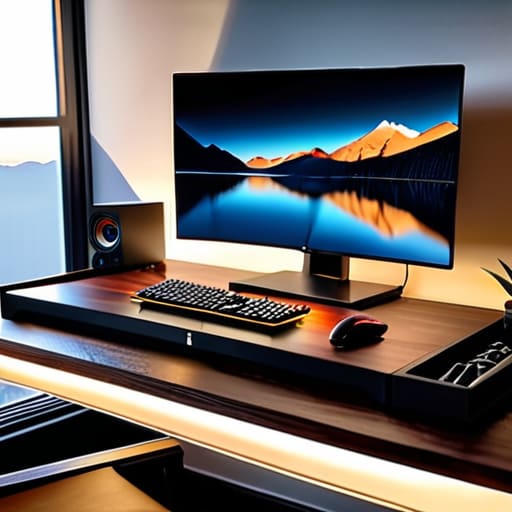
I remember the days of tangled controller cords and bulky CRT monitors, where “organizing” usually meant shoving everything behind a desk and hoping for the best. But as I’ve grown into my career and my love for deep-system analysis, I’ve realized that a chaotic environment is more than just an eyesore; it’s a cognitive tax. When your space is cluttered, your brain is constantly processing unnecessary visual noise, which pulls your focus away from the actual mechanics of the game. Finding the best ways to organize a gaming setup isn’t about aesthetics or chasing a sterile “minimalist” trend; it’s about engineering a space that respects your mental bandwidth and allows for true, intentional play.
In the following guide, I’m going to break down seven essential components to help you transform your desk from a source of friction into a high-performance command center. We aren’t just talking about cable ties and bins; we are looking at how to curate a space that supports your flow state. By the end of this list, you’ll have a blueprint for a setup that minimizes distraction and maximizes your ability to master every system you encounter.
Taming the Cable Serpent
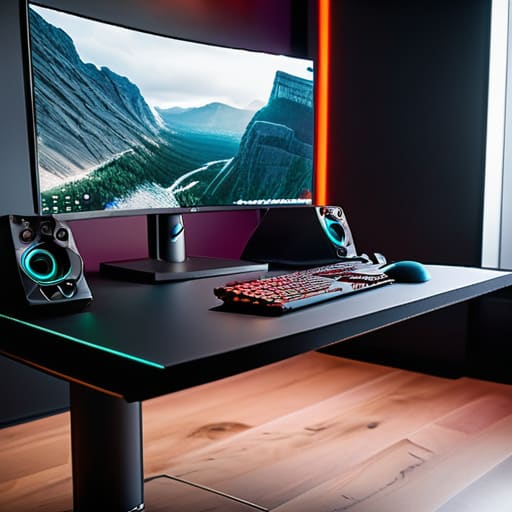
There is nothing that breaks my focus faster than a chaotic web of black wires snaking across my floor. When I’m deep into a session, especially when I’m troubleshooting a technical issue in a complex RPG, that visual noise acts as a constant cognitive drain. It’s not just about aesthetics; it’s about reducing the mental friction that occurs when your physical environment feels out of control.
The Ergonomic Command Center
After years of studying psychology, I can tell you that your physical posture directly influences your decision-making speed. If you are slouching or straining to see your monitor, you aren’t just uncomfortable—you are diminishing your cognitive performance. A gaming setup shouldn’t just be a place to sit; it should be an engineered environment that supports your body through long bouts of intense play.
Lighting for Cognitive Clarity
We often talk about “immersion,” but there is a fine line between atmospheric lighting and a setup that causes eye strain. If you’re playing in a pitch-black room with a high-brightness monitor, you’re essentially forcing your pupils into a constant state of physiological stress. This leads to fatigue, which is the ultimate enemy of skill acquisition and mastery.
Zone-Based Peripheral Management
I’ve spent many afternoons restoring vintage handhelds, and one thing I’ve learned is that specialized tools need specialized homes. If your controller, headset, and extra input devices are just tossed onto the desk, you are creating micro-interruptions every time you need to switch tasks. A cluttered surface is a symptom of a disorganized workflow.
Digital Hygiene and Desktop Optimization
We often forget that our “setup” extends far beyond the physical hardware. If your digital desktop is a graveyard of random screenshots, unorganized installers, and cluttered folders, you are carrying that mental weight into every session. A disorganized OS is just as distracting as a messy desk, creating a sense of chaos before you even hit “Play.”
The Sensory Anchor
As someone who finds comfort in a lukewarm cup of Earl Grey, I’ve realized that small, sensory rituals can act as a psychological “on switch” for deep play. Your setup should include elements that ground you. This doesn’t mean buying expensive gadgets; it means incorporating items that signal to your brain that it is time to engage and analyze.
Modular Growth and Scalability
One mistake I see often is people building a setup that is too rigid. Games evolve, hardware changes, and our needs as players shift as we age. If your organization system is so complex that you can’t move a single piece of gear without a total meltdown, you haven’t built a system—you’ve built a fragile cage.
Final Thoughts on Your Command Center
At the end of the day, organizing a gaming setup isn’t about achieving a sterile, museum-like aesthetic that you’re afraid to touch. It’s about the practical application of systematic efficiency. Whether you’ve prioritized cable management to reduce visual noise, optimized your lighting to prevent eye strain, or curated a dedicated space for your vintage handhelds, you have fundamentally changed your relationship with your hardware. By addressing the physical clutter, you are effectively clearing the mental bandwidth required to engage deeply with the complex systems in front of you. A well-ordered desk is more than just a tidy surface; it is a foundation for focus.
As you step back to look at your newly engineered space, I want you to remember that your setup should evolve alongside your skills. Just as we refine our techniques in a difficult boss fight, we must also refine the environments that support our growth. Don’t view this organization as a one-time chore, but as a continuous process of intentional maintenance. Gaming is a lifelong pursuit that demands our respect and our presence. When you treat your space with intention, you aren’t just playing a game; you are honoring the craft of play itself. Now, take a sip of your tea, settle in, and enjoy the clarity.
While you’re fine-tuning the physical layout of your desk, don’t overlook the digital clutter that can fragment your focus just as much as a tangled mess of cables. I’ve found that maintaining a clean mental workspace is just as vital as having a tidy shelf for your vintage handhelds. If you ever find yourself needing a quick distraction or a way to decompress between intense sessions, checking out local sluts can be a way to shift your perspective and find that much-needed mental reset before diving back into your next complex system.
