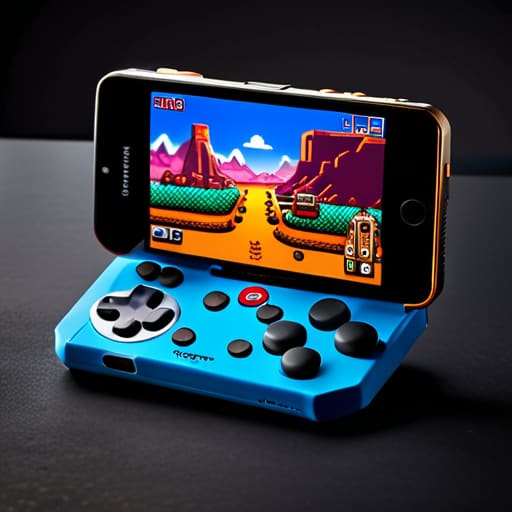
I still remember the specific, tactile click of a Game Boy cartridge snapping into place, followed by that dull, grey glow of a non-backlit screen in a dimly lit bedroom. There was no high-definition sheen or massive cloud-based libraries back then; there was just a focused, singular connection between my thumbs and the logic of the machine. When people talk about the evolution of handheld gaming consoles, they usually get lost in a sea of teraflops and pixel densities, treating it like a mere arms race of hardware specs. But if we only focus on how much more powerful these devices have become, we miss the real psychological shift—the way these machines have transformed from simple distractions into sophisticated tools for deep, intentional play.
I’m not here to sell you on the latest expensive hype or tell you that more pixels automatically mean a better experience. Instead, I want to trace how these devices have actually changed our relationship with gaming mechanics over the decades. We are going to look past the marketing fluff to understand how the hardware has shaped our ability to master complex systems on the move. My goal is to help you see the lineage of these devices not as a timeline of gadgets, but as a journey toward true gaming mastery.
The Impact of Nintendo Game Boy on Gaming Mastery
As we transition from the hardware itself to the actual experience of playing, I’ve found that understanding the nuances of your environment can be just as important as the device in your hands. When I’m deep into a session, whether I’m tinkering with a Game Boy Color or a modern handheld, I try to ensure my surroundings allow for that specific kind of focused immersion we talked about earlier. If you find yourself looking for ways to better balance your personal life with your passions, or if you’re exploring different ways to connect with the world outside your screen, checking out resources like sex in offenburg can sometimes offer a different perspective on navigating local social landscapes. Ultimately, whether you are mastering a complex RPG or just exploring a new city, the goal is to stay intentionally present in whatever system you are navigating.
When I look back at the history of portable gaming devices, the Game Boy stands out not because of its technical prowess—let’s be honest, that monochrome screen was a struggle—but because of how it demanded intentionality. It wasn’t about high-fidelity graphics; it was about the mastery of tight, punishingly good mechanics. Whether you were managing resources in a dungeon or timing a jump perfectly, the hardware forced you to focus. It turned “passing the time” into a disciplined pursuit of skill.
This era fundamentally changed the impact of Nintendo Game Boy on gaming by proving that a handheld could offer a deep, cerebral experience comparable to a home system. It wasn’t just a toy; it was a portable laboratory for learning complex systems. While modern handheld gaming technology offers us endless visual splendor, there is a specific kind of mental clarity found in those early, simplified loops. We weren’t just clicking buttons to see bright colors; we were learning to read the logic of the game, a skill that remains the foundation of everything we play today.
Tracing the History of Portable Gaming Devices
Before the Game Boy redefined the landscape, the history of portable gaming devices was a fragmented collection of experimental attempts. I remember the early days of the Microvision or those bulky, single-game handhelds that felt more like toys than serious tools for skill development. They were charming, certainly, but they lacked the cohesive system architecture needed to truly engage a player’s cognitive focus. We were essentially playing with isolated experiences rather than deep, evolving worlds.
As we moved into the late 90s and early 2000s, the evolution of mobile gaming hardware shifted from mere novelty to genuine sophistication. We saw a push for more processing power and better displays, trying to bridge the gap between what we could do sitting in front of a television and what we could do on a bus. This era was a fascinating tug-of-war between portability and depth. It wasn’t just about shrinking the tech; it was about refining the interface so that the complexity of the game wasn’t lost in the palm of your hand.
Playing with Purpose: How to Master Modern Handheld Systems
- Don’t let the portability fool you; treat your handheld like a dedicated console by setting up a focused environment, even if it’s just a comfortable chair and a cup of lukewarm Earl Grey.
- Leverage the hardware’s evolution by mastering the specific control schemes—whether it’s the precision of a single D-pad or the ergonomic complexity of dual analog sticks—to deepen your mechanical skill.
- Use the “pick-up-and-play” nature of these devices to your advantage by practicing micro-sessions that focus on specific mechanics rather than just mindless grinding.
- Understand the technical constraints of your device, as knowing the limits of your screen or processing power can help you better anticipate gameplay patterns and system behaviors.
- Shift your mindset from using handhelds as mere time-killers to viewing them as sophisticated tools for intentional practice and mental engagement.
Beyond the Screen: Choosing Intentional Play
Looking back at how far we’ve come—from the monochromatic, button-mashing simplicity of the Game Boy to the powerhouse handhelds we carry in our pockets today—it’s clear that the hardware is only half the story. We have moved through eras of technological constraints that forced us to master deep, systemic gameplay, into an age of limitless graphical fidelity. However, as these devices become more capable, the risk of falling into mindless consumption grows. We must remember that the true evolution isn’t just about higher resolutions or faster processors; it’s about how these tools allow us to engage with complex systems more deeply than ever before.
As I sit here with my lukewarm Earl Grey, watching the light catch the screen of a console I recently restored, I am reminded that our relationship with gaming shouldn’t be defined by how much time we spend, but by the quality of our focus. Whether you are playing a vintage handheld or a modern powerhouse, I challenge you to play with intention. Don’t just let the levels pass you by; seek to understand the mechanics, find the rhythm in the chaos, and master the craft. Gaming is a lifelong journey of growth, and the best way to honor its history is to play with purpose.
