I remember sitting on my floor in 1992, the glow of a heavy CRT television illuminating my living room, feeling that pure, unadulterated sense of discovery. Back then, a digital horizon felt like a promise. Fast forward to today, and I often find myself staring at a massive, sprawling map only to feel a profound sense of hollow exhaustion. We’ve reached a point where developers mistake sheer scale for depth, cluttering our screens with endless icons and repetitive tasks that do nothing but inflate playtimes. This modern approach to open world design has largely abandoned the magic of true exploration in favor of a glorified checklist, turning what should be an odyssey into a mindless grind.
I’m not here to tell you which games have the prettiest vistas or the largest maps. Instead, I want to pull back the curtain on the mechanics that actually matter. We are going to look past the marketing hype to analyze how intentionality—or the lack thereof—shapes your experience. My goal is to help you recognize the difference between a world that respects your intelligence and one that simply consumes your time. Let’s learn how to navigate these systems with purpose, rather than just wandering aimlessly through the noise.
Table of Contents
- Beyond the Map Landmark Based Navigation and World Building Techniques
- The Art of Non Linear Progression and Player Agency in Gaming
- Decoding the Sandbox: 5 Ways to Play with Intent
- Mastering the Open World: Three Pillars of Intentional Play
- The Psychology of Space
- Decoding the Horizon
- Frequently Asked Questions
Beyond the Map Landmark Based Navigation and World Building Techniques
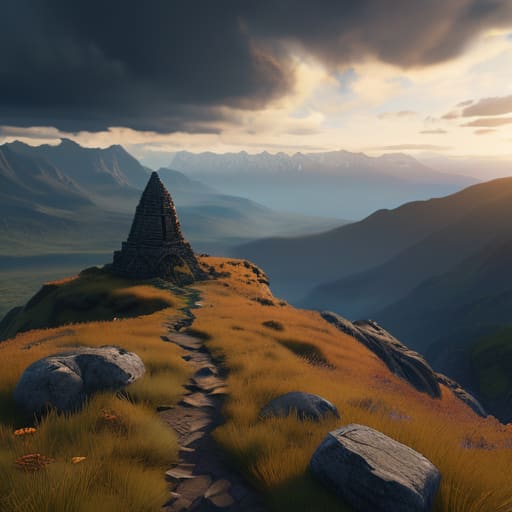
When I was younger, navigating a game meant staring at a mini-map in the corner of the screen, frantically matching icons to the terrain. It was a chore, not an experience. Modern developers have moved toward much more sophisticated landmark-based navigation, where the environment itself acts as your compass. Instead of following a glowing waypoint, you’re looking for a jagged mountain peak or a strangely glowing tower on the horizon. This shift forces you to actually look at the world, transforming a simple traversal task into an act of observation.
This is where effective world building techniques truly shine. A well-placed structure isn’t just eye candy; it serves as a psychological anchor. When a designer places a massive, crumbling citadel in the distance, they aren’t just filling space—they are creating a sense of scale and a silent invitation to explore. It turns the landscape into a readable map of history and intent. By utilizing these visual cues, games can foster a sense of organic discovery that a UI-heavy approach simply cannot replicate, allowing you to navigate by instinct rather than by instruction.
The Art of Non Linear Progression and Player Agency in Gaming
The real magic of a well-constructed world isn’t found in a checklist of icons on a mini-map, but in the feeling that your choices actually carry weight. True player agency in gaming occurs when the developer steps back and allows the systems to interact in ways they didn’t explicitly script. When a game offers non-linear progression, it stops being a guided tour and starts becoming a personal journey. I’ve always found that the most memorable moments aren’t the ones where I followed a quest marker, but the ones where I decided to ignore the “main” path to see what happened in the periphery.
This is where we see the beauty of emergent gameplay mechanics taking center stage. Instead of a rigid, A-to-B structure, the world becomes a sandbox of cause and effect. Whether it’s using a physics mechanic to bypass a guarded gate or stumbling upon a hidden faction through sheer curiosity, these moments feel earned because they weren’t forced upon us. When designers respect our intelligence by providing tools rather than just instructions, they transform the experience from mindless consumption into a meaningful mastery of the environment.
Decoding the Sandbox: 5 Ways to Play with Intent
- Stop following the golden trail. Most modern open worlds use visual breadcrumbs to lead you by the nose, but true mastery comes from ignoring the UI and learning to read the landscape itself. When you stop relying on the mini-map, you start actually seeing the world.
- Treat every side quest as a system test. Don’t just clear icons off your map like it’s a chore list. Instead, look at how a specific quest’s mechanics—be it stealth, combat, or dialogue—interact with the surrounding environment. Every mission is a lesson in how the game’s rules function.
- Respect the rhythm of the world. Open worlds aren’t just static playgrounds; they have internal cadences. Learn when to push through a high-intensity combat zone and when to pull back and observe the environmental storytelling. Pacing is a skill, not just something the developers decide for you.
- Master the economy of movement. Whether it’s managing stamina, fuel, or cooldowns, the way you traverse a massive map is a mechanical puzzle. Don’t just sprint aimlessly; calculate your pathing to minimize resource drain and maximize your tactical positioning.
- Look for the “Why” behind the clutter. When you encounter a dense cluster of loot or a strange landmark, don’t just consume it. Ask yourself what this tells me about the world’s logic. Understanding the developer’s intent behind the placement of objects turns mindless looting into meaningful exploration.
Mastering the Open World: Three Pillars of Intentional Play
Stop treating the map like a checklist; instead, learn to read the environmental cues and landmarks that turn a sprawling landscape into a coherent, navigable system.
True agency comes from understanding the game’s underlying mechanics, allowing you to move from reactive wandering to proactive, strategic exploration.
Embrace the non-linear nature of these worlds by setting your own objectives, ensuring your time spent is a deliberate pursuit of mastery rather than mindless traversal.
The Psychology of Space
A truly great open world isn’t a playground of endless distractions; it’s a conversation between the developer’s systems and the player’s intent, where every horizon offers a puzzle to solve rather than just a place to wander.
Delia Okonkwo
Decoding the Horizon
When we strip away the flashy graphics and the endless checklists, we see that great open world design is really about the harmony between navigation and autonomy. We’ve looked at how landmarks act as silent guides, pulling us through a landscape without the need for a cluttered mini-map, and how true agency comes from a world that respects our ability to choose our own path. It isn’t enough for a map to be large; it must be meaningful. To truly master these spaces, we have to move past the urge to simply clear icons off a screen and instead begin to read the environment as a cohesive, living system that reacts to our presence and our decisions.
As I sit here with my tea, watching the glow of a handheld screen, I am reminded that the most profound gaming experiences aren’t found in the destination, but in the intentionality of the journey. Don’t let a massive map turn you into a mindless consumer of content. Instead, approach every vast expanse as a puzzle to be understood and a rhythm to be felt. When you stop chasing completion percentages and start playing with purpose, you realize that the world isn’t just something to inhabit—it is a complex masterpiece waiting for you to master its mechanics.
Frequently Asked Questions
How can developers balance the freedom of non-linear progression without making the player feel completely lost or without purpose?
The trick lies in providing “invisible scaffolding.” You can’t just drop a player into a sandbox and hope for the best; that’s how engagement dies. Instead, developers should use systemic breadcrumbs—environmental storytelling, subtle audio cues, or reactive NPC dialogue—that suggest a direction without forcing it. It’s about offering a hierarchy of goals: immediate tactical needs that keep them moving, underpinned by larger, meaningful systemic objectives that give their wandering a sense of inevitable purpose.
At what point does a massive, landmark-driven world stop being an immersive system and start feeling like a checklist of chores?
It happens the moment the “why” disappears. When a landmark exists solely to host a generic icon rather than to tell a story or challenge your understanding of the world, the system breaks. If I’m traversing a beautiful valley just to clear a waypoint because a UI element told me to, I’m no longer playing; I’m performing data entry. Immersion dies when the world stops being a playground and starts feeling like a to-do list.
How do we distinguish between a world that is truly "open" and one that simply uses scale to mask a lack of meaningful mechanical depth?
It comes down to the difference between a playground and a museum. A museum is vast, impressive, and static; you walk through it, but you don’t change it. A true open world, however, is a living system. If you can traverse ten miles of terrain without the environment reacting to your presence, your gear, or your previous choices, you aren’t playing in an open world—you’re just wandering through a very large, very empty backdrop.
