
I remember sitting on my bedroom floor in 1988, the hum of a heavy CRT television warming my face, staring at a screen that felt like an unsolvable puzzle. I wasn’t just playing; I was trying to decode a language of inputs and responses that felt entirely alien. Most people think achieving mechanics mastery is about having the fastest reflexes or the most expensive peripheral setup, but they couldn’t be more wrong. It isn’t about how quickly your fingers move; it’s about the psychological bridge between your intent and the game’s logic.
I’m not here to sell you on some “pro-gamer” secret or a complex macro setup that does the work for you. Instead, I want to help you strip away the noise and look at the underlying systems that actually drive success. We are going to move past the mindless button-mashing and focus on how to play with intention. My goal is to give you a practical, grounded framework for understanding these patterns, so you can stop fighting the controller and start mastering the machine.
Table of Contents
Decoding Fighting Game Fundamentals Through Systemic Understanding

If you’ve ever sat in front of a fighting game, feeling like your hands are moving a split second slower than your brain, you aren’t alone. It’s easy to blame “lag” or “bad luck,” but more often than not, the issue lies in a lack of systemic awareness. To truly progress, you have to move past the chaos of a match and look at the math. This means grasping frame advantage theory—understanding exactly how much time you have to act after a hit connects. When you realize that every move is a timed exchange rather than a frantic scramble, the game transforms from a test of reflexes into a high-speed chess match.
This shift requires more than just playing more matches; it requires intentionality. I find that most players plateau because they skip the “boring” stuff. If you want to bridge the gap between seeing a move and executing a counter, you need to focus on training mode drills that isolate specific muscle memories. We aren’t just practicing combos; we are refining our neuromuscular coordination to ensure that our inputs become second nature. Once the execution is automated, your brain is finally free to focus on the actual strategy of the fight.
Optimizing Controller Inputs for Precision and Purpose
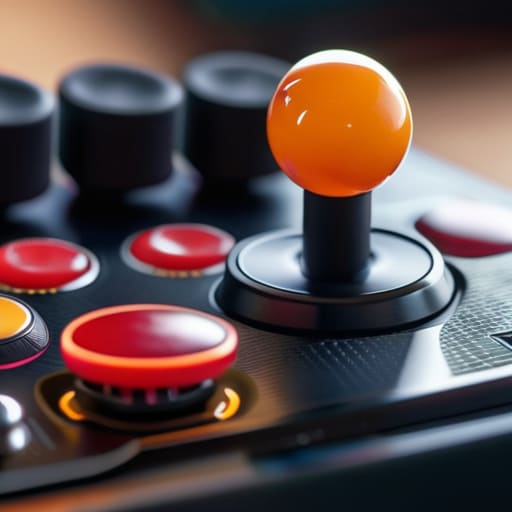
When I sit down to restore an old Game Boy, I’m always struck by how much the physical interface dictates the experience. The same logic applies to high-level play; you cannot achieve true precision if your hardware is working against your intent. Optimizing controller inputs isn’t just about buying the most expensive arcade stick on the market; it’s about finding the tactile feedback that aligns with your natural movements. I’ve found that even a slight adjustment in how I grip my controller can bridge the gap between a missed input and a perfectly timed parry.
Once you have your setup, you need to bridge the gap between thought and action through neuromuscular coordination. This is where many players plateau. They understand the theory, but their hands won’t cooperate under pressure. I recommend spending time in training mode drills that focus specifically on muscle memory rather than just practicing combos. Don’t just run through sequences; focus on the rhythm and the exact tension required for each press. When your inputs become subconscious, you finally free up the mental bandwidth needed to actually read your opponent.
Five Ways to Move From Muscle Memory to Mindful Mastery
- Stop the mindless grind. It’s easy to spend three hours repeating the same combo, but if you aren’t analyzing why a move failed or why your timing felt off, you’re just practicing your mistakes. Treat every session like a study, not just a workout.
- Learn the “Why” behind the “What.” When you encounter a mechanic—like a parry window or a stamina bar—don’t just react to it. Take a moment to step back and understand the logic the developers used to balance that system. Once you see the math, the execution becomes intuitive.
- Embrace the deliberate pause. In the heat of a boss fight or a competitive match, our instinct is to panic-button. Mastery comes from the ability to stay calm, observe the game’s rhythm, and wait for the specific opening the system has provided you.
- Audit your sensory input. Sometimes we fail a mechanic because we aren’t actually “listening” to the game. Whether it’s a subtle audio cue before an attack or a specific visual flicker, pay attention to the signals the game is sending you. They are the roadmap to success.
- Respect the learning curve. My psychology background tells me that frustration is often just a sign of cognitive overload. If a mechanic feels impossible, break it down into smaller, digestible pieces. You don’t master a complex system all at once; you master it one small interaction at a time.
The Core Pillars of Intentional Play
Stop treating mechanics as obstacles to overcome and start seeing them as the language of the game; once you understand the syntax, you can actually start having a conversation with the system.
Mastery isn’t about how fast your fingers can move, but how much thought you can pack into every single input to ensure nothing is wasted.
True progress happens when you shift from reactive button-mashing to proactive decision-making, moving from simply playing the game to understanding why it’s asking you to play it that way.
## The Shift from Reflex to Intent
Mastery isn’t about how fast your fingers can move; it’s about the quiet moment of clarity when you stop reacting to the screen and start anticipating the system itself.
Delia Okonkwo
The Path Forward
Mastering a game isn’t about memorizing a single combo or hitting a lucky streak; it’s about the synthesis of everything we’ve discussed. It starts with understanding the deep, systemic logic of the genre—whether that’s the frame data in a fighting game or the physics of a platformer—and moves into the physical execution of your inputs. When you stop treating your controller like a collection of buttons and start seeing it as a precision instrument, the entire experience shifts. You move from being a passenger in the game’s logic to being the one driving it. By refining your hardware setup and your mental model of the mechanics, you effectively strip away the noise and leave only the pure, intentional gameplay underneath.
As I sit here with my tea, watching the light fade on my workbench, I’m reminded that the pursuit of skill is never truly finished. There will always be a more complex system to decode or a more subtle nuance to uncover. Don’t let the frustration of a difficult level or a losing streak discourage you. Instead, view those moments as data points—evidence that there is still something left to learn. Gaming is a lifelong evolution, and the real magic happens when you stop playing on autopilot and start engaging with the world the developers built. Find your rhythm, respect the systems, and most importantly, play with purpose.
Frequently Asked Questions
How do I know when I've actually mastered a mechanic versus just getting lucky with a specific playstyle?
Luck is a one-off event; mastery is a repeatable process. If you win because you hit a high-risk move that happened to land, that’s luck. If you win because you understood the frame data, predicted the opponent’s spacing, and executed the move under pressure—that’s mastery. Ask yourself: can I replicate this success when the circumstances change? If your results depend on the “feeling” of a run rather than a conscious understanding of the system, you’re still just riding the wave.
Is it worth spending hours practicing a single complex input if the game's meta shifts every few months?
It’s a valid concern, but don’t mistake a “meta” for the foundation. The meta is just the current fashion; the mechanics are the grammar. If you spend hours mastering a complex input, you aren’t just learning a move—you’re building muscle memory and cognitive discipline. Even if that specific combo gets nerfed, the precision you gained stays with you. Master the system, not just the current trend, and you’ll be ready when the shift happens.
How can I maintain this level of intentionality without burning out or losing the pure joy of playing?
The trick is knowing when to put the controller down. If you treat every session like a rigorous training seminar, you’ll hit a wall fast. I’ve learned that mastery requires rest; your brain processes those complex patterns while you’re not playing. Balance your deep-dive sessions with “low-stakes” play—just run through a level or explore a world without a specific goal. Keep the intention for the practice, but leave room for the wonder.
