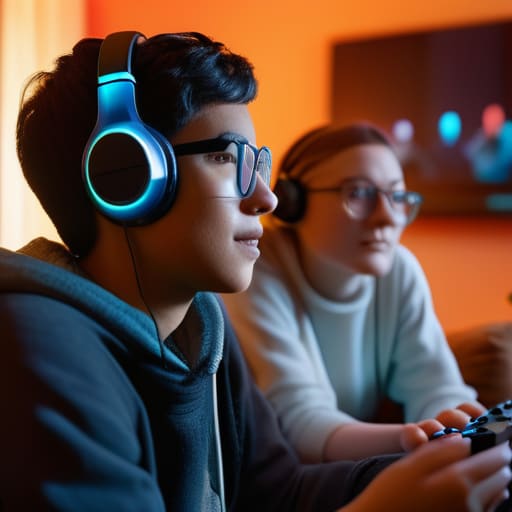
I remember sitting in my bedroom in the early 90s, the glow of a heavy CRT television warming my face, feeling like the world of high-level play was a gated community I wasn’t invited to join. Back then, the conversation around gaming and inclusivity wasn’t even a whisper; it was a silent, heavy barrier that suggested if you didn’t fit a very specific, narrow mold, you were merely a spectator. We didn’t talk about “representation” in the way people do now—we just felt the subtle, systemic exclusion that kept certain voices from ever mastering the mechanics or shaping the culture.
I’m not here to give you a lecture on corporate buzzwords or performative gestures that don’t actually change the player experience. Instead, I want to look at how we can move past the surface-level fluff to build environments where true skill can flourish regardless of who is holding the controller. I promise to provide a grounded, psychological perspective on how we can foster real accessibility and belonging, ensuring that the next generation of players can focus on what matters most: mastering the system and finding genuine joy in the play.
Table of Contents
- Inclusive Game Design Principles for True Skill Mastery
- Gaming Hardware for Disabilities Leveling the Playing Field
- Small Adjustments, Big Gains: How to Cultivate an Inclusive Playspace
- The Bottom Line: Playing with Intention and Accessibility
- ## Redefining the Barrier to Entry
- The Path Toward a Universal Playfield
- Frequently Asked Questions
Inclusive Game Design Principles for True Skill Mastery
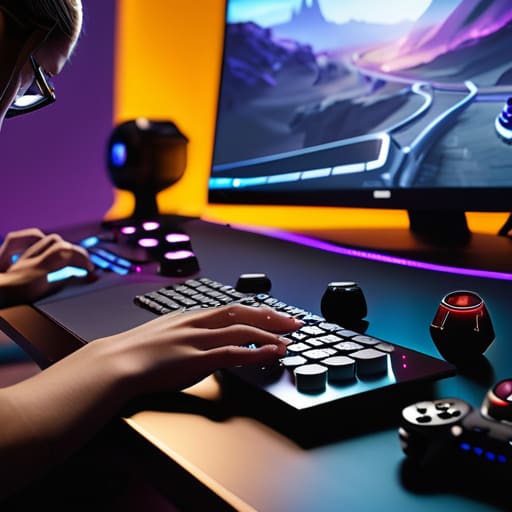
When we talk about skill, we often default to a very narrow definition of what a “gamer” looks like or how they interact with a controller. But if we want to truly deepen the medium, we have to look at inclusive game design principles through the lens of accessibility. It isn’t just about adding a few subtitle options; it’s about ensuring the mechanical depth of a game isn’t gated by physical or cognitive limitations. For instance, when developers integrate specialized gaming hardware for disabilities, they aren’t “dumbing down” the experience. On the contrary, they are removing the friction that prevents a player from actually engaging with the complex systems the developers worked so hard to build.
True mastery requires a clear connection between intent and execution. If a player’s input is hindered by a lack of adaptive settings, they never truly get to experience the intellectual satisfaction of overcoming a difficult level. By designing for a wider spectrum of human ability, we expand the arena. We move away from a culture of exclusion and toward one where the only thing standing between a player and victory is their own strategic thinking.
Gaming Hardware for Disabilities Leveling the Playing Field

While we often focus on software, we can’t ignore the physical gatekeepers of the experience: the controllers. For years, the industry standard was a “one size fits all” approach that, quite frankly, left a massive portion of the player base on the sidelines. But the landscape is shifting. We are seeing a surge in specialized gaming hardware for disabilities, from adaptive controllers that allow for single-handed play to highly customizable button layouts that accommodate varying degrees of motor control. These aren’t just “assistive tools”; they are the keys that unlock the ability to engage with complex systems on equal footing.
When the hardware matches the player’s capability, the focus shifts from the struggle of input to the mastery of mechanics. This is where the real magic happens. By reducing the physical friction of play, we allow the cognitive and strategic elements of a game to take center stage. It’s about ensuring that a player’s skill is defined by their quick thinking and tactical depth, rather than being limited by their physical interface. Bridging this gap is essential for breaking barriers in esports, ensuring that the most competitive arenas are truly open to anyone with the drive to compete.
Small Adjustments, Big Gains: How to Cultivate an Inclusive Playspace
- Audit your settings before the first boss fight. If you’re hosting a session or building a community, encourage everyone to dive into the accessibility menu immediately; toggling high-contrast modes or remapping buttons isn’t “cheating,” it’s optimizing your interface for peak performance.
- Watch your language in the heat of competition. We’ve all been there—the adrenaline spikes during a difficult level—but using ableist slang as a shorthand for frustration shuts down the mental flow and alienates players who rely on those specific mechanics to compete.
- Prioritize sensory awareness in your setups. If you’re playing in a group, be mindful of sudden audio spikes or strobe-heavy visual effects; true mastery requires a calm, focused brain, and sensory overload is the quickest way to break someone’s concentration.
- Advocate for “Intentional Design” in your feedback. When developers ask for input, don’t just ask for “more features”—ask for more ways to interact with the system. Whether it’s text-to-speech or simplified control schemes, better input methods lead to deeper mastery.
- Foster a culture of “Skill over Spectacle.” In community spaces, shift the focus from how “flashy” a player is to how effectively they navigate the game’s systems. When we value the technical execution of the mechanics rather than just the aesthetic of the play, we make room for every type of player to excel.
The Bottom Line: Playing with Intention and Accessibility
Inclusivity isn’t a checkbox for developers; it is a fundamental design requirement that ensures the mechanics of a game are accessible to every player, regardless of their physical or cognitive approach.
Mastering a game requires the right tools, and that means advocating for hardware and software adaptations that remove barriers rather than punishing players for their limitations.
When we widen the gates of who can play, we don’t dilute the challenge—we enrich the entire gaming culture with more diverse perspectives and a deeper collective understanding of what it means to master a system.
## Redefining the Barrier to Entry
“Inclusivity isn’t a charity case in game design; it’s a technical necessity. When we build barriers—whether they’re physical, sensory, or cognitive—we aren’t just excluding people; we are intentionally thinning the pool of talent and perspective that makes gaming a truly complex, evolving system worth mastering.”
Delia Okonkwo
The Path Toward a Universal Playfield
When we look at the landscape of modern gaming, it is clear that inclusivity isn’t just a checkbox for developers—it is the foundation of a healthy ecosystem. We have explored how intentional design principles allow players to engage with mechanics more deeply, and how specialized hardware is finally breaking down the physical barriers that once kept talented individuals on the sidelines. By prioritizing accessibility, we aren’t just being “nice”; we are ensuring that the complexity and beauty of game systems are available to anyone with the drive to master them. When the tools are right, the only thing that should matter is a player’s strategic intent and skill.
As I sit here with my tea, watching the glow of a handheld I just finished restoring, I am reminded that gaming has always been about connection. It is about the shared triumph of overcoming a difficult boss or the quiet satisfaction of mastering a new system. If we continue to push for a more inclusive culture, we don’t just expand the market; we expand the very definition of what it means to be a gamer. Let’s stop viewing accessibility as an afterthought and start seeing it for what it truly is: the key to unlocking human potential across every level, every genre, and every generation.
Frequently Asked Questions
How can developers balance deep, complex mechanics with accessibility features without diluting the challenge for veteran players?
The trick lies in decoupling “difficulty” from “mechanical friction.” A veteran player wants a challenge that tests their decision-making and reflexes, not their ability to navigate a clunky UI or struggle with a specific physical input. By implementing granular accessibility—like remappable controls or visual cues—you aren’t lowering the ceiling; you’re just removing the barriers to entry. True mastery should be about outsmarting the system, not fighting the interface itself.
Beyond specialized hardware, what specific software design shifts are most effective at reducing barriers for neurodivergent gamers?
We need to move past the idea that “one size fits all” works for cognitive processing. For neurodivergent players, the most effective shifts are in sensory management and information architecture. This means implementing robust options for toggling visual clutter, adjusting audio frequencies to prevent sensory overload, and providing clear, non-linear quest tracking. When we reduce the cognitive load required just to navigate the UI, we allow players to focus on what actually matters: mastering the game’s systems.
As someone who views gaming as a lifelong pursuit, how can we ensure the next generation of designers prioritizes inclusive systems from the initial concept phase rather than as an afterthought?
We have to stop treating accessibility as a “patch” or a checklist for the end of development. If we want the next generation to get this right, we need to integrate inclusive systems into the core mechanics from day one. I want to see designers studying cognitive load and motor variability during the prototyping phase, not just the polishing phase. When inclusivity is baked into the foundation, it becomes a tool for mastery, not a compromise.
