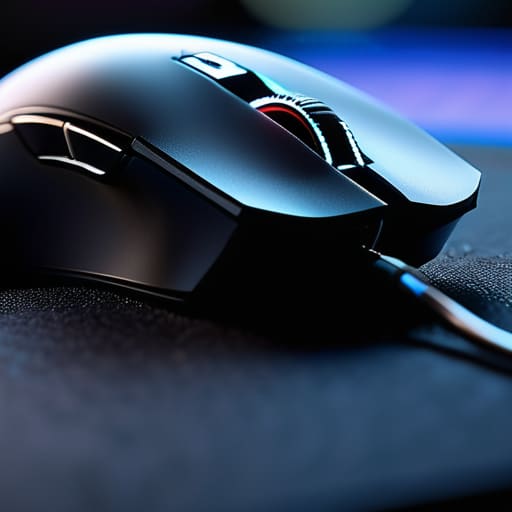
I was sitting at my desk last night, nursing a cup of lukewarm Earl Grey, when I realized I was fighting my hardware more than my opponents. I had just spent way too much money on a “professional grade” peripheral that felt like I was trying to drag a brick across my mousepad. The industry loves to push these heavy, RGB-laden monstrosities as if more features automatically equate to better skill, but they’re ignoring the fundamental physics of the hand. When it comes to gaming mouse weight, the marketing hype is often a direct distraction from the actual mechanics of intentional movement.
I’m not here to sell you on the latest overpriced gadget or feed you the usual nonsense found in sponsored reviews. Instead, I want to strip away the fluff and look at how mass actually impacts your cognitive load and reaction time. I’m going to share what I’ve learned from years of analyzing game systems and tactile feedback to help you find your personal sweet spot. My goal is to help you choose a weight that feels like an extension of your own hand, allowing you to stop fighting your gear and start mastering the game.
Table of Contents
- Understanding Inertia in Gaming Mice for Intentional Control
- Mouse Weight vs Flick Shots Precision Over Speed
- Finding Your Equilibrium: 5 Practical Tips for Selecting Your Weight
- Finding Your Equilibrium: The Core Lessons
- The Psychology of the Click
- Finding Your Equilibrium
- Frequently Asked Questions
Understanding Inertia in Gaming Mice for Intentional Control
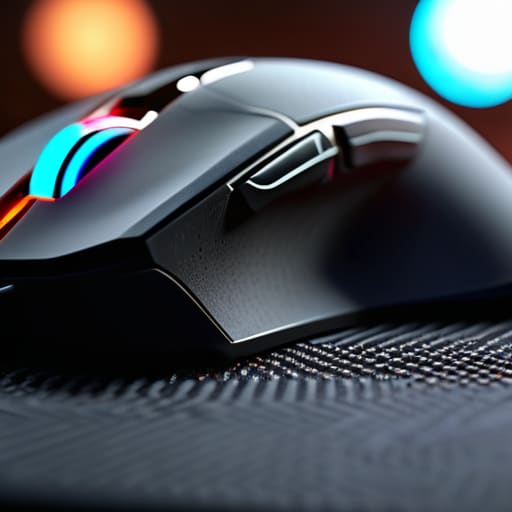
To understand why your aim feels “off,” we have to look past the specs and talk about physics—specifically, inertia in gaming mice. When you move your hand, you aren’t just moving plastic; you are managing momentum. A heavier mouse carries more kinetic energy, meaning once it starts moving, it wants to keep moving. This can be a nightmare when you’re trying to make micro-adjustments in a high-stakes firefight. If your mouse has too much mass, you’ll find yourself constantly overcorrecting because your brain expects the device to stop the moment your hand does, but the physics simply won’t allow it.
This is where the trade-off becomes a tactical decision. While some players crave that heavy, planted feel for stability, many are turning toward ultra-lightweight gaming mice benefits to minimize that stopping distance. When you reduce the mass, you reduce the force required to change direction. This isn’t just about speed; it’s about the cognitive load. When the hardware responds instantly to your intent, you stop fighting the tool and start mastering the system.
Mouse Weight vs Flick Shots Precision Over Speed
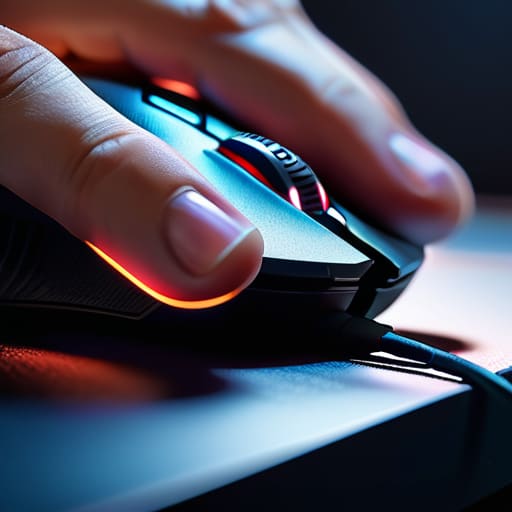
When we talk about mouse weight vs flick shots, there is a common misconception that lighter is always better for speed. While it’s true that a lighter mouse allows for faster acceleration, speed without control is just chaos. In high-stakes FPS scenarios, a flick shot isn’t just a quick movement; it’s a precise calculation of distance and deceleration. If your mouse is too light, you might find yourself overshooting your target because you lack the physical resistance needed to stop the glide exactly where you intended.
This is where the psychology of muscle memory comes into play. I’ve noticed that when I’m testing different setups, the ergonomics of lightweight mice can sometimes feel “twitchy” if they aren’t paired with a stable grip. To master the mechanic, you have to find the sweet spot where the hardware supports your intent rather than fighting it. You want a tool that responds to your micro-adjustments without feeling like it’s drifting away from you. True precision comes from minimizing the gap between your brain’s command and the cursor’s arrival.
Finding Your Equilibrium: 5 Practical Tips for Selecting Your Weight
- Audit your current grip style before buying; if you’re a fingertip gamer, a lighter mouse offers the agility you need, but a palm gripper might actually benefit from the stability of a slightly heavier chassis.
- Don’t fall for the “lighter is always better” hype; while ultra-light mice are trending, a mouse that lacks enough mass can feel twitchy and lead to overshooting your targets during high-stakes moments.
- Test the balance point, not just the total grams; a mouse that is heavily weighted toward the rear will feel cumbersome and disrupt your muscle memory, regardless of how light it claims to be on the box.
- Consider your mousepad’s friction as part of the equation; if you use a “control” pad with high surface tension, a lighter mouse can help you break static friction more easily, whereas a speed pad might require a bit more weight to keep your aim steady.
- Practice with your new setup for at least a week to let your nervous system adapt; changing weight is a physiological shift, and you need to move past the initial awkwardness to truly master the new level of intentional control.
Finding Your Equilibrium: The Core Lessons
Stop chasing the lightest mouse on the market; weight is a tool for stability, not just a race to the bottom.
Use heavier mice to master muscle memory and control inertia, or lighter mice to reduce fatigue during high-intensity sessions.
True precision comes from matching your hardware to your specific mechanical needs, allowing you to play with intention rather than fighting your equipment.
The Psychology of the Click
“A mouse isn’t just a peripheral; it’s an extension of your nervous system. When you find the right weight, you stop fighting the hardware and start communicating directly with the game’s mechanics.”
Delia Okonkwo
Finding Your Equilibrium
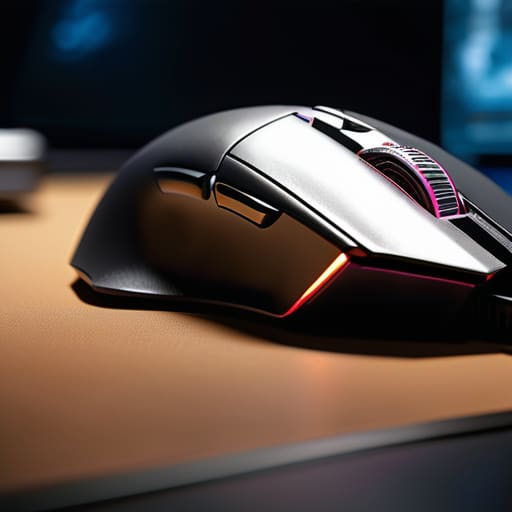
At the end of the day, choosing a mouse isn’t about chasing the lowest number on a spec sheet or following a trend. We’ve looked at how inertia dictates your ability to stop a movement on a dime and how the weight of your tool directly influences the success of your flick shots. It’s a delicate trade-off between the effortless glide of a lightweight model and the stabilizing presence of something with a bit more heft. Whether you prefer the agility required for high-speed tracking or the deliberate, grounded control needed for precision aiming, your choice should be a reflection of your specific mechanical needs. There is no universal “best” weight; there is only the weight that allows you to execute your intentions without the hardware getting in your way.
As I sit here with my tea, watching the light fade over my desk, I’m reminded that our relationship with our gear evolves just as we do. The mouse you used five years ago might not serve the player you are becoming today. Don’t be afraid to experiment, to fail, and to recalibrate your setup as your skill deepens. Gaming is a lifelong pursuit of mastery, and that mastery begins with the tools you choose to hold. Treat your setup not as a collection of gadgets, but as an extension of your own agency. Play with purpose, refine your mechanics, and most importantly, find the joy in the precision.
Frequently Asked Questions
How do I find the "sweet spot" weight for my specific hand size and grip style?
Finding your sweet spot isn’t about following trends; it’s about ergonomics and physics. If you use a fingertip grip, a lighter mouse reduces strain during micro-adjustments. For a palm grip, a slightly heavier weight can offer the stability your hand needs to feel grounded. I suggest testing various weights with a “drag test”: move the mouse in small circles. If it feels flighty, go heavier; if it feels sluggish, lighten the load.
Is it worth investing in an ultra-lightweight mouse if I primarily play tactical shooters that require stability?
Honestly, I’d tell you to hold off. If your priority is stability in tactical shooters, an ultra-lightweight mouse might actually work against you. While the speed is tempting, those featherweight models can make micro-adjustments feel jittery or “floaty.” For precision-heavy games, a bit of extra mass provides the natural inertia needed to steady your hand. Don’t chase the trend; choose the weight that helps you maintain intentional, calm control during a clutch.
How much does mousepad friction change the way a heavier mouse actually feels during high-stakes movement?
It’s a subtle shift, but a critical one. Think of friction as the stabilizer for that extra mass. On a high-friction cloth pad, a heavier mouse feels more “planted”—it resists those micro-jitters, which can actually help you maintain composure during high-stakes moments. However, if you’re on a slick glass or hard pad, that weight suddenly feels like an anchor you’re fighting to drag. You have to balance the physical mass with the surface resistance to ensure your movements remain intentional, not labored.
