I remember the specific, metallic scent of ozone and heated plastic that drifted from the arcade cabinets my father used to take me to in the late 80s. Back then, a “gaming lifestyle” wasn’t about owning a $5,000 liquid-cooled rig or a chair that looks like it belongs in a cockpit; it was about the tactile connection between your hands and a joystick, and the mental grit required to beat a level on your first try. Today, I see so much noise surrounding the industry—endless cycles of consumerism designed to make you feel like your setup is obsolete the moment you buy it.
I’m not here to sell you on the latest RGB-lit gimmick or tell you that you need more gear to be a “real” gamer. Instead, I want to talk about how we can reclaim our time and our focus. My goal is to help you transition from mindless consumption into a more intentional way of playing. I’ll be sharing my own observations on how to build a sustainable, skill-focused routine that respects your time and your brain, ensuring that every hour you spend in front of a screen is an investment in your own mastery.
Table of Contents
Mastering Gaming Setup Ergonomics for Peak Performance
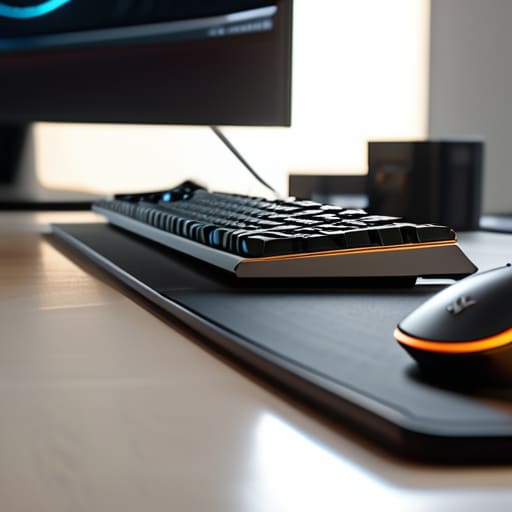
We often talk about frame rates and input lag, but we rarely discuss the physical toll of a poorly optimized environment. If you are hunching over a desk for four hours straight, you aren’t just inviting back pain; you are actively degrading your cognitive focus. True gaming setup ergonomics isn’t about buying the most expensive RGB-lit chair on the market; it’s about the geometry of your body in relation to your peripherals. Your eyes should be level with the top third of your monitor, and your wrists need to remain neutral to avoid the repetitive strain that ends many promising runs.
I’ve spent years studying how physical discomfort bleeds into mental fatigue. When your neck is stiff, your reaction time drops and your decision-making becomes sluggish. Integrating small gaming productivity hacks—like standing stretches every hour or adjusting your monitor height—can significantly extend your sessions without the usual post-game lethargy. We need to treat our bodies like the hardware they are: if the physical chassis is compromised, the software simply cannot perform at its peak.
Prioritizing Mental Health for Gamers in High Stakes Play
We often obsess over frame rates and peripheral latency, but we rarely audit the most critical component of our system: our own minds. When you’re deep in a competitive session or grinding through a complex RPG, the adrenaline can mask a creeping sense of cognitive fatigue. I’ve seen so many players mistake burnout for a lack of skill, when in reality, they’ve simply pushed their nervous systems past the breaking point. Prioritizing mental health for gamers isn’t some soft, secondary concern; it is a fundamental requirement for sustained high-level play.
If you find yourself tilting or losing focus, stop trying to “power through” it. That’s not discipline; it’s a recipe for diminishing returns. Instead, treat your mental state like you would a piece of vintage hardware—it requires regular maintenance and careful calibration. Implementing small, intentional breaks isn’t a distraction from the game; it’s a way to ensure you aren’t falling victim to streamer burnout prevention strategies that most pros only learn after they’ve already hit a wall. Learn to recognize when your brain is no longer processing mechanics efficiently, and step away before the frustration becomes a habit.
Beyond the Screen: Five Pillars of an Intentional Gaming Life
- Curate your library with intention. Stop the “infinite scroll” on digital storefronts; instead, select games that challenge your cognitive limits or offer genuine emotional depth, ensuring every hour spent is an investment rather than a drain.
- Implement a structured “cooldown” ritual. Just as I step away from my workbench after a long session of soldering vintage circuits, you need a mental buffer between high-intensity play and sleep to prevent cognitive burnout.
- Treat your physical movement as a mechanic. Think of stretching and mobility not as a chore, but as essential maintenance for your hardware—your body—to prevent the stiffness that kills long-term performance.
- Engage in social play that builds, rather than breaks. Seek out communities that foster constructive critique and shared mastery, avoiding the toxic noise that turns a rewarding hobby into a source of unnecessary cortisol.
- Diversify your input methods. Don’t let your dexterity become one-dimensional; occasionally step away from the controller to engage with different systems, whether that’s tabletop strategy or even a bit of technical writing, to keep your brain’s problem-solving pathways flexible.
The Intentional Player’s Checklist
Treat your physical environment as part of your gear; a poorly optimized setup isn’t just uncomfortable, it’s a mechanical bottleneck that limits your reaction time and long-term consistency.
Guard your mental clarity as fiercely as your frame rate; high-stakes play requires a rested, focused mind, not a burnt-out brain running on autopilot.
Shift your mindset from passive consumption to active mastery by studying the underlying systems of a game rather than just chasing the next dopamine hit.
## The Intentional Player
“A true gaming lifestyle isn’t about how many hours you can sink into a screen; it’s about the quality of your focus and the intention you bring to the mechanics. Stop treating your sessions like a way to kill time and start treating them like a discipline worth mastering.”
Delia Okonkwo
The Path Toward Intentional Play
At the end of the day, a sustainable gaming lifestyle isn’t about having the most expensive peripherals or the highest rank in a competitive ladder. It’s about the harmony between your physical environment and your mental state. We’ve looked at how optimizing your ergonomics can prevent the physical toll of long sessions and how prioritizing your mental health keeps you from burning out when the stakes get high. When you treat your body and mind with the same respect you give your hardware, you stop fighting against yourself and start playing with true intention. It’s the difference between merely surviving a marathon session and actually mastering the mechanics of your own well-being.
As I sit here with my tea, watching the light fade over my workbench, I’m reminded that our relationship with games changes as we age. We move from the frantic button-mashing of our youth to a more nuanced, analytical appreciation of the systems before us. Don’t let your passion become a source of stress or a mindless habit that drains you. Instead, view every session as an opportunity to refine your skills, both in-game and in life. Gaming is a lifelong pursuit, and if you approach it with deliberate focus, you will find that the joy isn’t just in the victory screen, but in the disciplined journey it took to get there.
Frequently Asked Questions
How can I balance a demanding professional career with the time required to actually master complex game mechanics?
Stop trying to grind for hours on weeknights when your brain is already fried from work. You can’t master complex systems through sheer exhaustion. Instead, treat your gaming like a technical deep dive. Spend twenty minutes during a lunch break watching high-level mechanical breakdowns or studying frame data. When you finally sit down to play, you aren’t just “playing”—you’re executing a studied plan. Quality of focus always beats quantity of hours.
What are some practical ways to transition from playing for mindless escapism to playing with more intentionality?
Stop treating your controller like a remote for mindless scrolling. To shift toward intentionality, start by setting a specific objective before you even power on your console. Are you practicing frame-perfect inputs, or are you studying a specific boss’s pattern? I find that keeping a small notebook nearby helps; jotting down a single mechanic you want to improve turns a passive session into a focused study. Play to learn, not just to disappear.
Are there specific cognitive training exercises that can help improve my reaction times and decision-making without causing burnout?
Don’t fall into the trap of mindless “brain training” apps; most of them are just glorified distractions. If you want real results, look toward deliberate practice. Try isolating specific mechanics—like practicing aim trainers for precision or playing high-tempo rhythm games to sharpen sensory processing. The key is the “flow state” threshold. Stop as soon as you feel mental fatigue setting in. True cognitive growth happens in that sweet spot of focused challenge, not through exhaustion.
