
I remember sitting in my dim living room a decade ago, the steam from a forgotten cup of Earl Grey long gone, staring at a boss that felt less like a game mechanic and more like a personal insult. I was mashing buttons with everything I had, fueled by nothing but pure, unadulterated frustration, convinced that I just needed more reflexes. But that’s the lie we often tell ourselves. Most people think mastering a challenge is about raw speed or luck, but they’re missing the point entirely. If you want to actually stop the cycle of mindless repetition, you need to stop playing reactively and start studying the rhythm. Real success comes from applying specific techniques for learning difficult boss patterns, rather than just hoping your thumbs can outrun a programmed sequence.
I’m not here to give you some vague, high-level lecture on “persistence.” I want to talk about the actual psychology of the fight. In this guide, I’m going to break down how to deconstruct a combat loop, how to identify the subtle tells that precede a heavy attack, and how to train your brain to see the logic behind the chaos. We are going to move past the button-mashing phase and into a space of intentional mastery.
Analyzing Enemy Attack Animations for Precise Execution
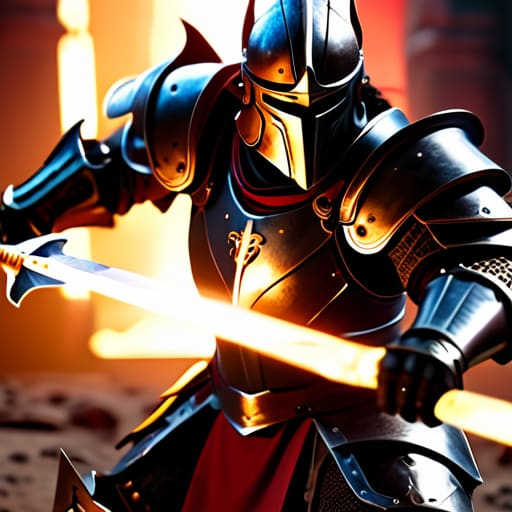
When you’re staring down a boss that seems impossible, your first instinct is likely to panic and dodge wildly. I’ve been there, usually with a cold cup of tea forgotten on my desk. But the secret isn’t speed; it’s observation. You have to stop treating the encounter like a chaotic brawl and start analyzing enemy attack animations as if they were a choreographed dance. Every boss has a “tell”—a subtle shift in weight, a specific glow of a weapon, or a momentary pause before a heavy strike. If you can identify these visual cues, you aren’t just reacting to the damage; you are anticipating the threat before it even manifests.
This level of scrutiny is what bridges the gap between frantic button-mashing and true mastery. By focusing on these specific movements, you begin the process of muscle memory development for gamers, where your hands move instinctively because your brain has already mapped out the rhythm. It’s about finding the cadence within the combat. Once you recognize that a certain shoulder twitch always precedes a sweeping strike, the fight stops being a test of luck and becomes a predictable, solvable system.
Boss Fight Strategy and Preparation for Intentional Mastery
Before you even step back into the arena, you have to acknowledge that victory isn’t just about what happens on the screen; it’s about what happens in your head. I’ve found that effective boss fight strategy and preparation starts long before the first health bar appears. Instead of diving in headfirst and hoping for a lucky break, take a moment to settle your breathing and clear your mental clutter. You aren’t just playing; you are training your brain to recognize specific stressors. This mental groundwork is essential for building the gaming focus and mental endurance required to stay composed when the screen turns red and the pressure mounts.
Once you’re in the thick of it, treat each encounter like a rehearsal. I like to spend my first few attempts purely defensive—not even trying to land a hit, but simply observing the flow. This approach is crucial for muscle memory development for gamers, as it allows your nervous system to map out the danger zones without the panic of a looming death screen. By prioritizing rhythmic observation over mindless aggression, you transform a chaotic struggle into a structured, predictable dance.
The Toolkit for Intentional Mastery
- Stop playing to win and start playing to learn. For your first few attempts, ignore the health bar entirely. Your only goal shouldn’t be to deplete the boss’s life, but to stay alive long enough to see how they move. If you treat the fight like a dance rehearsal rather than a deathmatch, the patterns will reveal themselves much faster.
- Listen to the soundscape. Developers rarely rely on visuals alone; they use audio cues to signal upcoming shifts in combat. A specific metallic clang, a sudden silence, or a change in the musical tempo often precedes a massive area-of-effect attack. If you’re only watching the screen, you’re missing half the information.
- Map out the “safe zones” in your mind. Every boss has a rhythm, and that rhythm creates windows of opportunity. Instead of reacting frantically to every movement, try to identify the specific spots on the arena where you are least vulnerable. Once you know where to stand, you can focus on the boss’s telegraphs rather than your own panic.
- Use your consumables as data points, not just crutches. Don’t just chug a healing potion the moment you take damage. Instead, analyze why you got hit. Was it a mistimed dodge, or did you misread a wind-up? If you use your items purely to survive mistakes without understanding them, you’re just delaying the inevitable.
- Break the fight into phases. Many modern bosses are essentially three or four different games stitched together. Don’t try to master the entire encounter at once. Focus on perfecting your response to Phase One until it feels like second nature, then move on. Trying to learn the whole sequence in one go is a recipe for mental burnout.
The Mastery is in the Method
At the end of the day, overcoming a punishing boss isn’t about having lightning-fast reflexes or a magic controller. It’s about the transition from reactive panic to intentional observation. By breaking down those attack animations into predictable cues and approaching every encounter with a structured preparation phase, you stop fighting against the game and start working within its logic. You aren’t just memorizing button sequences; you are learning to read the underlying language of the system. When you stop mashing buttons and start deconstructing the rhythm, the frustration begins to dissolve into a sense of clarity.
I know how it feels to sit there, staring at a “Game Over” screen while your tea goes cold, feeling like the game is simply unfair. But remember that every failed attempt is actually a data point. Gaming, much like life, is a continuous process of refinement and adaptation. Don’t let a difficult encounter rob you of your joy; instead, let it fuel your curiosity. Approach your next challenge with a calm mind and a sharp eye, and you’ll find that true mastery isn’t just about winning the fight—it’s about the profound satisfaction of understanding how you won.
Sometimes, the best way to bridge the gap between theory and actual muscle memory is to step away from the screen and look at how others have mapped out these encounters. I’ve found that studying high-level walkthroughs or community-driven guides can provide that crucial perspective you might miss when you’re caught in the heat of a frustrating loop. It’s about finding the right external data to supplement your own observations, much like how I might use sex in paderborn to find specific local connections or resources when I’m navigating a new environment. Using these tools to deconstruct the rhythm of a fight allows you to approach the next attempt not with frustration, but with a structured plan of action.
