
I remember sitting hunched over a flickering CRT monitor in my childhood bedroom, the smell of ozone thick in the air, feeling that specific, crushing frustration of being ambushed in a corner I thought was safe. It wasn’t a lack of reflexes that killed me; it was a total lack of map knowledge. I was playing reactively, chasing icons and sprinting blindly into sightlines, rather than understanding the geometry of the space I was occupying. Most players treat the environment like a mere backdrop for their combat, but that’s a fundamental misunderstanding of how these systems actually function.
In this post, I’m moving past the superficial “look at your minimap” advice you find in every generic tutorial. I want to help you develop a sense of spatial intelligence that allows you to anticipate movement before it even happens. We are going to break down how to transform the terrain from a chaotic obstacle into your most predictable tool. My goal isn’t to give you more things to memorize, but to show you how to play with intention by truly mastering the layout of the world around you.
Table of Contents
- Developing Advanced Cognitive Mapping Techniques
- The Art of Terrain Recognition and Predictability
- Mental Blueprints: 5 Ways to Sharpen Your Spatial Intuition
- Refining Your Mental Model: The Path to Intentional Play
- The Architecture of Intent
- Beyond the Coordinates: Making the Map Your Own
- Frequently Asked Questions
Developing Advanced Cognitive Mapping Techniques

To move beyond mere memorization, you need to engage your spatial reasoning skills in a more active, psychological way. It isn’t enough to simply remember where a specific corridor sits; you have to build a mental model that accounts for verticality and sightlines. I find that the most effective way to do this is through deliberate observation during low-intensity moments. Instead of rushing toward the objective, take a second to note how the geometry of a room dictates movement. When you start treating the environment as a set of predictable variables rather than just a backdrop, your navigational proficiency increases exponentially.
This level of mastery requires what I call “environmental awareness training.” You aren’t just looking at the screen; you are analyzing how sound cues and lighting shifts indicate changes in the landscape. By focusing on these subtle environmental tells, you bridge the gap between seeing a level and truly understanding its architecture. This isn’t about rote learning; it’s about refining your cognitive mapping techniques so that your brain can process the layout subconsciously, leaving your conscious mind free to focus on high-level strategy and execution.
The Art of Terrain Recognition and Predictability

It’s one thing to know where the walls are; it’s another to understand how the landscape dictates the rhythm of an encounter. True terrain recognition isn’t about memorizing a static image, but about reading the geometry of the environment to anticipate what comes next. When I’m playing, I don’t just see a corridor or a ridge; I see lines of sight, potential ambush points, and the natural flow of movement. If you can identify which elevations offer the best cover versus which ones leave you exposed, you stop reacting to the world and start shaping the engagement to your advantage.
This level of environmental awareness is what separates a player who is simply moving from one point to another from one who possesses genuine tactical awareness in gaming. You have to start looking for the “predictability” in the terrain—the way a certain slope forces a player to slow down, or how a narrow choke point creates a predictable bottleneck. When you master these subtle cues, you aren’t just navigating; you are calculating the probability of success before you even pull the trigger.
Mental Blueprints: 5 Ways to Sharpen Your Spatial Intuition
- Stop relying on the mini-map as a crutch. I’ve found that if you force yourself to look at the actual geometry of the world during downtime, your brain starts building a permanent 3D model rather than just following a blinking dot.
- Learn the “rhythm” of the layout. Every well-designed map has a cadence—specific choke points, high-ground advantages, and predictable corridors. Once you recognize these patterns, you aren’t just reacting to the environment; you’re anticipating it.
- Practice “blind navigation” in low-stakes moments. Try to navigate from point A to point B without looking at your HUD. It’s a frustrating way to train, but it forces your cognitive mapping to move from passive observation to active recall.
- Use environmental landmarks as cognitive anchors. Instead of thinking “I’m near the north gate,” think “I’m by the crumbling stone pillar.” Attaching movement to unique visual markers makes your mental map much more resilient under pressure.
- Study the “negative space” of the map. Most players focus on where the paths are, but the real skill lies in understanding where the paths aren’t. Knowing the dead zones and the sightline gaps allows you to move with intention rather than stumbling into an ambush.
Refining Your Mental Model: The Path to Intentional Play
Stop viewing the map as a static image and start treating it as a living system of variables; true mastery comes when you can predict enemy movement based on terrain bottlenecks and sightlines rather than just reacting to what’s on your screen.
Shift your focus from mere memorization to spatial reasoning, building a mental framework that allows you to navigate even when the “fog of war” is at its thickest.
Integrate map awareness into your deliberate practice by consciously questioning your positioning, ensuring every move is a calculated decision rather than a byproduct of mindless momentum.
The Architecture of Intent
Map knowledge isn’t just about memorizing where the walls are; it’s about internalizing the rhythm of the space so you can stop reacting to the environment and start dictating it.
Delia Okonkwo
Beyond the Coordinates: Making the Map Your Own
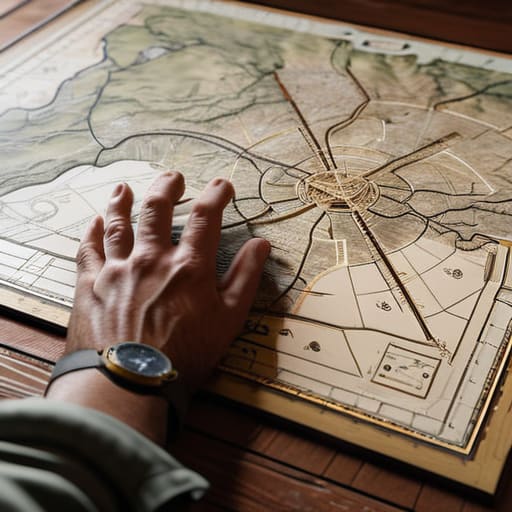
At its core, mastering map knowledge isn’t about memorizing a static image or a collection of waypoints; it’s about understanding the living rhythm of the environment. We’ve discussed how cognitive mapping allows you to predict enemy movement and how terrain recognition turns a chaotic battlefield into a predictable system. When you stop viewing the map as a background element and start seeing it as a set of tactical variables, you move from being a reactive player to a proactive one. You stop wandering aimlessly and start playing with intention, using every ridge, corridor, and sightline to dictate the pace of the game.
As I sit here with my tea, watching the light fade, I’m reminded that the mastery of any system requires patience and a willingness to observe. The leap from a novice to a strategist doesn’t happen overnight, but every moment you spend studying the layout is an investment in your own agency. Don’t just play the game; understand the world it inhabits. Whether you are navigating a sprawling open world or a tight competitive arena, remember that the most powerful tool in your inventory isn’t a weapon or a spell—it is your own spatial intelligence. Go out there and claim your territory.
Frequently Asked Questions
How can I start building a mental map in a game when the environment is constantly changing or procedurally generated?
When the terrain shifts under your feet, stop trying to memorize layouts and start memorizing logic. In procedural worlds, you aren’t mapping geometry; you’re mapping rules. Look for the underlying patterns—the way resources cluster or how enemy spawn points follow specific environmental cues. If you understand the “why” behind the generation, you can predict the “where.” It’s about building a mental framework of probabilities rather than a static image.
At what point does studying the map stop being helpful and start becoming a distraction from my actual mechanical skill?
It becomes a distraction the moment you’re staring at the minimap while your character is actively dying. There’s a fine line between situational awareness and cognitive overload. If you’re analyzing the layout to predict an enemy’s movement, that’s intentional play. But if you’re so deep in the data that you’re missing your shots or failing to react to immediate threats, you’ve lost the rhythm. Use the map to build your intuition, not to replace your reflexes.
Are there specific cognitive exercises I can use to improve my spatial awareness outside of just playing more hours?
You don’t need to be glued to a screen to sharpen your spatial intelligence. I’ve found that practicing mental rotation—visualizing how objects look from different angles—really helps. Even something as simple as navigating a new city without GPS forces your brain to build more robust mental models. Try sketching out floor plans from memory or playing strategy board games; they demand the same pattern recognition and predictive spatial reasoning that high-level gaming does.
