I remember sitting on my floor in 1992, surrounded by the hum of a CRT television and the smell of ozone, trying to explain to my younger brother why he couldn’t just mash buttons to win. We weren’t playing a balanced arena fighter; we were wrestling with the early, messy iterations of what we now call asymmetric multiplayer. Most modern critics treat these games like they’re fundamentally broken or “unfair” by design, dismissing them as mere gimmicks that lack competitive integrity. They see the imbalance and call it a flaw, but they’re missing the entire point of the psychological tension that occurs when players occupy entirely different cognitive spaces.
I’m not here to sell you on the hype or tell you that every uneven matchup is a masterpiece. Instead, I want to help you look past the surface-level frustration and understand the underlying mechanics that make these systems tick. We are going to dissect how to actually master the imbalance of asymmetric multiplayer, moving away from mindless button-mashing and toward a more intentional, strategic way of playing. My goal is to give you the tools to find the skill and the joy in every lopsided encounter.
Table of Contents
Decoding Core Asymmetric Game Design Principles
To understand why these games work—or why they fail so spectacularly—we have to look past the surface-level chaos and examine the underlying asymmetric game design principles. At its heart, this isn’t just about giving one person more “stuff” than everyone else; it’s about the deliberate distribution of information and utility. In a successful setup, the disparity in resources must be offset by a disparity in perspective. While one player might possess overwhelming physical power, the others often hold the advantage of coordination and collective intelligence.
When we analyze the friction in one vs many gameplay, we see that the tension usually stems from how the designer manages the flow of information. If the “many” are left in the dark, the game feels unfair; if the “one” is too predictable, the challenge evaporates. The goal is to create a system where balancing power dynamics in games becomes a living, breathing part of the strategy. You aren’t just fighting an opponent; you are navigating a structural imbalance that requires constant tactical recalibration to master.
Finding Joy in One vs Many Gameplay
The magic of one vs many gameplay doesn’t lie in the crushing weight of a lopsided score, but in the tension of the struggle itself. When I sit down with a game that pits a single powerhouse against a coordinated group, I’m not looking for a slaughter; I’m looking for that exquisite moment where the underdog finds a crack in the armor. The joy comes from the psychological dance between the hunter and the hunted. For the solo player, it’s the thrill of being a force of nature, managing resources and attention with surgical precision. For the group, it is the intoxicating rush of a well-executed ambush that turns the tide.
However, this satisfaction hinges entirely on how developers handle balancing power dynamics in games. If the “one” feels untouchable or the “many” feel like mere fodder, the system breaks. True mastery requires a design where every player feels a sense of purpose. We need to feel that our individual choices actually matter, regardless of our side of the scale. When a game respects your player agency in unequal matchups, it stops being a math problem and starts being a high-stakes drama.
Mastering the Imbalance: 5 Strategies for Intentional Play
- Embrace the asymmetry as a feature, not a bug. Instead of fighting the fact that you have more or less power than your opponent, lean into your specific role’s unique constraints to find your rhythm.
- Study the information gap. In these games, what you know and what your opponent sees are rarely the same; success comes from learning to read the silence and the shadows rather than just the HUD.
- Prioritize systemic understanding over reflex. Since you can’t rely on a level playing field, you have to outthink the mechanics. Map out the power spikes and cooldowns of your specific role to know exactly when you hold the upper hand.
- Communicate with intent, even when the roles are mismatched. If you are the “many” against the “one,” coordination is your greatest weapon; if you are the “one,” psychological pressure and unpredictability are your best tools.
- Manage your emotional investment. Asymmetry can lead to frustration when you feel powerless or overwhelmed. Treat every setback as a data point in the system’s logic rather than a personal failure.
Mastering the Imbalance: Key Takeaways
Stop viewing asymmetry as an unfair disadvantage; instead, treat the disparity in power or perspective as a complex system to be analyzed and exploited through strategic intention.
True mastery in asymmetric play comes from understanding your specific role’s unique agency, whether you are the singular force navigating a crowd or the many working to contain a titan.
Shift your mindset from mindless consumption to purposeful engagement by focusing on how your specific mechanics interact with the opposing side’s constraints.
The Cognitive Shift of Asymmetry
“Asymmetric multiplayer isn’t about one side winning and the other losing; it’s about two different minds navigating two entirely different sets of rules to find a common equilibrium.”
Delia Okonkwo
Mastering the Imbalance
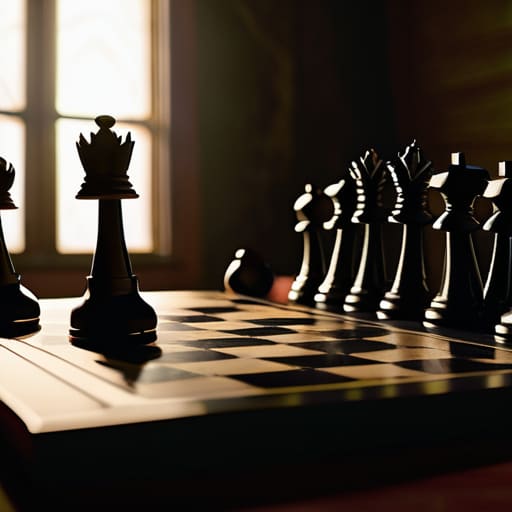
Navigating the uneven landscape of asymmetric multiplayer requires more than just quick reflexes; it demands a fundamental shift in how we perceive the game’s architecture. We’ve looked at how design principles dictate the flow of tension, how the psychological weight of being the “hunter” differs from the “prey,” and how to find genuine satisfaction in roles that are inherently lopsided. When you stop fighting the imbalance and start reading the system, you realize that the friction between players is exactly where the magic happens. It is through this intentional understanding of power dynamics that we move beyond mere play and into the realm of true mastery.
As I sit here with my tea, watching the glow of my screen, I’m reminded that the most rewarding challenges aren’t always the most balanced ones. Life, much like these complex digital ecosystems, is rarely a level playing field. But that is precisely why asymmetric games are so vital; they teach us to find our footing when the rules aren’t fair and to find joy in the struggle of adaptation. Don’t just settle for easy victories in symmetrical loops. Seek out the intentional friction of the asymmetric experience, and you will find a deeper, more profound connection to the art of gaming.
Frequently Asked Questions
How can I ensure I'm not just "playing down" to the other side when the power imbalance feels too overwhelming?
It’s a common trap—when you’re the “powerhouse,” it’s easy to stop engaging with the actual mechanics and just steamroll. To avoid playing down, stop treating the other side as an obstacle and start treating them as a variable in a complex system. Focus on efficiency and precision rather than raw force. If you’re the asymmetric advantage, your real challenge isn’t winning; it’s mastering the nuance of the win without breaking the game’s intended flow.
Is there a way to maintain competitive integrity in a game where one player has fundamentally different tools than the others?
It’s a valid concern, but competitive integrity isn’t about identical toolsets; it’s about balanced agency. In my view, fairness comes from ensuring every player—regardless of their role—has a clear, actionable path to victory. The “power” player shouldn’t be an unstoppable force, but a high-stakes puzzle. When the asymmetric player’s strengths are met with meaningful, predictable counters from the group, the system feels intentional rather than broken. Mastery lies in that tension.
For those of us playing solo, how do we find games that offer depth without feeling like we're just being toyed with by a more powerful opponent?
Look for games that prioritize “systemic depth” over raw power scaling. You want titles where the solo player has agency through preparation, strategy, or environmental mastery rather than just being a target for a higher-level opponent. I tend to gravitate toward games with robust skill trees or complex crafting loops. When you can outsmart a system through your own mechanical competence, the imbalance feels like a rewarding puzzle rather than a cheap way to toy with you.