Category: Games

  • The Impact of Motion Controls on Gaming

    The Impact of Motion Controls on Gaming

    I remember sitting on my floor in the late nineties, surrounded by half-disassembled handhelds and a lukewarm cup of Earl Grey, feeling that specific, growing frustration. It was the first time I realized that “innovation” doesn’t always equal “improvement.” For years, the industry has peddled the idea that motion controls are a magical bridge to total immersion, but more often than not, they feel like a clumsy barrier between your intent and the game’s response. We’ve all been there: waving a controller around like a madman, only to have the character perform a half-hearted stumble instead of a precise strike. It’s not just annoying; it’s a break in the psychological flow that makes mastery feel impossible.

    I’m not here to sell you on the hype or tell you that every gimmick is a revolution. Instead, I want to look at this technology through a more analytical lens. I’m going to show you how to move past the frantic, aimless waving and start treating motion controls as a deliberate, skill-based extension of your own body. We are going to strip away the nonsense and focus on the mechanics that actually work, helping you turn a frustrating gimmick into a tool for genuine, intentional play.

    Table of Contents

    Decoding the Precision of Accelerometer and Gyroscope Technology

    Decoding the Precision of Accelerometer and Gyroscope Technology.

    To truly master these systems, we have to look past the novelty and understand the hardware doing the heavy lifting. At the heart of most modern controllers lies the interplay between accelerometer and gyroscope technology. While the accelerometer measures linear acceleration—essentially how fast you’re moving the device in a specific direction—the gyroscope tracks angular velocity, or the rotation around an axis. When these two sensors work in tandem, they allow the system to map your physical movements into the digital space with startling accuracy.

    In my experience, the difference between a frustrating session and a flow state often comes down to how well a developer has tuned this human-computer interaction evolution. It isn’t just about sensing movement; it’s about how the software interprets the subtle nuances of your hands. When the calibration is tight, the controller stops feeling like a plastic peripheral and starts feeling like a natural extension of your intent. We aren’t just waving hardware around anymore; we are leveraging sophisticated sensors to bridge the gap between physical gesture and digital execution.

    Haptic Feedback Integration Feeling the Weight of Every Move

    Haptic Feedback Integration Feeling the Weight of Every Move

    If the sensors we discussed earlier provide the “eyes” for your movements, then haptic feedback integration serves as the nervous system. In my early days with a standard controller, a vibration was just a blunt, binary rumble—a generic buzz that told you “something happened.” But modern systems have moved beyond that crude distraction. When a game uses precise haptics alongside motion sensing peripherals, the sensation becomes nuanced. You aren’t just feeling a shake; you’re feeling the specific resistance of a bowstring being pulled taut or the subtle grit of gravel beneath a virtual tire.

    This connection is vital because it bridges the gap between visual input and physical intuition. When your hands feel the weight of an action, your brain stops treating the controller as a tool and starts treating it as an extension of your own body. This is where the real magic of human-computer interaction evolution happens. By syncing tactile responses with your physical gestures, developers can create a sense of intentionality that makes every swing of a sword or tilt of a cockpit feel grounded in reality, rather than just a series of digital commands.

    Beyond the Gimmick: Five Ways to Master Intentional Movement

    • Stop fighting the sensor drift. Most people treat motion controls like a toy, but if you want precision, you need to calibrate your hardware in a quiet space before every session. It’s the difference between a deliberate strike and a clumsy swipe.
    • Find your physical anchor. Whether it’s a steady stance or leaning against a chair, your body needs a point of stability to minimize “noise” in your movements. If your core is loose, your aim will be too.
    • Treat the controller as an extension of your hands, not a wand. Don’t use large, sweeping arm motions when a subtle flick of the wrist will suffice. The most skilled players use the smallest possible movement to achieve the maximum result.
    • Lean into the haptic cues. If a game uses vibration to signal a lock-on or a parry window, don’t ignore it. Use that tactile feedback to time your inputs rather than relying solely on visual cues, which can be cluttered.
    • Practice the “reset.” Motion controls can lead to physical fatigue and loss of accuracy. Every few levels, take a moment to reset your posture and your grip. A tired hand is an imprecise hand, and precision is what turns a casual player into a master.

    Mastering the Motion: Three Pillars of Intentional Play

    Stop fighting the hardware; treat the accelerometer and gyroscope as tools for precision rather than gimmicks to be endured.

    Use haptic feedback as a sensory data stream to inform your decision-making, turning vibrations into a language of mechanical awareness.

    Move with purpose—true mastery of motion controls comes when your physical gestures become a seamless extension of your strategic intent.

    The Intentionality of Movement

    Motion controls shouldn’t just be a gimmick to make you wave your arms; they should be a bridge between your physical intent and the digital system, turning every gesture into a deliberate act of skill rather than a frantic struggle against the hardware.

    Delia Okonkwo

    Beyond the Gimmick: Finding Your Flow

    Beyond the Gimmick: Finding Your Flow.

    At the end of the day, mastering motion controls isn’t about chasing a novelty; it’s about bridging the gap between your physical intent and the digital response. We’ve looked at how the subtle math of accelerometers and gyroscopes provides the foundation for precision, and how haptic feedback transforms a mere vibration into something that feels like genuine physical resistance. When you stop fighting the hardware and start understanding these underlying systems, the controller stops being a barrier and starts becoming a seamless extension of your own body. It is the difference between flailing at a screen and executing a deliberate, calculated movement that feels entirely your own.

    As I sit here with my tea, watching the light fade over my latest console restoration, I’m reminded that the way we interact with technology is constantly shifting. Motion controls might have been dismissed as a gimmick in the past, but for those willing to put in the work, they offer a unique path to deep immersion. Don’t settle for mindless button-mashing or clumsy gestures. Instead, approach these interfaces with curiosity and a desire for mastery. Treat every tilt, every swing, and every subtle twist as a chance to refine your skill. After all, the most rewarding way to play is to play with intention.

    Frequently Asked Questions

    How can I minimize the physical fatigue that often comes with extended sessions of motion-heavy gameplay?

    To avoid the “gorilla arm” effect, stop treating motion controls like a frantic workout. It’s about efficiency, not exertion. Keep your elbows tucked near your ribs rather than flaring them out, and use small, deliberate wrist movements instead of full-arm swings. Think of it as micro-adjustments. If you find yourself tensing up, step back. Mastering the mechanics means knowing how to exert the minimum necessary force to achieve the maximum intended result.

    Are there specific calibration techniques to stop the "drift" that makes precise aiming so frustrating?

    Drift is the ultimate flow-killer. If your aim is wandering, start with a hard reset of your deadzones in the game settings; increasing that threshold slightly can mask sensor jitter. If you’re on a console, recalibrate the controller through the system menu to realign the center point. For the hardware enthusiasts, a quick blast of compressed air into the sensor housing often clears the debris causing those phantom inputs. Don’t just fight it—adjust your environment to match your gear.

    How do I balance the immersion of motion controls with the raw speed and efficiency of traditional button inputs?

    It’s the classic tension between feeling the world and actually winning the fight. I’ve found the sweet spot lies in hybridity. Don’t try to do everything with motion; use your thumbs for the rapid-fire, high-precision inputs that require muscle memory, and reserve motion for the sweeping, gestural movements that ground you in the space. Treat motion as your nuance and buttons as your engine. When they work in tandem, you aren’t just playing—you’re performing.
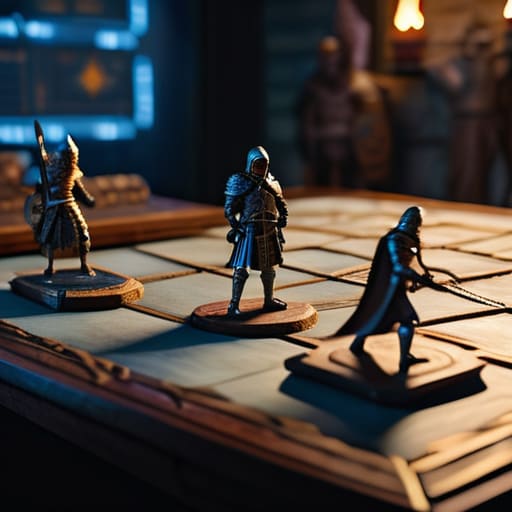

  • Mastering Turn Based Combat Systems

    Mastering Turn Based Combat Systems

    I remember sitting on my bedroom floor in 1988, the glow of a heavy CRT television washing over me as I gripped a controller with white knuckles. I wasn’t sweating because of lightning-fast reflexes or twitchy aim; I was sweating because I had three moves left, a single health potion, and a boss that felt like an insurmountable mathematical wall. People often dismiss turn based combat as “slow” or “passive,” as if the lack of frantic button-mashing means there’s no stakes involved. They couldn’t be more wrong. To me, that pause between turns isn’t downtime—it’s the electric tension of a high-stakes mental duel.

    I’m not here to feed you shallow tutorials or tell you which buttons to press to breeze through the easy parts. My goal is to help you deconstruct the underlying logic of these systems so you can stop playing reactively and start playing intentionally. We are going to look past the flashy animations and dive into the actual mechanics of resource management and positioning. By the end of this, you won’t just be surviving your encounters; you’ll be mastering the rhythm of the fight.

    Table of Contents

    Decoding the Action Economy in Gaming

    Decoding the Action Economy in Gaming.

    When I sit down with a new tactical RPG, I’m not just looking at character stats; I’m looking at the clock. In these systems, time isn’t a linear flow but a finite resource you spend like currency. This is the essence of action economy in gaming. Every move you make—whether it’s a heavy strike that leaves you winded or a quick buff that prepares your team—comes at a cost. If you spend your entire turn chasing a single high-damage kill while ignoring the enemy’s momentum, you aren’t playing the game; you’re letting the game play you.

    Mastering this requires a shift in perspective. You have to stop thinking about what you want to do and start analyzing the turn order management of the entire battlefield. It’s a delicate dance of efficiency. A well-designed encounter isn’t just about hitting harder; it’s about ensuring your most vital actions land before the enemy can disrupt your rhythm. When you finally grasp how to manipulate these windows of opportunity, the combat stops feeling like a series of math problems and starts feeling like true strategic mastery.

    Maximizing Strategic Depth in Rpgs Through Intentional Play

    Maximizing Strategic Depth in Rpgs Through Intentional Play

    To truly unlock the potential of tactical RPG combat systems, you have to stop viewing your character sheet as a mere list of stats and start seeing it as a toolkit for manipulation. Most players fall into the trap of “optimal” builds that prioritize raw damage, but true mastery lies in how you interact with the environment and the enemy’s rhythm. I’ve found that the most rewarding victories don’t come from hitting harder, but from constraining the enemy’s options. Whether you are manipulating positioning or utilizing status ailments to strip away an opponent’s defenses, you are essentially rewriting the rules of the engagement in your favor.

    This level of intentionality requires a constant focus on turn order management. It isn’t enough to simply react to what the AI does; you need to anticipate the flow of the battle several steps ahead. When you start treating every movement and every buff as a calculated investment rather than a reflex, the strategic depth in RPGs becomes incredibly profound. It transforms a standard encounter from a chore into a high-stakes game of chess where every decision carries weight.

    The Tactician's Toolkit: Five Ways to Outsmart the System

    • Stop thinking about individual turns and start thinking about momentum. In many systems, a single powerful move might feel satisfying, but if it leaves your character vulnerable or depletes your resources too early, you’ve lost the long game. I always look for the move that sets up my next three turns, not just the one that ends this one.
    • Treat your status effects like a secondary resource pool. It’s easy to get tunnel vision on HP bars, but a well-placed debuff or a strategic stun is often more valuable than a heavy physical attack. If you can strip an enemy of their ability to act, you’ve effectively stolen their turn from the action economy.
    • Learn the rhythm of the enemy’s AI. Most turn-based encounters aren’t truly random; they follow predictable patterns or logic gates. Once you recognize that a boss always follows a heavy attack with a defensive stance, you stop reacting to the game and start dictating the flow of the battle.
    • Don’t neglect the “boring” utility skills. When I’m deep in a complex RPG, I find that the players who win aren’t always the ones with the highest damage stats, but the ones who master buffs and cleanses. A well-timed shield or a quick heal can be the difference between a calculated victory and a frantic scramble for survival.
    • Manage your resource economy with a sense of urgency. Whether it’s mana, stamina, or specialized items, you need to know exactly when to spend and when to hoard. There is a specific kind of joy in hitting that “sweet spot” where you exhaust your resources just as the final enemy falls, leaving you with nothing left but the satisfaction of a perfect execution.

    The Intentional Player’s Checklist

    Stop treating turns as mere waiting periods; view the action economy as your most precious resource and spend it with purpose.

    Look past the flashy animations to identify the underlying mathematical systems that actually drive your success or failure.

    Shift your mindset from reactive button-mashing to proactive system mastery to find the true depth hidden within the mechanics.

    The Rhythm of Strategy

    Turn-based combat isn’t a pause in the action; it’s the moment the game stops being a test of your reflexes and starts being a test of your character. It’s where the real play begins.

    Delia Okonkwo

    Moving Beyond the Menu

    Moving Beyond the Menu in combat strategy.

    At its core, mastering turn-based combat isn’t about memorizing a list of spells or brute-forcing your way through a boss encounter. It’s about understanding the underlying architecture of the game—the delicate dance between the action economy, resource management, and the predictive logic required to stay one step ahead of the AI. When we stop treating combat as a series of menus to click through and start seeing it as a dynamic mathematical puzzle, the entire experience shifts. We move from being passive participants to becoming architects of our own victory, ensuring that every single move we make is an intentional contribution to our long-term success.

    As I sit here with my tea, watching the light fade across my desk, I’m reminded of why I fell in love with these systems decades ago. The thrill doesn’t come from the flashy animations; it comes from that quiet, cerebral moment of clarity when a complex strategy finally clicks into place. I hope you take this mindset into your next session. Don’t just play to finish the level; play to understand the system. When you approach gaming with this kind of curiosity, you realize that the real reward isn’t just the loot or the experience points—it is the profound satisfaction of true mastery.

    Frequently Asked Questions

    How do I balance immediate damage output against long-term resource management without losing momentum?

    It’s the classic tension: do you burn your mana now to end the fight, or save it for the boss? I’ve found the key is identifying “pivot points.” Don’t just aim for maximum damage; aim for efficiency. Use low-cost abilities to maintain pressure and build momentum, reserving your heavy hitters for moments where they guarantee a kill or a status shift. If you’re constantly redlining your resources, you aren’t playing the system—the system is playing you.

    At what point does a game's tactical complexity stop being rewarding and start feeling like tedious math?

    Complexity crosses into tedium the moment the math obscures the agency. If I’m calculating damage modifiers for ten minutes just to realize a single stat buff makes the encounter trivial, the system has failed. True depth should feel like a rewarding puzzle, not a spreadsheet. When the mental load shifts from “how do I outsmart this boss?” to “did I remember to add the secondary elemental multiplier?”, the joy evaporates into chores.

    How can I improve my ability to predict enemy patterns in games that use randomized elements or hidden stats?

    Predicting the “unpredictable” requires shifting your focus from specific outcomes to probability windows. Even in games with heavy RNG, patterns exist within the math. I’ve found that tracking “miss” streaks or high-damage spikes helps me map out the hidden variance. Don’t chase the exact number; instead, learn the game’s internal logic. When you stop fighting the randomness and start playing the percentages, you stop reacting to luck and start managing it.

  • How Sandbox Games Encourage Creativity

    How Sandbox Games Encourage Creativity

    I remember sitting on my bedroom floor in 1989, the hum of a heavy CRT television warming the air, staring at a screen that didn’t tell me where to go or how to win. There were no glowing waypoints or checklists screaming for my attention; there was just a vast, digital void and the sheer, terrifying freedom of sandbox gaming. Most people today mistake that freedom for “endless content,” but they’re wrong. They treat these open worlds like massive, unorganized toy boxes where you just wander aimlessly, hoping something interesting happens to trigger a dopamine hit. To me, that isn’t play; it’s mindless consumption.

    I’m not here to give you a list of the most popular titles or hype up every shiny new open world that hits the market. Instead, I want to teach you how to look under the hood. We are going to move past the superficial “exploration” and start analyzing these environments as the complex, interlocking systems they truly are. My goal is to help you stop wandering and start playing with intention, so you can master the mechanics and find the genuine skill hidden within the chaos.

    Table of Contents

    Mastering Non Linear Gameplay Mechanics for Intentional Play

    Mastering Non Linear Gameplay Mechanics for Intentional Play

    To truly master these environments, you have to shift your mindset away from the “quest marker” mentality. In traditional titles, you’re often following a breadcrumb trail laid out by a designer, but in a true sandbox, the path is yours to carve. This is where player agency and autonomy become your most valuable tools. Instead of asking “where do I go next?”, start asking “what systems can I manipulate?” Whether it’s managing resources or understanding how different factions interact, intentional play means looking for the levers that move the world.

    I often find that players get lost in the sheer scale of modern open world game design, mistaking movement for progress. It’s a common trap. To avoid it, treat the map not as a playground, but as a series of interconnected variables. If you encounter a barrier, don’t just wait for a level-up; analyze the mechanics. Can you use the environment to your advantage? Can you exploit a specific crafting loop? When you stop reacting to the game and start interacting with its underlying logic, that’s when the real mastery begins.

    The Impact of Player Agency and Autonomy on Mastery

    The Impact of Player Agency and Autonomy on Mastery.

    When we talk about player agency and autonomy, we aren’t just talking about the ability to walk in any direction. We are talking about the psychological weight of a choice. In a strictly guided experience, your success is a reaction to the developer’s script. But in a true sandbox, your success is a result of your own intellectual architecture. When a game gives you the tools to solve a problem in a way the designers didn’t explicitly dictate, it shifts the experience from simple participation to true mastery.

    This is where the distinction between sandbox vs linear games becomes most apparent. In a linear title, you are mastering a sequence; in a sandbox, you are mastering a system of possibilities. This autonomy can be daunting—some players mistake the lack of a clear path for a lack of direction—but that’s where the real growth happens. You have to stop asking “What does the game want me to do?” and start asking “What can I make this system do for me?” That shift in mindset is the bridge between being a casual player and an intentional one.

    Beyond the Sandbox: 5 Strategies for Intentional Exploration

    • Stop treating the map like a checklist. In a sandbox, the “objective” is often a suggestion rather than a command. Instead of rushing to the next waypoint, pause and ask yourself how the environment’s physics or resource systems actually function. Mastery comes from understanding the rules of the world, not just following the breadcrumbs.
    • Embrace the “Systemic Loop.” Every sandbox game is a collection of interlocking systems—weather, AI behavior, economy, or crafting. Don’t just react to what happens; look for the patterns. If you know how a certain elemental effect interacts with the terrain, you aren’t just playing; you’re engineering a solution.
    • Document your own discoveries. Because these games lack a rigid structure, your personal progress can feel nebulous. I’ve found that keeping a mental (or literal) log of what works and what fails helps transform aimless wandering into a structured study of the game’s mechanics.
    • Set self-imposed constraints to sharpen your skill. If a game gives you total freedom, it’s easy to become complacent. Try a “minimalist” run or limit yourself to a specific set of tools. This forces you to engage with the game’s deeper mechanics rather than relying on brute force or overpowered gear.
    • Learn to value failure as data. In a non-linear environment, you will inevitably trigger a cascade of events that leads to disaster. Don’t see this as a “Game Over”; see it as a diagnostic tool. Analyze exactly which system you failed to account for, and use that insight to refine your next approach.

    Beyond the Sandbox: Three Pillars of Intentional Play

    Stop treating open worlds like aimless playgrounds; instead, approach them as interconnected systems where every mechanic is a tool for your mastery.

    Real agency isn’t just about having options—it’s about the cognitive satisfaction that comes from making deliberate, high-stakes choices that actually shape your experience.

    Mastery in a sandbox environment requires shifting your mindset from mindless consumption to active observation, learning to read the game’s logic rather than just reacting to it.

    The Architecture of Agency

    “A sandbox isn’t just a wide-open map; it’s a sophisticated set of interlocking gears. If you approach it with a passive mindset, you’re just drifting. But if you stop to study how those systems react to your input, you stop being a tourist and start being an architect of your own experience.”

    Delia Okonkwo

    Beyond the Sandbox: A Call to Intentionality

    Beyond the Sandbox: A Call to Intentionality

    Ultimately, sandbox gaming shouldn’t be viewed as a lack of direction, but rather as a test of how we navigate complexity. We’ve looked at how mastering non-linear mechanics and embracing true player agency can transform a chaotic digital space into a structured playground for growth. When you stop treating these worlds as mere backdrops for mindless consumption and start seeing them as interconnected systems, your relationship with the game changes. It shifts from simply passing time to actively engaging with a machine that responds to your specific logic and choices. To truly master a sandbox, you must embrace the friction that comes with total freedom.

    As I sit here with my tea, watching the light fade over my workbench, I’m reminded that the best games don’t hold our hands; they offer us a set of tools and a question: What will you do with this? Whether you are building a sprawling empire or perfecting a single, complex mechanic, remember that the goal isn’t just to reach the end, but to understand the “why” behind every action. Don’t just play to win; play to understand. The sandbox is yours to shape, so make sure you are playing with intention.

    Frequently Asked Questions

    How do I avoid the feeling of "choice paralysis" when a sandbox game gives me too many directions at once?

    Choice paralysis happens when we treat a sandbox like a buffet instead of a toolkit. When the map feels overwhelming, stop looking at the “what” and start looking at the “why.” Pick one specific system—maybe it’s resource management or terrain traversal—and commit to mastering just that for an hour. By narrowing your scope to a single mechanical goal, you turn a chaotic expanse into a series of solvable, intentional puzzles.

    Is there a way to find genuine mastery in a sandbox if the game doesn't provide a traditional skill ceiling or end goal?

    Mastery in a sandbox isn’t about hitting a final boss; it’s about shifting your metric of success from “completion” to “efficiency and elegance.” When the game stops giving you objectives, you have to invent them. I find my flow by imposing my own constraints—trying to build a specific machine with limited resources or optimizing a resource loop until it runs like clockwork. Mastery here is the transition from playing the game to manipulating its underlying systems.

    How can I distinguish between a sandbox that offers true systemic depth and one that is just an empty, procedurally generated map?

    Look for the “reaction chain.” In a deep sandbox, systems should talk to one another. If I set a fire, does the wind carry it? Does the NPC react with fear or use it to their advantage? If the world only reacts to your direct input, it’s just a pretty backdrop. True systemic depth means the environment has its own logic that you can learn, predict, and eventually manipulate.

  • Characteristics of the Metroidvania Genre

    Characteristics of the Metroidvania Genre

    I still remember the humid summer of ’94, sitting cross-legged on my bedroom floor with a lukewarm cup of tea, staring at a CRT screen in total, frustrated silence. I had hit a literal wall in a game I loved, wandering through the same three corridors for an hour because I couldn’t grasp the underlying metroidvania structure. It wasn’t that the game was broken; it was that I was playing it reactively rather than intentionally. I was just pressing buttons and hoping for the best, completely missing the psychological breadcrumbs the developers had laid out for me to find.

    I’m not here to feed you a textbook definition or some overblown marketing jargon about “emergent exploration.” Instead, I want to help you stop wandering aimlessly and start decoding the intent behind the map. We are going to break down how these interconnected systems actually function so you can stop feeling lost and start feeling powerful. My goal is to move you past mindless consumption and toward a place where you can master the labyrinth with purpose and precision.

    Table of Contents

    Mastering the Interconnected Map Layout

    Mastering the Interconnected Map Layout in Metroidvania.

    When you first step into a well-crafted Metroidvania, the map shouldn’t just feel like a series of rooms; it should feel like a living, breathing organism. I’ve spent countless hours staring at pixelated corridors, and the best ones are those that utilize an interconnected map layout to create a sense of place rather than just a checklist of objectives. You aren’t just moving from point A to point B; you are learning the geography of a world that remembers where you’ve been. It’s about that subtle psychological shift when a path that once seemed like a dead end suddenly reveals itself as a vital artery to a new zone.

    The real magic happens through progression through power-ups, where your growing capabilities reshape your understanding of the environment. It’s a beautiful feedback loop: you find a tool, and suddenly the entire world expands. I find that the most rewarding experiences occur when the game rewards your curiosity, allowing you to see the architecture of the world differently once you’ve mastered a new movement mechanic. It’s not about mindless exploration; it’s about learning the rhythm of the terrain so you can navigate it with intention.

    Navigating Gated Progression Systems in game design.

    If the map is the skeleton of the experience, then gated progression systems are the muscles and tendons that dictate how you actually move through the world. It’s easy to view a locked door or a gap too wide to jump as a mere roadblock, but I prefer to see them as intentional pauses in the rhythm of play. These gates aren’t there to stall you; they are there to create a sense of purposeful growth. When you finally secure that double jump or the thermal suit, the satisfaction doesn’t just come from the new ability itself, but from the sudden, exhilarating realization of how much more of the world is now within your grasp.

    This is where the psychological payoff really hits. True mastery in this genre comes from recognizing the relationship between your character’s increasing capabilities and the environment’s expanding accessibility. I’ve always found that the most rewarding moments happen through progression through power-ups that turn a once-impenetrable wall into a simple gateway. Instead of feeling frustrated by what you can’t do yet, look at the obstacles as breadcrumbs. They are subtle cues, guiding you toward the specific skills you need to master before you can truly claim the territory as your own.

    Playing with Intent: Five Ways to Master the Metroidvania Loop

    • Stop treating backtracking like a chore; view it as a victory lap. When you return to an old area with a new ability, you aren’t just replaying content—you are witnessing the tangible proof of your character’s evolution.
    • Develop a mental “map of obstacles.” Instead of just seeing a ledge you can’t reach, categorize it. Is it a height issue, a gap issue, or a barrier issue? Labeling these gaps helps you recognize exactly which mechanic you need to hunt for next.
    • Learn to read the environment’s subtle language. Developers rarely place a gate by accident. If you see a strange crack in a wall or a peculiar door, don’t just walk past it; mark it in your mind as a future objective.
    • Resist the urge to brute-force your way through. Metroidvanias are systems of logic, not just reflexes. If you find yourself stuck in a loop of death, stop fighting the enemies and start analyzing the layout; the solution is usually structural, not combat-oriented.
    • Embrace the “Aha!” moment over the “Level Up” moment. The real dopamine hit in these games shouldn’t come from a stat increase, but from that sudden, sharp realization of how a new tool connects two previously unrelated parts of the world.

    Key Lessons for the Intentional Player

    Stop treating backtracking as a chore; view it as a victory lap that proves you’ve actually mastered the mechanics required to unlock the world.

    Map the logic, not just the terrain. A great Metroidvania isn’t about memorizing hallways, but about understanding the relationship between your current abilities and the barriers in your path.

    Respect the gate. When you hit a dead end, don’t just mash buttons in frustration—pause, analyze what specific tool you’re missing, and treat that gap as a roadmap for your next upgrade.

    The Psychology of the Loop

    A well-designed Metroidvania isn’t just a map; it’s a psychological contract between the developer and the player, where every backtrack is an opportunity to prove you’ve actually learned something rather than just wandering through a maze.

    Delia Okonkwo

    Beyond the Map: Playing with Intention

    Beyond the Map: Playing with Intention.

    At its core, mastering a Metroidvania isn’t about memorizing a map or brute-forcing your way through a boss fight; it’s about understanding the rhythm of the system. We’ve looked at how the interconnected layout serves as a living organism and how gated progression acts as a deliberate way to pace your growth. When you stop seeing a locked door as a frustration and start seeing it as a signal of upcoming mastery, the entire genre shifts. You aren’t just wandering through a digital labyrinth anymore; you are learning to read the language of the level designer, turning every backtrack from a chore into a moment of earned triumph.

    As I sit here with my tea, watching the glow of a handheld screen, I’m reminded that these games demand something more from us than most modern titles: they demand our presence. Don’t let the complexity overwhelm you or turn your play session into mindless repetition. Instead, embrace the friction. The beauty of the Metroidvania structure lies in that precise moment when a skill you earned three hours ago suddenly unlocks a world you couldn’t touch before. Play with intention, respect the mechanics, and remember that the struggle is exactly where the joy lives.

    Frequently Asked Questions

    How do I tell the difference between a well-designed ability gate and a developer just being lazy with map connections?

    It comes down to intention. A well-designed ability gate feels like a conversation between you and the environment; the world is whispering, “You can’t pass here yet, but look at what you’ll become.” It creates anticipation. Lazy design, however, feels like a dead end—a sudden, jarring halt that offers no visual cues or mechanical promises. If the detour feels like wasted time rather than a setup for a future payoff, the system has failed.

    At what point does a non-linear map stop being rewarding and start feeling like a chore or a waste of time?

    It stops being rewarding the moment the “why” disappears. When you’re backtracking through empty corridors just to reach a door you unlocked twenty minutes ago, you aren’t exploring—you’re commuting. If the map lacks meaningful environmental storytelling or mid-transit encounters to keep your brain engaged, the loop breaks. A well-designed system respects your time; once the exploration feels like a checklist rather than a discovery, the intentionality is lost to mindless friction.

    How can I train my brain to recognize environmental cues that signal a new path is opening up, rather than just getting lost?

    Stop treating the environment like wallpaper and start treating it like a dialogue. To train your brain, you need to look for “intentional friction.” When you see a ledge that’s just an inch too high or a door with a specific color tint, don’t just pass it by. Pause. Ask yourself, “What mechanic am I missing to interact with this?” Once you start categorizing these visual anomalies as potential milestones rather than scenery, the map stops being a maze and starts being a roadmap.

  • Psychological Elements of Engaging Games

    Psychological Elements of Engaging Games

    I still remember the smell of ozone and heated plastic in my uncle’s basement, hunched over a flickering CRT screen while my tea went cold on the floor. Back then, I didn’t have the vocabulary for what was happening; I just knew that certain boss fights felt like a personal insult, while others felt like a riddle waiting to be solved. Most people treat gaming psychology as some mystical, unreachable science or, worse, a way to explain why we’re “addicted.” They miss the point entirely. It isn’t about being manipulated by flashy lights; it’s about the invisible architecture of reward and frustration that dictates whether you actually grow as a player or just spin your wheels in a loop of mindless consumption.

    I’m not here to sell you on some expensive “pro-gamer” seminar or academic jargon that leaves you more confused than when you started. My goal is to pull back the curtain on these systems so you can stop playing on autopilot. I’m going to show you how to recognize the mental levers being pulled and, more importantly, how to harness your own cognitive patterns to play with real intention. We’re going to move past the hype and focus on turning psychological insight into a genuine tactical advantage.

    Table of Contents

    The Architecture of Focus Managing Cognitive Load in Gaming

    The Architecture of Focus Managing Cognitive Load in Gaming

    When I’m deep into a session—whether I’m troubleshooting a circuit on a Game Boy or navigating a complex RPG—I can feel my brain hitting a wall. That mental exhaustion isn’t just fatigue; it’s the result of high cognitive load in gaming. Every flashing UI element, every sudden enemy spawn, and every complex menu system demands a slice of your attention. If a developer throws too much at you at once, your brain stops processing strategy and starts reacting out of pure survival instinct. You aren’t playing the game anymore; you’re just drowning in it.

    To play with intention, you have to recognize when your mental bandwidth is being hijacked. Great design manages this by layering information, but poorly optimized games use sensory overload as a blunt instrument. I’ve noticed that when I feel that “brain fog” setting in, my decision-making becomes sloppy. Instead of leaning into the psychological mechanics of immersion, I find myself stuck in a loop of mindless button-mashing. Learning to recognize your own cognitive limits is the first step toward moving from reactive play to true mastery.

    Harnessing Reward Systems in Game Design for Skill Growth

    Harnessing Reward Systems in Game Design for Skill Growth.

    We need to talk about why that “just one more level” feeling is so incredibly potent. Most players view loot drops or XP gains as simple dopamine hits, but if you look closer, you’re actually witnessing operant conditioning in video games at its most refined. Designers aren’t just giving you shiny objects; they are shaping your behavior through a precise schedule of reinforcement. When the rewards are too predictable, you get bored; when they are too random, you get frustrated. The sweet spot lies in that tension, where the game subtly trains your brain to associate persistence with progress.

    To actually grow as a player, you have to stop being a passive recipient of these reward systems in game design. Instead of chasing every flashing light, start analyzing the cadence of the feedback loop. Are you playing because you’ve mastered a mechanic, or are you just chasing a digital carrot on a stick? When you learn to distinguish between meaningful progression and mindless Skinner-box loops, you regain control. That is the moment you transition from a consumer to a strategist.

    Tactical Intention: 5 Ways to Outsmart Your Own Brain

    • Stop the mindless grind. When you feel yourself slipping into a “autopilot” state where you’re just clicking buttons without thinking, stop. Take a breath, step back, and re-evaluate your strategy. If you aren’t playing with intent, you aren’t actually playing; you’re just reacting.
    • Learn to embrace the “frustration threshold.” There is a fine line between a productive challenge and mindless tilt. If you find your heart rate spiking and your decision-making becoming erratic, your prefrontal cortex has essentially gone offline. Walk away for ten minutes; the game will be there when your logic returns.
    • Audit your dopamine loops. Modern games are masterfully designed to keep you hooked through intermittent reinforcement, but you need to be the one in control. Ask yourself: “Am I pursuing this achievement because it builds my skill, or am I just chasing a notification?” Distinguish between meaningful progress and cheap hits.
    • Manage your sensory input. Just like I have to clear the workspace when I’m restoring a Game Boy, you need to clear your mental workspace. Too much visual clutter or overwhelming audio can spike your cognitive load. Learn to filter out the noise so you can focus on the core mechanics that actually matter for victory.
    • Document your failures, not just your wins. We tend to remember the epic boss kill, but we forget the twenty times we made the same stupid mistake leading up to it. Keep a mental—or literal—log of your patterns. Analyzing your own psychological pitfalls is the fastest way to turn a frustrating loss into a tactical advantage.

    Beyond the Screen: Three Pillars for Intentional Play

    Stop letting the game play you; recognize when you’re stuck in a dopamine loop and pivot your focus from mindless repetition to deliberate, analytical practice.

    Manage your mental bandwidth by identifying which mechanics demand your full attention and which ones you can automate through muscle memory to avoid cognitive burnout.

    Treat every setback as data rather than failure, using the game’s reward structures as a roadmap for incremental skill acquisition rather than just a way to chase a high score.

    The Intentional Player

    “Most people approach a game like a passenger on a ride, letting the mechanics carry them along; but if you want to truly master the experience, you have to step into the driver’s seat and understand the psychological machinery that’s actually steering you.”

    Delia Okonkwo

    Beyond the Screen: Playing with Purpose

    Beyond the Screen: Playing with Purpose.

    At the end of the day, understanding the psychological scaffolding of a game isn’t about finding “cheats” or shortcuts; it’s about gaining agency. We’ve looked at how managing your cognitive load prevents burnout and how recognizing the mechanics of reward systems can turn a frustrating grind into a structured path toward mastery. When you stop reacting blindly to every flashing light and dopamine hit, you start seeing the game for what it truly is: a series of interconnected systems designed to challenge your mental limits. By applying these insights, you move from being a passive consumer to an intentional player who navigates digital worlds with clarity and composure.

    As I sit here with my lukewarm tea, watching the glow of a handheld console, I’m reminded that our relationship with games changes as we age. We don’t play to escape reality as much as we play to refine our focus and test our mettle. Gaming is a lifelong pursuit of skill, and the more you understand the mind behind the controller, the more rewarding every victory becomes. Don’t just play to win; play to understand. The real magic happens when you finally bridge the gap between raw instinct and tactical intention.

    Frequently Asked Questions

    How can I distinguish between a healthy sense of accomplishment and the hollow dopamine loop of mindless grinding?

    It comes down to the “why” behind the play. Real accomplishment feels like a hard-won expansion of your capability—you’ve mastered a mechanic or solved a complex pattern. That’s growth. Mindless grinding, however, is just a feedback loop of tiny, meaningless hits designed to keep you seated. If you’re playing just to see a number go up without actually feeling more skilled, you aren’t playing the game; the game is playing you.

    Are there specific mental exercises I can use to prevent cognitive fatigue during long, high-stakes sessions?

    To stave off that mental fog, you need to treat your brain like a muscle. I swear by “micro-resetting”: every thirty minutes, look away from the screen for sixty seconds. It breaks the hyper-focus loop that leads to burnout. Also, try active visualization during loading screens—rehearsing your next move rather than scrolling through your phone. It keeps your cognitive engagement high without draining your battery. Don’t just play through the fatigue; manage it.

    How do I stop myself from falling into "tilt" when a game's difficulty spikes unexpectedly?

    When that difficulty spike hits, your amygdala takes the wheel, hijacking your rational brain. That’s tilt in a nutshell. To fight it, you have to break the physiological loop. The moment you feel that heat in your chest, step away. Don’t just “try harder”—that’s how you burn out. Take five minutes, sip some tea, and reset your cognitive load. You can’t solve a complex system when your brain is stuck in survival mode.

  • How Modding Changes Game Lifecycles

    How Modding Changes Game Lifecycles

    I remember sitting in my dim bedroom in the late 90s, the glow of a CRT monitor illuminating a half-finished cup of tea, as I stared at a game that felt just slightly off—a mechanic that didn’t quite click or a texture that felt hollow. I didn’t want a new game; I wanted the one I had to be better. That hunger is exactly what fuels modding communities today, yet we often treat them like mere repositories for free content rather than what they truly are: digital laboratories. Most people see a mod as a quick fix for a boring title, but they miss the deeper reality of how these creators are actually re-engineering the psychological loop of play itself.

    I’m not here to give you a curated list of “must-have” downloads or hype up every superficial skin update. Instead, I want to show you how to approach these spaces with intention. We are going to look past the surface-level tweaks and explore how to leverage the expertise within modding communities to deconstruct and master the systems you love. My goal is to help you move beyond passive consumption and start using these community-driven tools to craft a gaming experience that is uniquely, deeply your own.

    Table of Contents

    The Power of User Generated Content Impact

    The Power of User Generated Content Impact.

    When we talk about the user-generated content impact, we aren’t just talking about a few new skins or a handful of custom maps. We are talking about a fundamental shift in how a game lives and breathes. In my experience, a game’s lifecycle is often dictated by the developer’s roadmap, but a robust modding ecosystem can completely bypass those limitations. By introducing new mechanics or fixing long-standing bugs, players transform a static product into a living, evolving system. It’s the difference between reading a book and participating in a continuous, collaborative rewrite.

    This evolution is driven by the intricate modding ecosystem dynamics that emerge when tools are made available to the public. When developers embrace transparency, they allow players to move beyond simple consumption and into the realm of true digital asset creation. I’ve seen firsthand how a single, well-crafted overhaul can revitalize a decade-old title, proving that the soul of a game often resides in the hands of those who refuse to let it go stale. It turns a solitary experience into a collective pursuit of perfection.

    Mastering Game Engine Modification Skills

    Mastering Game Engine Modification Skills through coding.

    When we talk about moving beyond simple content tweaks, we’re really talking about a fundamental shift in how we interact with software. Engaging in game engine modification isn’t just a hobby; it’s a deep dive into the logic that governs a virtual world. For me, there is a profound satisfaction in pulling back the curtain to see how physics engines or lighting systems actually function. It turns a player from a passive observer into a digital architect.

    This transition requires a certain level of discipline, much like the way I approach technical writing. You aren’t just slapping a new skin on a character; you are learning the intricacies of digital asset creation and how those assets communicate with the core code. It can be daunting at first, but understanding these underlying structures is what separates a casual tinkerer from someone who truly masters the medium. By learning to manipulate the engine itself, you stop playing within the boundaries set by developers and start defining the boundaries of the experience yourself.

    Precision Play: How to Navigate and Contribute to the Modding Ecosystem

    • Start with the “Vanilla” Foundation. Before you try to rewrite a game’s physics or overhaul its UI, spend time understanding the developer’s original intent. You can’t effectively dismantle and rebuild a system if you don’t first respect how its core mechanics were designed to function.
    • Join the Discourse, Not Just the Download. Don’t just be a consumer who hits the “install” button on Nexus Mods. Dive into the Discord servers and forums. Understanding the technical hurdles and the “why” behind a mod’s creation is where the real learning happens.
    • Learn the Language of the Engine. Whether it’s Lua scripting or navigating the Creation Kit, treat modding as a technical discipline. I approach it like my technical writing work: clarity and structure are everything. If your code is messy, the player’s experience will be too.
    • Respect the Versioning Lifecycle. There is nothing more frustrating than a game update breaking a beloved mod. Stay observant of patch notes and community discussions. Learning to manage dependencies and version compatibility is a skill that separates the amateurs from the masters.
    • Curate Your Experience with Intention. It’s easy to fall into the trap of “mod bloat,” where you’re constantly tweaking settings instead of actually playing. Set a goal: decide what kind of experience you want to achieve, select your tools, and then step back and let the game breathe.

    Moving Beyond the Player Mindset

    Stop treating games as static products; start viewing them as malleable frameworks that you have the agency to reshape.

    Use modding as a practical laboratory to sharpen your technical literacy and deepen your understanding of complex game systems.

    Engage with modding communities not just for content, but to join a collective of thinkers who are actively evolving the medium.

    The Architecture of Agency

    “Modding isn’t just about adding new skins or maps; it’s about reclaiming agency over the systems we love. When we move from being mere consumers to active architects, we stop playing within the boundaries and start mastering the mechanics themselves.”

    Delia Okonkwo

    The Final Level: Beyond the Code

    The Final Level: Beyond the Code.

    At its core, engaging with modding communities isn’t just about adding new skins or fixing a few bugs; it is about understanding the very architecture of the digital worlds we inhabit. We’ve seen how user-generated content can breathe decades of life into a title, and how mastering the technical nuances of a game engine can transform a player from a mere consumer into a system architect. By diving into these communities, you aren’t just playing a game anymore—you are participating in a continuous, living dialogue between the developer’s original intent and the player’s infinite imagination. It is the ultimate way to deconstruct the mechanics that once felt like untouchable black boxes.

    As I sit here with my tea, watching a flickering screen of a restored handheld, I’m reminded that the most profound way to honor a game is to refuse to let it remain static. Don’t settle for the experience that is handed to you on a silver platter. Instead, take the tools, join the forums, and start breaking things just so you can learn how to put them back together better. Gaming is a lifelong pursuit of mastery, and sometimes, that mastery means rewriting the rules yourself. Go ahead—dive into the files, find your niche, and turn your favorite pastime into a true craft.

    Frequently Asked Questions

    How can I tell if a mod is actually improving the game's core mechanics or just adding superficial visual clutter?

    Look past the high-res textures and fancy particle effects. To see if a mod has real teeth, watch how it alters the feedback loop. Does it change the timing of a parry, refine the resource economy, or deepen the tactical decision-making? If the mod changes how you think about your next move rather than just how the screen looks, it’s improving the system. If it’s just eye candy, it’s clutter.

    Is there a way to learn the technical side of modding without needing a computer science degree?

    Absolutely. You don’t need a degree to pull back the curtain on these systems. Most of the modding community learned through trial, error, and sheer curiosity—just like I did with my vintage consoles. Start by exploring community wikis and Discord servers; they are goldmines of practical knowledge. Focus on learning basic scripting or asset manipulation through specialized tools designed for that specific game. It’s about understanding the logic, not just memorizing syntax.

    At what point does heavy modding stop being "playing the game" and start becoming an entirely different experience?

    It’s a threshold I cross often when I’m tinkering with my old handhelds. For me, the line blurs when you stop interacting with the developer’s intent and start interacting with your own architecture. When you’re no longer reacting to a curated challenge, but instead managing a complex ecosystem of scripts and assets you’ve implemented yourself, you’ve moved from player to architect. You aren’t just playing a game anymore; you’re conducting a digital symphony.

  • Strategic Play in Battle Royale Games

    Strategic Play in Battle Royale Games

    I was sitting in my workshop last Tuesday, mid-way through soldering a loose connection on a Game Boy Color, when I realized why so many players feel like they’re just spinning their wheels. You see these “pro” influencers screaming about the latest meta-shifting weapon or a specific $50 skin that supposedly grants an edge, but that’s just noise. Most of the advice out there treats battle royale strategy like a series of lucky coincidences or gear checks, ignoring the actual psychological architecture of the match. It’s frustrating to watch talented players get swallowed by the chaos simply because they’ve been taught to react rather than to observe.

    I’m not here to sell you on a magic loot drop or a flashy new setting. Instead, I want to pull back the curtain on the systems that actually govern these games. We are going to move past the mindless consumption of tutorials and focus on intentional movement and decision-making. My goal is to help you stop playing against the map and start mastering the mechanics that dictate every encounter. If you’re ready to stop relying on luck and start playing with purpose, let’s get to work.

    Table of Contents

    The Art of Intentional Resource Management in Battle Royale

    The Art of Intentional Resource Management in Battle Royale.

    Most players treat their inventory like a junk drawer, grabbing every shiny attachment or healing item they see without a second thought. But if you want to move past mindless looting, you have to treat resource management in battle royale as a psychological exercise in prioritization. I’ve spent years studying how we make decisions under pressure, and I can tell you: the panic of a low-health encounter usually stems from poor preparation, not bad luck. You shouldn’t just be looking for “better” gear; you should be looking for the specific tools that complement your intended playstyle.

    This means mastering loadout optimization long before the first shot is fired. It isn’t enough to just have a high-damage rifle; you need to calculate the weight of your utility against your mobility. Do you carry extra shields to sustain a prolonged siege, or do you strip your inventory down to prioritize movement items for faster rotations? Every slot in your bag is a commitment. When you play with intention, you aren’t just reacting to the map—you are shaping the environment to suit your needs.

    Optimizing Your Loadout Optimization for Maximum Efficiency

    Optimizing Your Loadout Optimization for Maximum Efficiency

    When we talk about loadout optimization, it’s easy to fall into the trap of just grabbing whatever shiny new attachment drops from a crate. But if you want to move past being a casual player, you have to view your inventory as a toolkit designed for specific contingencies. I’ve learned through years of analyzing system mechanics that a balanced loadout isn’t about having the “best” gun; it’s about ensuring you have the right utility to support your movement. If you’re carrying heavy armor but zero mobility items, you’ve essentially built a cage for yourself that will fail you the moment the ring shifts.

    True efficiency comes from anticipating the friction points of a match. You need to bridge the gap between your primary weapon and your situational needs, such as items that facilitate a quick high-ground advantage or tools that assist in repositioning. I often find myself checking my inventory not just to see what I have, but to ask what I’ll be missing ten minutes from now. If your kit doesn’t allow for both aggressive pushes and calculated retreats, you aren’t playing the system—you’re just hoping the system is kind to you.

    Mastering the Macro: Five Pillars of High-Level Play

    • Stop treating the circle like a suggestion. If you’re constantly sprinting toward the edge of the zone, you’re playing reactively, not proactively. Start scouting the next ring early so you can claim high ground or defensive cover before the chaos even begins.
    • Learn to read the “silence” on the map. Just because you aren’t hearing gunfire doesn’t mean the area is safe; it often means players are repositioning or setting up ambushes. Use that quiet time to observe the terrain rather than just looting blindly.
    • Value positioning over raw firepower. I’ve seen countless players with the best loot in the game get wiped because they were caught in the open with no line-of-sight advantage. A mediocre weapon in a great position will almost always beat a legendary weapon in a bad one.
    • Master the art of the “calculated retreat.” There is no shame in disengaging from a fight that has gone sideways. If you realize you’ve lost the tactical advantage, pull back, reset your cooldowns, and find a new angle instead of forcing a fight you can’t win.
    • Treat every movement as a data point. Don’t just run from point A to point B; ask yourself why you’re taking that specific path. Are you minimizing your exposure to sightlines, or are you just following the easiest route? Intentional movement is what separates the survivors from the casualties.

    Mastering the System: Key Takeaways for Intentional Play

    Stop treating loot as a scavenger hunt; view every item through the lens of your immediate tactical needs and long-term survival strategy.

    Efficiency isn’t just about having the best gear, but about how quickly and decisively you can transition from one phase of the match to the next.

    Success in a battle royale comes from recognizing that the map and the shrinking zone are active components of the game’s system that you must manipulate, not just endure.

    ## The Mindset of a Systemic Player

    “Winning a battle royale isn’t about who has the fastest reflexes in a frantic shootout; it’s about who understands the underlying systems of the map and the circle well enough to ensure they aren’t even in a position to lose.”

    Delia Okonkwo

    Beyond the Final Circle

    Proactive dominance Beyond the Final Circle.

    At its core, mastering the battle royale genre isn’t about having the fastest reflexes or the luckiest loot drops; it is about the synthesis of everything we have discussed. It requires the discipline to manage your resources before the pressure hits, the foresight to curate a loadout that complements your specific playstyle, and the mental clarity to make decisions under fire. When you stop treating every engagement as a chaotic scramble and start viewing the map as a series of interconnected systems, your win rate will naturally begin to climb. It is about moving from a state of reactive survival to one of proactive dominance.

    As you head back into your next match, I want you to remember that every loss is just another data point in your personal evolution. Don’t get discouraged by a sudden death or a missed rotation; instead, take a moment, sip your tea, and analyze exactly where your intention faltered. Gaming is a lifelong pursuit of refinement, and the true mastery lies in the consistency of your process. Approach the arena with curiosity rather than frustration, and you will find that the joy of the game isn’t just in the victory screen, but in the intentionality of the journey.

    Frequently Asked Questions

    How do I balance the urge to loot more gear with the necessity of staying ahead of the shrinking circle?

    It’s the classic psychological trap: the dopamine hit of a new attachment versus the mounting anxiety of the zone. To beat this, you have to stop treating loot as a reward and start treating it as a cost. Every second you spend scanning a floor for a better scope is a second you aren’t positioning yourself for the next engagement. If your current gear is functional, move. Don’t let the pursuit of perfection become your downfall.

    At what point does "playing it safe" become a liability that prevents me from securing a win?

    It becomes a liability the moment your caution stops being a strategy and starts being a paralysis. If you’re spending so much time hunkered down that you’re losing the ability to contest high-tier loot or secure optimal positioning, you aren’t playing safe—you’re just waiting to lose. In a closing circle, passivity is a slow death. You have to transition from avoiding conflict to proactively controlling the space, or the system will eventually force you into a corner you can’t escape.

    How can I train my brain to stay calm and make calculated decisions when the endgame chaos starts to ramp up?

    When the circle shrinks and the gunfire starts, your amygdala wants to hijack your logic. To fight that, you have to practice “tactical breathing”—short, controlled breaths to lower your heart rate. But more importantly, stop reacting to the noise and start scanning for patterns. Instead of panicking at every sound, ask yourself: Where is the next zone, and what is my path there? Training your brain to prioritize the system over the chaos is how you stay composed.

  • How Games Tell Stories Through Gameplay

    How Games Tell Stories Through Gameplay

    I remember sitting on my bedroom floor in 1988, the glow of a heavy CRT television illuminating the room while I gripped a plastic controller, trying to make sense of a pixelated world. There were no cinematic cutscenes back then, no sweeping orchestral scores to tell me how to feel; there was just the rhythm of the inputs and the subtle way the environment shifted around me. People often mistake narrative design for nothing more than writing long-winded dialogue trees or slapping a dramatic voiceover onto a mediocre loop. They think it’s about the script, but they’re missing the point entirely. Real storytelling isn’t just what the characters say; it’s how the mechanics themselves whisper the story to you through every jump, every death, and every systemic interaction.

    I’m not here to give you a textbook lecture or a list of buzzwords that won’t help you when you’re actually playing. My goal is to pull back the curtain on how these systems actually function so you can stop being a passive observer and start becoming a master of the experience. We are going to look past the flashy cinematics to understand the intentional systems that drive true immersion. I promise to give you a direct, no-nonsense breakdown of how to recognize—and eventually appreciate—the invisible architecture that makes a game truly unforgettable.

    Table of Contents

    Harnessing Player Agency in Games for Deeper Meaning

    Harnessing Player Agency in Games for Deeper Meaning

    The real magic happens when a player stops being a spectator and starts being a participant. To achieve this, developers must move beyond scripted cutscenes and focus on true player agency in games. It isn’t just about giving us a list of choices at the end of a level; it’s about making our presence felt within the very logic of the world. When my actions—whether it’s a tactical decision in combat or how I choose to navigate a conversation—actually ripple through the game’s state, the connection becomes visceral.

    This is where the most sophisticated gameplay and narrative integration comes into play. I’ve always found that the most impactful moments aren’t found in a long-winded monologue, but in the friction between what the player wants to do and what the system allows them to do. When those two forces align, the story stops being something told to you and becomes something you have authored. We aren’t just consuming a plot; we are navigating a living system where our agency is the primary driver of meaning.

    World Building for Video Games Through Intentional Detail

    World Building for Video Games Through Intentional Detail

    When we talk about world-building for video games, it’s easy to get lost in the sheer scale of a map or the density of a lore bible. But scale isn’t depth. Real immersion happens in the quiet corners—the way a discarded note sits on a bloodstained desk or how the architecture of a ruined city subtly tells the story of its collapse. These environmental storytelling methods are what transform a digital space from a mere backdrop into a living, breathing entity. I’ve always found that the most impactful worlds don’t shout their history at you through long-winded cutscenes; they whisper it through the objects you find along the way.

    To truly master this, developers must focus on the seamless gameplay and narrative integration that prevents the player from feeling like they are merely “doing chores” between story beats. If a player enters a high-security laboratory, the tension shouldn’t just come from a boss fight, but from the clinical, sterile design of the halls that reinforces the setting’s oppressive atmosphere. When every asset serves a dual purpose—both as a functional game element and a piece of the puzzle—the world stops feeling like a stage and starts feeling like a reality worth inhabiting.

    Beyond the Cutscene: 5 Ways to Master Narrative Through Play

    • Stop relying on dialogue dumps. If a character is grieving, don’t just have them say it; let the player see it in the way the environment feels heavy or how their movement mechanics change. True story lives in the friction between the player and the world.
    • Use environmental storytelling as a silent narrator. I’ve always found that a discarded, broken handheld or a half-empty tea cup tells a much more visceral story than a three-page lore entry. Let the clutter speak for itself.
    • Align your mechanics with your themes. If your story is about loss, don’t give the player a power-up that makes them feel invincible. The mechanics should reinforce the emotional weight of the narrative, not contradict it.
    • Respect the player’s intelligence by leaving gaps. You don’t need to explain every single detail of your world. Leaving room for the player to deduce the “why” behind a mechanic or a plot point creates a much deeper sense of mastery and connection.
    • Ensure every systemic choice has a narrative consequence. If a player chooses a specific path or playstyle, the world should react. When the systems and the story are in sync, the player stops being a spectator and starts being a participant.

    Moving Beyond the Script: Three Lessons in Intentional Play

    Stop waiting for a cutscene to tell you what matters; true narrative is found in the interplay between your choices and the game’s mechanics.

    Detail isn’t just window dressing—when a world is built with intention, every environmental cue serves as a silent storyteller that rewards an observant player.

    Mastery of a game comes from understanding its systems, but emotional mastery comes from recognizing how those systems shape your personal journey through the world.

    The Soul in the System

    Narrative design isn’t about the dialogue trees or the cinematic cutscenes; it’s about the silent conversation between a player’s choices and the game’s mechanics. When a system responds to your intent, that’s when a game stops being a toy and starts being a story.

    Delia Okonkwo

    Beyond the Cutscene: The Mastery of Meaning

    Beyond the Cutscene: The Mastery of Meaning

    At its core, narrative design isn’t just about the dialogue trees or the cinematic sequences that interrupt our gameplay. It is the delicate, often invisible thread that weaves player agency and meticulous world-building into a single, cohesive experience. When we understand how intentional details and systemic choices interact, we stop being passive observers and start becoming active participants in the story. We realize that the most profound storytelling doesn’t happen in a script, but in the complex interplay between the player’s intent and the game’s mechanics.

    As you move forward, I challenge you to look past the surface level of the games you play. Don’t just consume the plot; study the architecture of the world and how it shapes your emotional response. Whether you are a developer crafting these systems or a player seeking a deeper connection, remember that every mechanic is an opportunity for meaning. Gaming is a lifelong evolution of how we perceive and interact with digital worlds, and when we play with intention, we find a level of mastery that transcends simple entertainment.

    Frequently Asked Questions

    How can I balance meaningful narrative beats without slowing down the mechanical flow of the gameplay?

    The trick is to stop treating story and mechanics like two different entities fighting for your attention. Instead, weave them together. Use environmental storytelling—a bloodstained note or a crumbling statue—to deliver context while the player is moving. If you must use cutscenes, keep them tight and purposeful. When the narrative serves the mechanical rhythm rather than interrupting it, you aren’t just pausing the game; you’re deepening the player’s investment in the system.

    Where is the line between intentional environmental storytelling and just adding unnecessary clutter to a level?

    It comes down to purpose. In my experience, clutter is just noise—it’s visual static that lacks a “why.” Intentional environmental storytelling, however, functions like a psychological cue. Every discarded item or bloodstain should answer a silent question about the inhabitant or the history of that space. If an object doesn’t contribute to the player’s understanding of the system or the story, it’s just clutter. If it prompts a thought, it’s design.

    How do I ensure that player choices actually impact the systemic world rather than just feeling like an illusion of agency?

    To make agency feel real, you have to move beyond dialogue trees and start manipulating the underlying systems. If a player decides to burn down a forest, don’t just give them a “Game Over” or a sad cutscene; change the resource availability in the next zone. True impact happens when the game’s mechanics—economy, NPC behavior, or environmental hazards—recalibrate to reflect the player’s footprint. If the math doesn’t change, the choice is just theater.

  • The Role of Music in Video Games

    The Role of Music in Video Games

    I remember sitting on my bedroom floor in 1988, the glow of a heavy CRT television illuminating a half-finished cup of tea, completely mesmerized by the chiptune melodies bleeding from my console. Back then, we didn’t have orchestral swells or Dolby Atmos; we had limited bits and a lot of imagination. Today, people treat game soundtracks like mere background noise or high-fidelity wallpaper to be consumed passively. They get lost in the hype of “cinematic scores” without realizing that the most effective audio isn’t just something you hear—it’s a functional system designed to manipulate your tension, your timing, and your focus.

    I’m not here to give you a list of the most expensive compositions or a generic history lesson. Instead, I want to pull back the curtain on how these auditory layers actually work to influence your psychology and gameplay. We are going to look at how to listen with intention, moving past the surface-level melodies to understand how a score can become a tactical tool for mastering a game. My goal is to help you stop just listening and start truly hearing the architecture of the experience.

    Table of Contents

    Mastering the Nuance of Video Game Music Composition

    Mastering the Nuance of Video Game Music Composition.

    To truly appreciate the craft, we have to look past the catchy melodies and examine the underlying architecture of video game music composition. Unlike a film score, which follows a fixed timeline, a great game score must breathe with the player. I’ve spent many late nights observing how interactive music systems respond to our smallest inputs. It isn’t just about a loop playing in the background; it’s about the subtle shift in a cello’s pitch when you step into a shadow, or the sudden percussion swell when an enemy spots you.

    When we study these layers, we realize that the most effective scores function as a feedback loop. The music isn’t just reacting to the action; it is actively guiding our psychological state. This use of dynamic audio in gaming creates a seamless bridge between the player’s intent and the digital environment. Instead of treating the audio as a separate entity, I try to view it as a living component of the game’s mechanics. When the composition aligns perfectly with your tactical decisions, the experience ceases to be mere entertainment and becomes a deeply integrated cognitive flow.

    Soundtrack Emotional Storytelling a System of Pure Intent

    Soundtrack Emotional Storytelling a System of Pure Intent

    When we talk about soundtrack emotional storytelling, we aren’t just discussing a catchy melody playing in the background. We are talking about a calculated psychological tool. As someone with a background in psychology, I find it fascinating how a composer can manipulate our cortisol levels or trigger a sense of profound nostalgia through a single, recurring motif. It isn’t accidental; it is a deliberate use of interactive music systems designed to mirror your internal state. When your character’s health drops or you enter an unfamiliar territory, the shift in tone isn’t just for flair—it’s a systemic feedback loop that informs your subconscious of the stakes involved.

    The real magic happens when you stop treating the audio as mere decoration and start viewing it as a roadmap. High-tier dynamic audio in gaming allows the score to breathe alongside your decisions, expanding in complexity as your mastery grows or contracting into a tense, minimalist drone when you’re cornered. This isn’t just passive listening; it is a dialogue between the developer and your nervous system. To play with intention, you must learn to read the sonic cues as clearly as you read the UI.

    Tuning Your Senses: How to Play with the Score

    • Stop treating the music as background noise. When you’re deep in a boss fight, listen for the tempo shifts; often, the composer is using rhythmic cues to telegraph a change in the enemy’s attack pattern.
    • Map the sonic landscape. Pay attention to how the audio environment changes when you move from an open field into a cramped dungeon. Learning to recognize these transitions helps you anticipate the shift in gameplay tension before it even happens.
    • Use the leitmotif as a mental shortcut. Most great games assign specific melodies to characters or themes. Once you recognize a character’s theme, you can subconsciously prepare for their arrival or influence on the game world.
    • Practice active listening during downtime. When you aren’t in a high-intensity combat loop, let the ambient tracks sink in. Understanding the subtle, low-frequency layers of a soundtrack helps you appreciate the “quiet” moments that build much-needed psychological tension.
    • Match your focus to the frequency. If a soundtrack is driving you toward frantic, high-speed play, use that energy to sharpen your reflexes. If the score turns somber and slow, lean into the methodical, tactical side of your playstyle rather than fighting against the mood.

    Playing the Score: How to Listen with Intention

    Stop treating the soundtrack as background noise; start treating it as a HUD for your emotions and a roadmap for the game’s difficulty spikes.

    Learn to recognize the “audio cues” in a composition, using the shifts in tempo and key to anticipate boss transitions or environmental changes before they happen visually.

    Use the music as a tool for focus rather than just atmosphere, allowing the rhythm to help you find a “flow state” during high-stakes gameplay.

    ## Beyond the Background Noise

    “Stop treating a soundtrack like mere background noise for your session; start seeing it as a sophisticated feedback loop. When you learn to listen to the shifts in tempo and key, you aren’t just hearing music—you’re reading the game’s intent.”

    Delia Okonkwo

    Tuning Into the System

    Tuning Into the System: Deciphering game audio.

    At its core, understanding a game’s soundtrack is about recognizing that the music isn’t just background noise; it is a functional layer of the game’s architecture. We’ve looked at how composition dictates the flow of combat, how emotional cues act as a psychological roadmap, and how every note is a deliberate choice made by a designer to influence our state of mind. When you stop treating audio as a passive experience and start treating it as a system of information, you begin to see the invisible threads that connect the player to the digital world. It’s the difference between merely hearing a melody and deciphering the intent behind the score.

    As you head back into your next session, I challenge you to do more than just let the music wash over you. Listen for the shifts in tempo that signal an approaching boss, or the subtle harmonic changes that mirror a character’s internal struggle. Gaming is a lifelong pursuit of mastery, and that mastery extends far beyond your button inputs or reaction times. By engaging with the sonic landscape, you are engaging with the very soul of the game. Don’t just play the game; listen to what it is trying to tell you.

    Frequently Asked Questions

    How can I train my ears to recognize the specific musical cues that signal a shift in enemy behavior or environmental danger?

    Stop treating the soundtrack as background noise and start treating it as a data stream. When you play, try active listening: isolate a single instrument, like a low cello or a sudden synth swell, and note exactly when it enters the mix. Does it coincide with a shadow moving or an enemy’s patrol pattern changing? Once you map these auditory triggers to specific in-game mechanics, you’ll stop reacting to the danger and start anticipating it.

    When playing high-intensity competitive games, is it actually beneficial to listen to the score, or does it create unnecessary cognitive load?

    It’s a delicate balance. From a psychological standpoint, high-tempo scores can trigger a sympathetic nervous system response—increasing your heart rate and adrenaline. In a competitive setting, this can be a double-edged sword. If the music is driving your rhythm, it’s an asset. But if the layers are too dense, you’re essentially asking your brain to process extra sensory data while trying to track frame-perfect movements. My advice? Treat the soundtrack like a tool: if it feels like noise, mute it; if it feels like momentum, lean into it.

    How do modern adaptive soundtracks manage to transition between exploration and combat without breaking the player's sense of immersion?

    It’s all about vertical layering and horizontal resequencing. Instead of a jarring track swap, modern engines use “stems”—think of them as musical layers. When you stumble into combat, the game doesn’t change the song; it simply fades in the percussion and brass layers that were already running silently in the background. It’s a seamless shift in intensity that respects the player’s flow, turning a sudden threat into a choreographed part of the sonic landscape.

  • The Art of Speedrunning Games

    The Art of Speedrunning Games

    I still remember the hum of my old CRT television and the smell of ozone in my childhood living room, hunched over a controller while my Earl Grey went cold on the side table. I wasn’t just playing to win; I was obsessed with the rhythm of the machine. Most people look at speedrunning techniques as some sort of chaotic, frame-perfect magic reserved for teenagers with superhuman reflexes, but that’s a total misconception. It isn’t about frantic button-mashing or luck; it’s about the quiet, psychological discipline of understanding exactly how a game’s logic can be bent to your will.

    I’m not here to sell you on some “get fast quick” gimmick or a list of impossible glitches that will only lead to frustration. Instead, I want to pull back the curtain on the actual mechanics of movement and timing. We are going to look at how to deconstruct the system so you can approach every run with intention. My goal is to help you move past mindless repetition and start mastering the intentional play required to shave those precious seconds off your personal best.

    Table of Contents

    Decoding the System Through Optimal Movement Patterns

    Decoding the System Through Optimal Movement Patterns

    To master a run, you have to stop seeing the environment as a series of obstacles and start seeing it as a set of vectors. Most players move from point A to point B, but a serious runner looks for the most efficient path through the physics engine itself. This is where optimal movement patterns come into play. It’s not just about running fast; it’s about understanding how momentum carries through a jump or how a specific angle can shave seconds off a transition. When you stop fighting the controls and start working with the game’s inherent physics, the world begins to feel less like a cage and more like a playground.

    This level of precision often requires a granular understanding of how the software interprets your actions. You’ll frequently encounter the concept of subpixel positioning, where being just a fraction of a pixel off can mean the difference between a perfect frame-perfect jump and a wasted second. It’s a subtle, almost invisible distinction, but in a high-level run, these tiny adjustments are what separate a casual playthrough from true mastery. It requires a level of focus that turns the controller into a direct extension of your intent.

    The Art of Sequence Breaking Strategies

    The Art of Sequence Breaking Strategies.

    Once you’ve mastered the basic flow of a level, the real magic happens when you start looking for the cracks in the game’s logic. This is where sequence breaking strategies transition from mere shortcuts into a profound dialogue with the code itself. It’s about finding those moments where the developer’s intended path diverges from what the engine actually allows. I’ve spent countless hours staring at a single screen, trying to understand why a specific jump or a frame-perfect interaction allows me to bypass an entire zone. It isn’t just about skipping content; it’s about reclaiming agency over the game’s structure.

    This process often requires a level of precision that feels almost clinical. You might find yourself obsessing over subpixel positioning, realizing that being just one pixel off to the left can be the difference between a successful skip and a dead run. It’s a delicate dance between human intuition and the rigid, unforgiving math of the software. When you finally pull off a break that shouldn’t be possible, it doesn’t feel like a glitch—it feels like you’ve finally learned to speak the game’s true language.

    Precision Over Panic: Five Pillars of a Faster Run

    • Master the frame-perfect input. Speedrunning isn’t about playing faster; it’s about playing more precisely. If you’re mashing buttons to save time, you’re actually losing control. Learn the exact rhythm of the engine so your inputs become muscle memory rather than frantic guesses.
    • Embrace the grind of repetitive practice. There is no shortcut to mastery. You have to be willing to fail the same jump a thousand times to understand the millisecond where the physics engine actually rewards your movement.
    • Understand the “Why” behind the glitch. Don’t just memorize a button sequence to clip through a wall. Use your analytical brain to figure out why the collision detection fails at that specific angle. When you understand the logic, you can adapt when things go wrong.
    • Optimize your mental load. If you’re worrying about a mistake you made three levels ago, you’ve already lost the current run. Develop the ability to compartmentalize; treat every new segment as a fresh system to be dismantled.
    • Learn to read the game’s “tells.” Whether it’s a boss’s animation frame or a subtle change in background music, every game has a rhythm. Once you stop reacting to what’s happening and start anticipating what’s about to happen, you’ve stopped playing the game and started mastering the system.

    Mastering the Mechanics: My Final Thoughts

    Stop viewing speedrunning as a series of button presses and start seeing it as a way to deconstruct the game’s internal logic.

    True mastery comes from intentionality; once you understand why a glitch works, you stop relying on luck and start commanding the system.

    Don’t let the pursuit of a perfect run strip away the joy—the real reward is in the cognitive shift that happens when you finally stop playing the game and start playing the code.

    The Psychology of the Run

    “Speedrunning isn’t about playing a game faster; it’s about deconstructing the architecture of the code until you aren’t just a player anymore, but a part of the system itself.”

    Delia Okonkwo

    Beyond the Timer

    Decoding game logic Beyond the Timer.

    At its core, speedrunning isn’t just about frantic button mashing or memorizing a series of arbitrary inputs. It is about the fundamental shift from being a passenger in a game to becoming its architect. By mastering optimal movement patterns and learning how to surgically dismantle a game’s logic through sequence breaking, you aren’t just playing faster; you are engaging with the software on a deeper, more structural level. You have moved past the surface-level distractions and begun to decode the very soul of the machine.

    As you head back to your console—perhaps with a fresh cup of tea in hand—remember that the pursuit of a new personal best is rarely a straight line. There will be frustrating setbacks and glitches that feel like personal affronts, but that is where the real growth happens. Don’t let the clock dictate your worth; instead, let the mastery of these complex systems fuel your curiosity. Gaming is a lifelong evolution, and every time you shave a second off a run, you are proving that intentional play is the most rewarding way to experience the digital worlds we love.

    Frequently Asked Questions

    How do I balance the need for frame-perfect execution with the mental stamina required for a long run?

    It’s a delicate calibration. If you chase frame-perfect execution with raw intensity, you’ll burn out before the final boss. I’ve learned that true mastery requires pacing. Think of your focus like a resource to be managed, not a flame to be stoked. Practice the high-precision segments in short, intense bursts, but allow yourself “flow state” segments where you rely on muscle memory. Don’t fight the fatigue; learn to work within it.

    At what point does mastering a specific glitch stop being a "shortcut" and start becoming the core mechanic of the run?

    It’s a fine line, but I think the shift happens when the glitch stops being an anomaly and starts being a requirement for the run’s logic. When you move from “I found a way around this wall” to “I cannot progress without this specific frame-perfect input,” the glitch has been integrated into the game’s architecture. At that point, you aren’t breaking the game; you’re simply mastering a more complex, hidden version of its rules.

    How can I transition from memorizing rote inputs to actually understanding the underlying logic of the game's engine?

    Stop treating the controller like a musical instrument and start treating it like a diagnostic tool. When you hit a wall, don’t just repeat the combo; ask why the frame data allows it. Is it a collision box error or a specific animation cancel? Once you stop memorizing “up, down, left” and start seeing the engine’s logic—the way it calculates momentum or handles state changes—you aren’t just playing anymore. You’re deconstructing.