Category: Games

  • Importance of Ergonomics for Long Gaming Sessions

    Importance of Ergonomics for Long Gaming Sessions

    I remember sitting hunched over a flickering CRT monitor in my childhood bedroom, my spine curved like a question mark as I tried to beat a boss level in Castlevania. Back then, I didn’t know any better; I just thought the ache in my wrists was a small price to pay for progress. Fast forward a few decades, and I see the industry trying to sell us “ergonomic” solutions that cost more than a vintage GameBoy, claiming a thousand-dollar chair is the magic fix for everything. Honestly, most of that high-priced gear is just marketing fluff. Real gaming ergonomics isn’t about buying the most expensive plastic throne on the market; it’s about understanding how your physical setup interacts with your cognitive focus.

    In this guide, I’m stripping away the flashy hype to give you the practical, science-backed adjustments that actually matter. I want to help you bridge the gap between your physical comfort and your mental performance so you can play with true intention. We’ll look at how to optimize your space to support your body, ensuring that physical strain never becomes the bottleneck for your skill.

    Table of Contents

    Optimizing Monitor Height Adjustment for Precision Focus

    Optimizing Monitor Height Adjustment for Precision Focus.

    We often focus so much on our mouse grip or keyboard positioning that we completely overlook the vertical axis of our vision. If your screen is too low, you’re essentially forcing your neck into a permanent downward tilt, which creates a cascade of tension through your upper back and shoulders. When I’m deep in a session—usually with a cup of Earl Grey cooling beside me—I’ve noticed that even a slight misalignment can turn a focused flow state into a dull ache. Proper monitor height adjustment is about ensuring that your eyes naturally land on the top third of the screen, allowing your neck to remain in a neutral, relaxed position.

    This isn’t just about comfort; it’s about cognitive endurance. When your body is fighting physical strain, your brain has fewer resources to dedicate to complex game mechanics. By aligning your screen correctly, you reduce the micro-distractions caused by physical discomfort, which is a cornerstone of repetitive strain injury prevention. If you find yourself slouching, don’t just reach for a pillow; look at your line of sight. A well-calibrated setup ensures that your physical interface supports, rather than sabotages, your mental precision.

    The Vital Role of Lumbar Support for Gamers
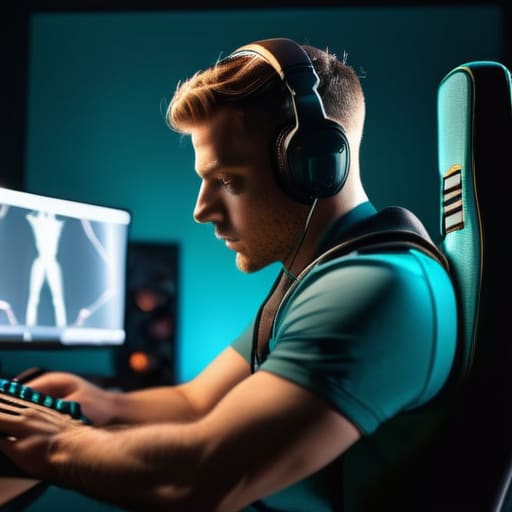
    The Vital Role of Lumbar Support for Gamers

    We often focus so much on our reaction times and input precision that we completely neglect the foundation of our physical performance: the spine. As someone who spent countless hours hunched over a CRT monitor in the 90s, I can tell you firsthand that the “gamer slouch” isn’t just a bad habit; it’s a systematic failure of your setup. Without proper lumbar support for gamers, your lower back inevitably rounds, forcing your muscles to work overtime just to keep you upright. This constant tension doesn’t just cause dull aches; it disrupts your concentration and can lead to long-term fatigue that pulls you away from the very games you love.

    Finding that right curve against your lower back is essential for maintaining a neutral spine. When your lumbar is supported, your pelvis stays in a stable position, which naturally improves your posture and reduces the risk of repetitive strain injury prevention efforts being undermined by poor seating. It’s about creating a stable base of operations. If you can’t sit comfortably, you can’t play with intention. Investing time into your seating geometry is just as important as upgrading your ergonomic gaming peripherals if you want to stay in the game for the long haul.

    Beyond the Chair: Fine-Tuning Your Physical Interface

    • Stop treating your peripherals like afterthoughts; your keyboard and mouse should be positioned so your wrists stay neutral, not cocked at awkward angles that invite strain.
    • Mind the “elbow rule” by ensuring your armrests or desk height allow your elbows to stay at roughly a 90-degree angle, preventing that heavy, aching tension in your shoulders.
    • Don’t let your feet dangle like a kid in a high chair; keep them flat on the floor or use a footrest to stabilize your pelvis and take the pressure off your lower back.
    • Integrate the 20-20-20 rule into your sessions—every 20 minutes, look at something 20 feet away for 20 seconds—to prevent your eyes from locking into a fatigued, unblinking stare.
    • Watch your grip tension during high-stakes moments; I’ve noticed many players subconsciously white-knuckle their controllers, which only leads to faster fatigue and diminished fine motor control.

    Building a Sustainable Foundation for Play

    Treat your physical setup as a tool for skill acquisition, not just a place to sit; if your body is in pain, your brain can’t focus on the mechanics.

    Small, intentional adjustments to your monitor height and lumbar support prevent the long-term fatigue that turns a passion into a chore.

    Mastery requires consistency, and you can’t maintain high-level play if you’re constantly fighting against poor ergonomics.

    The Body as an Interface

    We often focus so much on mastering the software and the mechanics that we forget our own bodies are the primary hardware. If your posture is fighting against your focus, you aren’t playing the game—you’re just managing discomfort.

    Delia Okonkwo

    The Long Game
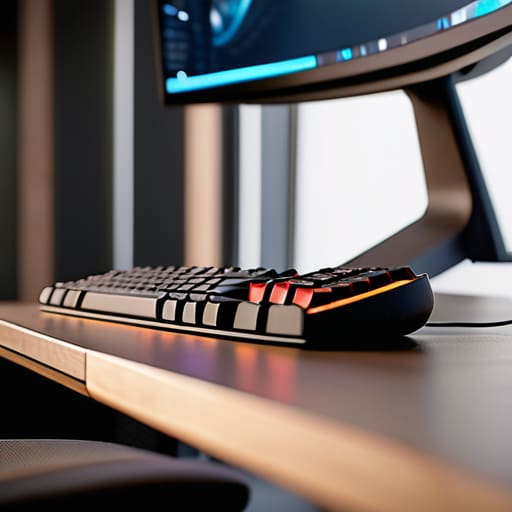
    Ergonomic setup for playing The Long Game.

    At the end of the day, ergonomics isn’t about buying the most expensive gear or following a strict set of rules just for the sake of it. It’s about recognizing that your physical setup is the foundation of your performance. We’ve looked at how monitor height keeps your focus sharp and how proper lumbar support prevents your body from becoming a distraction during intense sessions. When you align your monitor, your chair, and your peripherals with the way your body actually moves, you stop fighting your environment and start mastering the interface. It’s about removing the friction between your intentions and your actions so that nothing—not even a dull ache in your neck—stands in the way of your progress.

    I’ve spent decades moving from arcade cabinets to high-end PC rigs, and if there is one thing I’ve learned, it’s that our bodies change even as our passion for gaming stays constant. We can’t afford to play mindlessly when it comes to our health. Treat your setup with the same respect you give to a complex game mechanic or a difficult boss fight. If you invest in your physical well-being now, you aren’t just preventing discomfort; you are ensuring that you can play with intention for many years to come. Gaming is a lifelong pursuit, and your body deserves to be a partner in that journey, not an obstacle.

    Frequently Asked Questions

    How can I tell if my current desk height is actually causing long-term strain versus just feeling uncomfortable in the moment?

    It’s easy to dismiss a little ache as just “part of the game,” but there’s a difference between temporary fatigue and structural strain. Pay attention to the “hangover” effect: if you notice stiffness in your neck or a dull ache in your wrists that persists long after you’ve put the controller down, your desk height is likely the culprit. If you’re constantly shrugging your shoulders to reach your keyboard, you’re inviting long-term tension.

    Are there specific stretches I can do during loading screens to prevent my wrists from locking up?

    Don’t let a loading screen go to waste. I’ve learned the hard way that if I don’t move, my wrists start feeling like they’re made of rusted gears. Try some gentle wrist circles or a simple prayer stretch—palms together, elbows out, and slowly lower your hands. Even just a quick shake-out helps reset the tension. It’s about maintaining your physical interface so your focus stays on the mechanics, not the discomfort.

    Since I'm often playing on handhelds or smaller devices, how do I maintain good posture without a full desktop setup?

    The handheld dilemma is real. When you’re playing on a Switch or a Steam Deck, the temptation is to hunch into a “gamer’s shrimp” position. To fight this, stop playing in your lap on the couch. Try using a lap desk to bring the device closer to eye level, or prop yourself up with firm pillows to maintain that lumbar curve. If you’re in bed, sit against the headboard rather than lying flat. Keep your elbows tucked; don’t let your arms hang unsupported.

  • How to Improve Your Aim in First Person Shooters

    How to Improve Your Aim in First Person Shooters

    I spent most of my Saturday morning hunched over a disassembled Game Boy Color, the scent of old solder and dust filling my workspace, but my mind kept drifting back to a frustrating realization I had during my last match. We’ve been sold this lie that fps aim training is about grinding endless, soul-crushing hours in a sterile simulator until your wrist aches. I see people treating it like a mindless chore—just clicking dots on a screen to satisfy some arbitrary metric—and frankly, it’s a waste of a perfectly good brain. If you aren’t understanding the neurological connection between your intent and your mouse movement, you aren’t training; you’re just practicing being tired.

    I’m not here to sell you on some expensive peripheral or a “secret” routine that promises pro-level skill overnight. Instead, I want to help you approach your practice with actual intentionality. We are going to strip away the hype and look at the mechanics of how you actually move, focusing on building a foundation that sticks even when the pressure is on. My goal is to help you transform your fps aim training from a repetitive grind into a disciplined, rewarding craft that you can actually enjoy mastering.

    Table of Contents

    Mastering the Mechanics Tracking vs Flicking Techniques

    Mastering the Mechanics Tracking vs Flicking Techniques

    When we break down the mechanics of precision, we really have to look at the fundamental divide between tracking vs flicking techniques. In my experience, players often struggle because they try to treat every engagement the same way. Tracking is about sustained, fluid motion—it’s a rhythmic dance where your crosshair stays glued to a moving target, much like trying to follow a single thread through a moving needle. This is the backbone of games like Overwatch or Apex Legends. Flicking, on the other hand, is about explosive, momentary precision. It’s that sudden, violent correction you make in a tactical shooter like CS2 to snap onto a head before the enemy even realizes you’re there.

    Mastering these requires more than just raw speed; it requires a deep understanding of your own physical limits. If you find yourself constantly overshooting, you might need to reconsider your low sensitivity vs high sensitivity balance. A lower sensitivity often provides the stability needed for micro-adjustments in tracking, whereas a higher sensitivity can make those rapid-fire flicks feel more intuitive. Don’t expect to master both overnight. Instead, approach each technique as a distinct discipline within your broader practice.

    Building Your Foundation an Aim Training Routine for Beginners

    Building Your Foundation an Aim Training Routine for Beginners

    You can’t build a house on sand, and you certainly can’t build precision if your fundamentals are shaky. When I first started looking at the psychology of muscle memory, I realized that most players fail because they jump straight into high-intensity matches without a structured aim training routine for beginners. You need to start small. Instead of grinding for four hours and burning out, aim for twenty to thirty minutes of focused, deliberate practice. Think of it like a warm-up for your brain; you’re teaching your nervous system to communicate more efficiently with your hand.

    During these sessions, pay close attention to your hardware setup before you even touch a target. I’ve seen so many players struggle simply because their mouse acceleration settings are fighting against their natural movement. Once you’ve stabilized your environment, focus on repetitive, slow movements. It’s tempting to go for speed, but if you aren’t being precise, you’re just practicing being inaccurate. Build that steady hand first; the speed will come as a natural byproduct of your mastery.

    Precision Over Pace: Five Ways to Refine Your Aim

    • Stop chasing high scores in your trainer. It’s easy to get caught up in the dopamine hit of a high number, but if your technique is sloppy, you’re just practicing bad habits. Focus on the smoothness of your movement rather than how fast you can click.
    • Respect your hardware settings. I’ve spent too many hours tinkering with vintage handhelds to ignore the importance of tactile feedback. If your sensitivity is too high, you’ll never develop the fine motor control needed for precision; find a DPI that allows you to be intentional, not reactive.
    • Analyze your mistakes like a scientist. When you whiff a shot, don’t just grit your teeth and reset. Ask yourself: Was I overshooting because of tension, or was I undershooting because I lacked speed? Treating every miss as data makes the learning process much more efficient.
    • Manage your physical tension. I notice that when I’m getting frustrated, my grip on the mouse tightens, and my aim becomes jittery. True mastery comes from a relaxed hand; keep your grip light to ensure your micro-adjustments remain fluid.
    • Integrate training with actual gameplay. Aim trainers are great for building the raw mechanics, but they lack the cognitive load of a real match. You have to bridge the gap by taking those practiced movements into high-pressure scenarios where decision-making is just as important as your crosshair placement.

    The Path to Intentional Aim

    Stop treating aim training like a chore and start treating it like a skill; focus on the “why” behind your movements rather than just chasing higher scores on a leaderboard.

    Balance is non-negotiable, so ensure your routine alternates between the smooth, controlled precision of tracking and the explosive, reactive nature of flicking.

    Consistency beats intensity every single time—ten minutes of focused, mindful practice is far more effective for your muscle memory than a three-hour marathon of mindless clicking.

    ## The Psychology of the Click

    “Stop treating aim training like a mindless grind and start seeing it for what it actually is: a way to rewire your brain’s connection to the machine. When you move from clicking blindly to understanding the mechanics of your own movement, that’s when the game finally starts to feel like an extension of yourself.”

    Delia Okonkwo

    Beyond the Crosshair

    Mastering aim training: Beyond the Crosshair.

    At the end of the day, mastering your aim isn’t about memorizing a specific set of mouse movements or blindly following a spreadsheet of training scores. It is about understanding the interplay between your tracking precision and your flicking speed, then building a consistent, intentional routine that respects your brain’s ability to learn. We’ve covered how to differentiate your techniques and how to structure a beginner-friendly foundation, but remember that these are just tools. The real work happens when you stop treating aim training as a chore and start treating it as a systematic study of your own mechanics.

    As I sit here with my tea, watching the progress of my own skill evolution over the decades, I am reminded that gaming is a lifelong journey of refinement. You might have days where your aim feels heavy and disconnected, and that is perfectly fine. The goal isn’t perfection; it is deliberate progress. Don’t let the grind consume the joy of the game itself. Instead, approach every training session with curiosity and every match with intention. If you treat your skill as a craft rather than a destination, you will find that the mastery you seek is much more rewarding than a simple high score.

    Frequently Asked Questions

    How do I know if I'm actually improving through deliberate practice or if I'm just hitting a plateau of mindless muscle memory?

    It’s the classic trap: you feel fast, but you’re actually just on autopilot. To tell the difference, look at your “why.” If you’re hitting targets but can’t explain why you missed the previous shot, you’re just building mindless muscle memory. True deliberate practice requires cognitive friction. If a drill feels easy and comfortable, you aren’t learning; you’re just rehearsing. Real improvement feels mentally taxing because you’re actively correcting your micro-adjustments in real-time.

    Is it better to focus on high-sensitivity precision or should I be looking into lowering my sensitivity for more stability?

    It’s a classic trade-off, but if you’re looking for long-term mastery, lean toward lower sensitivity. High sensitivity might feel snappy at first, but it often sacrifices the fine motor control needed for true precision. I’ve found that lowering your sensitivity provides the stability required to treat aiming like a craft rather than a frantic reflex. Find that sweet spot where you can still turn quickly, but prioritize the control that allows for intentional, calm shots.

    How much time should I realistically spend in aim trainers versus actually playing the game to ensure my skills translate to real matches?

    Don’t fall into the trap of endless, mindless clicking in a trainer. I see so many players treat aim training like a chore to be finished, but it’s a tool, not the destination. Aim for a 30/70 split: thirty percent of your time refining mechanics in the trainer, and seventy percent applying them in actual matches. You need the live game to master target prioritization and movement—things a static bot simply can’t teach you.

  • Understanding Role Playing Game Mechanics

    Understanding Role Playing Game Mechanics

    I remember sitting on my bedroom floor in 1992, the glow of a heavy CRT television warming my face while I stared blankly at a screen full of incomprehensible stats. I wasn’t playing; I was just calculating. There is this pervasive, exhausting myth that to truly enjoy a game, you have to treat rpg mechanics like a second job or a mathematical dissertation. We’ve reached a point where “complexity” is often used as a mask for bad design, forcing players to navigate layers of bloated menus and arbitrary math just to feel a sense of progression. It’s frustrating because it turns what should be a flow state into a chore of mindless spreadsheet management.

    I’m not here to sell you on a new meta or a way to exploit a glitch to skip the grind. Instead, I want to pull back the curtain on how these systems actually interact with your decision-making. My goal is to help you look past the numbers and understand the intentional design behind the curtain. We’re going to break down how to master these systems so you can stop reacting to the UI and start playing with actual purpose.

    Table of Contents

    The Art of Precision in Combat Systems Design

    The Art of Precision in Combat Systems Design.

    When we talk about combat systems design, it’s easy to get lost in the flashy particle effects or the sheer scale of an encounter. But if you look closer, the real magic lies in the tension between player agency and the underlying math. I’ve spent many late nights analyzing how a game handles the friction of a fight. A well-designed system doesn’t just ask you to click faster; it demands that you understand the rhythm of the encounter. Whether you are navigating the calculated pauses of turn-based vs real-time mechanics or reacting to a boss’s telegraph, the goal is the same: intentionality.

    True mastery comes when you stop reacting blindly and start predicting. You begin to see the combat not as a chaotic brawl, but as a series of predictable, solvable puzzles. When a developer nails this, the combat feels earned rather than gifted. You aren’t just surviving by luck; you are winning because you’ve decoded the logic of the encounter. That moment of clarity—where the mechanics finally click and your strategy aligns perfectly with the game’s rules—is exactly why we play.

    Calculating Success Through Dice Roll Probability

    Calculating Success Through Dice Roll Probability.

    There is a specific kind of tension that only exists when you’re staring at a digital d20, waiting for the math to settle. It’s that moment where your carefully planned strategy meets the cold, hard reality of dice roll probability. I’ve spent many late nights, tea cooling on my desk, realizing that the most engaging games don’t just let you win; they force you to negotiate with chance. When a system uses randomness, it isn’t just “luck”—it’s a psychological tool that tests your ability to manage risk under pressure.

    To truly master these systems, you have to look past the frustration of a missed critical hit and start seeing the underlying architecture. High-level play is about understanding how your stat allocation and leveling choices buffer those inevitable low rolls. If you’ve built a character that relies entirely on a single high-variance roll, you aren’t playing a strategy game; you’re just gambling. The real skill lies in building a toolkit that remains effective even when the dice decide to be unkind.

    Beyond the Stat Sheet: Five Ways to Play with Intention

    • Stop treating your character build like a checklist. Instead of just chasing the highest numbers, look at how your stats actually interact with the game’s core systems; a well-rounded build often survives longer than one that’s just a glass cannon of pure damage.
    • Learn to read the “math” behind the curtain. When you understand whether a game favors additive or multiplicative scaling, you stop guessing which gear is better and start making calculated decisions that actually move the needle.
    • Respect the economy of your resources. Whether it’s mana, stamina, or limited-use consumables, the best players don’t just use them when they’re low—they manage them so they never reach that point of desperation in the first place.
    • Don’t ignore the “flavor” mechanics. Sometimes a seemingly useless skill or a niche attribute provides the exact situational utility you need to bypass a difficult encounter entirely, turning a grueling fight into a clever tactical win.
    • Observe the feedback loops. Pay attention to how the game rewards your specific playstyle; if the mechanics are punishing you for being too aggressive, don’t just mash harder—adjust your rhythm to match the system’s internal logic.

    Moving Beyond the Numbers

    Stop viewing mechanics as obstacles to overcome; instead, start seeing them as the language the game uses to communicate its challenges to you.

    True mastery isn’t about memorizing stat spreadsheets, but about understanding the underlying logic so you can make intentional decisions when the pressure is on.

    When you stop playing on autopilot and start engaging with the system’s rhythm, the game shifts from a mindless grind into a deeply rewarding intellectual exercise.

    ## Systems Over Stats

    “Stop looking at your character sheet as a list of numbers to increase, and start seeing it as a map of possibilities; once you understand how these mechanics actually interact, the game stops being a grind and starts being a dance.”

    Delia Okonkwo

    Beyond the Numbers: Finding the Rhythm

    Beyond the Numbers: Finding the Rhythm.

    When we pull back the curtain, we see that RPG mechanics aren’t just math problems to be solved or obstacles to be bypassed. Whether you are navigating the high-stakes tension of a precision combat encounter or learning to respect the inherent chaos of a dice roll, these systems are the language the game uses to speak to you. By understanding how these layers—combat, probability, and progression—interact, you move from being a passive consumer to an active participant. You stop fighting against the game and start playing within its logic, which is where the true depth of the experience finally reveals itself.

    At the end of the day, I don’t want you to just “beat” the game; I want you to understand why it works. There is a profound, quiet satisfaction in seeing a complex system click into place, much like the feeling of finally getting a vintage handheld to power up after weeks of tinkering. Don’t let the complexity intimidate you. Instead, embrace it as a puzzle designed to challenge your mind and reward your growth. Play with intention, look for the patterns, and remember that every mechanic is an invitation to master something new.

    Frequently Asked Questions

    How do I balance my character's build without falling into the trap of just following a meta-guide?

    Stop treating builds like math problems to be solved by a stranger on a forum. To avoid the meta-trap, start by identifying your “core fantasy”—how do you actually want to feel when the combat starts? Once you have that, look at the internal synergy of your stats. If a specific gear piece breaks your intended rhythm, toss it, even if a guide says it’s “optimal.” True mastery comes from understanding the system, not just copying it.

    At what point do complex math systems stop being engaging and start feeling like a chore?

    It happens the moment the math stops serving the fantasy and starts demanding a spreadsheet. When I’m playing, I want to feel the weight of a critical hit or the tension of a narrow escape, not feel like I’m filing my taxes. If you’re spending more time staring at stat modifiers than interacting with the world, the system has failed. Complexity should deepen the immersion, not act as a barrier to the actual joy of play.

    How can I recognize when a game is subtly manipulating my dopamine response through its reward mechanics?

    Look for the “near-miss” effect. If a game consistently gives you a flashing light or a triumphant sound effect right when you almost win, it’s likely tugging at your dopamine receptors. It’s that itch to try “just one more time” because the reward feels imminent, even if it isn’t. When the loop feels less like mastering a system and more like chasing a slot machine, take a sip of tea and step back.