Category: Games

  • How Horror Games Create Immersion

    How Horror Games Create Immersion

    I remember sitting in my darkened living room in the late nineties, the blue glow of a CRT monitor reflecting off my glasses, while the low-frequency hum of a survival horror soundtrack made the hair on my arms stand up. I wasn’t just playing a game; I was trapped in a psychological space where every floorboard creak felt like a personal threat. That visceral sense of horror game immersion isn’t something you can buy with a high-end headset or a 4K monitor. It’s a delicate, often fragile, psychological state that happens when the mechanics of the game stop being “inputs” and start feeling like survival instincts.

    I’m not here to sell you on expensive gear or tell you that lighting settings are the secret to fear. Instead, I want to pull back the curtain on how these systems actually manipulate your brain to keep you on edge. We are going to look at how sound design, pacing, and even your own cognitive biases work together to build—or break—that sense of dread. My goal is to help you move past mindless play and teach you how to truly inhabit the terror, ensuring that every jump scare is earned and every shadow feels heavy with meaning.

    Table of Contents

    Decoding Environmental Storytelling in Horror

    Decoding Environmental Storytelling in Horror details.

    When I’m diving into a new title, I often find myself slowing down, ignoring the obvious jump scares to look at what the developers left in the corners. This is where environmental storytelling in horror truly shines. It’s not just about a blood-stained note on a desk; it’s about the way a room is arranged to suggest a frantic struggle. When a game uses its setting to whisper a narrative without saying a word, it forces you to engage your brain rather than just your reflexes. You aren’t just a spectator; you become a detective piecing together a tragedy.

    The real magic happens when these visual cues are paired with subtle auditory shifts. I’ve noticed that the most effective games use spatial audio in gaming to make the environment feel alive—or perhaps, predatory. A floorboard creaking behind you in a hallway that looks perfectly normal creates a dissonance that is far more unsettling than any monster model. It’s about that psychological weight, where the space itself feels like it’s closing in on you, making the dread feel personal and inescapable.

    Visual Fidelity and Dread Seeing the Unseen
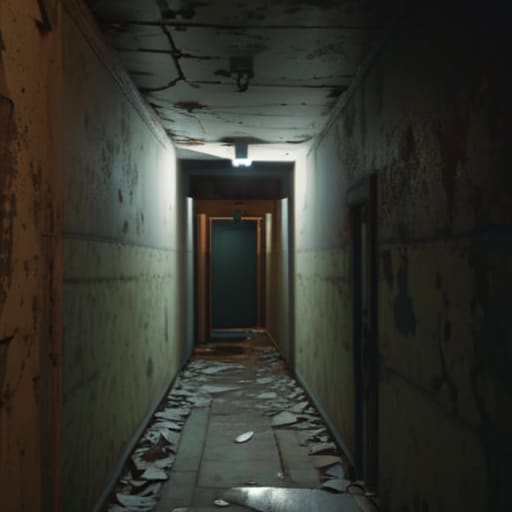
    Visual Fidelity and Dread Seeing the Unseen

    We often mistake high-end graphics for mere eye candy, but in the realm of psychological tension, visual fidelity and dread are inextricably linked. It isn’t about how many polygons are on screen; it’s about how those polygons manipulate your perception of depth and shadow. When a developer uses advanced lighting to cast long, jittery shadows in a narrow corridor, they aren’t just showing off a rendering engine—they are weaponizing your brain’s natural tendency to fill in the blanks. I’ve found that the most effective games use high fidelity to create a sense of tactile reality, making the grime on a wall or the flicker of a dying bulb feel dangerously close to home.

    This visual precision works most effectively when it plays with your sense of scale. In many modern titles, particularly those utilizing a first-person perspective horror lens, the ability to see minute details—the way dust motes dance in a flashlight beam or the subtle tremor in a character’s hand—grounds you in a physical space. This grounding is what makes the sudden absence of light so terrifying. When the visuals are sharp and consistent, the moment they fail or distort, the psychological impact is doubled.

    Five Ways to Lean Into the Terror

    • Curate your sensory environment. If you’re playing a psychological thriller, don’t let a stray notification or a bright kitchen light break the spell; dim the lights and use high-quality headphones to ensure the soundscape—the subtle creaks and distant whispers—becomes your entire reality.
    • Stop rushing the mechanics. It’s tempting to sprint through a hallway to get to the next objective, but true immersion comes from moving with the character’s perceived weight and caution, letting the slow pace build the very tension the developers intended.
    • Practice active observation. Instead of just looking for loot or enemies, treat the environment like a psychological puzzle; look at the placement of a discarded toy or a bloodstain not as a texture, but as a piece of a narrative that demands your mental presence.
    • Embrace the vulnerability. One of the biggest mistakes players make is trying to “conquer” a horror game like an action title; instead, accept that being scared and feeling powerless is a core part of the system you are trying to master.
    • Manage your cognitive load. If you find yourself getting frustrated by a jump scare or a difficult encounter, take a moment to breathe and recalibrate; you can’t find the rhythm of the dread if your brain is stuck in a state of pure, unthinking panic.

    Summary: Mastering the Psychological Landscape

    True immersion isn’t about the graphics; it’s about how the environment uses sensory cues to manipulate your sense of safety.

    Stop looking for the jump scare and start paying attention to the details in the architecture—the stories are often hidden in what’s left behind.

    To master horror, you must stop resisting the tension and instead learn to use that psychological pressure to inform your gameplay decisions.

    ## The Psychology of Presence

    True immersion in horror isn’t about the jump scare that makes you gasp; it’s about that heavy, unsettling realization that the game’s mechanics have successfully bypassed your logic and started talking directly to your nervous system.

    Delia Okonkwo

    Finding the Rhythm of Fear

    Finding the Rhythm of Fear in horror.

    At the end of the day, true immersion in horror isn’t just about a high frame rate or a sudden jump scare that makes you drop your controller. It is the cumulative effect of how a game uses its environment to whisper secrets to you, and how its visual language builds a sense of unrelenting tension. When we stop viewing these games as mere obstacles to be overcome and start seeing them as intricate psychological landscapes, we change the way we play. We move from being passive observers to active participants in the dread, learning to read the shadows and respect the silence.

    As I sit here with my cooling tea, looking back at how far game design has come since the pixelated corridors of my childhood, I’m reminded that horror is one of the most profound ways we can test our own limits. Don’t just play to finish the level; play to master the experience. Embrace the discomfort, lean into the atmosphere, and let the mechanics guide your pulse. Whether you are navigating a modern masterpiece or a retro relic, remember that the most powerful scares are the ones that linger in your mind long after the screen goes dark.

    Frequently Asked Questions

    How much does the actual difficulty of a game impact my ability to stay immersed in the horror experience?

    It’s a delicate balance. If a game is too easy, the tension evaporates because you feel untouchable; you aren’t truly afraid if there’s no consequence to your mistakes. But if the difficulty spikes into pure frustration—constant deaths due to clunky mechanics—the dread breaks. You stop being a character in a nightmare and start being a player fighting a broken system. True immersion lives in that “sweet spot” where the threat feels real, but the agency remains yours.

    Are there specific ways to adjust my hardware or setup to better lean into the psychological tension of these games?

    It really comes down to sensory deprivation. If you want to lean into the psychological weight, you need to eliminate your connection to the physical world. Use high-quality, closed-back headphones to create a private sonic space; sound design is often more terrifying than the visuals. I also recommend dimming your lights or using a single, low-intensity warm lamp. It forces your eyes to work harder, making every shadow feel like it’s shifting.

    At what point does a game's atmosphere stop being immersive and start feeling like it's just cheap jump scares?

    It crosses that line when the tension breaks. True immersion relies on a sustained psychological state—that heavy, lingering dread that follows you through a corridor. When a developer relies on a sudden, loud noise or a monster popping out of nowhere just to get a reaction, they aren’t building atmosphere; they’re exploiting your startle reflex. If the fear comes from a sound cue rather than the environment itself, the system has failed.


  • Core Concepts of Fighting Games

    Core Concepts of Fighting Games

    I still remember the smell of ozone and stale popcorn in my local arcade, hunched over a cabinet with a lukewarm soda, watching players execute frame-perfect combos that looked like magic. Back then, I thought mastery was about having the fastest fingers or memorizing a thousand-line input list. But after years of studying both psychology and the way these systems actually function, I’ve realized that most people approach fighting game fundamentals all wrong. They treat it like a frantic race to memorize high-level execution, when in reality, it’s about understanding the dialogue between two minds. If you’re just mashing buttons and hoping for a lucky hit, you aren’t playing the game; you’re just reacting to it.

    I’m not here to sell you on some expensive training regimen or a list of “secret” combos that only work in a vacuum. My goal is to strip away the noise and help you build a foundation of intention. We are going to look at the mechanics through a lens of logic and pattern recognition, moving away from mindless consumption toward deliberate practice. By the end of this, you won’t just be playing harder; you’ll be playing smarter.

    Table of Contents

    Mastering Footsies and Whiff Punishing With Precision

    Mastering Footsies and Whiff Punishing With Precision

    If you’ve spent any time in the lab, you know that the space between you and your opponent is where the real psychological warfare happens. This is the realm of footsies and whiff punishing, a delicate dance of spacing where one millimeter of movement can be the difference between a successful poke and a devastating counter-hit. It isn’t about being aggressive; it’s about being patient. You aren’t just looking for an opening; you are baiting your opponent into making a mistake, waiting for that moment their limb extends into empty air.

    Once they commit to that useless swing, the game shifts from a dance to a hunt. This is where your ability to manage your mental stack and decision making becomes paramount. You have to process the visual cue of the whiff, calculate the recovery frames, and execute your punish without hesitation. It’s incredibly easy to get caught up in the adrenaline and simply mash, but true mastery comes from intentionality. You aren’t reacting to the chaos; you are capitalizing on the precise moment the system allows you to take control.

    Understanding Hitstun and Blockstun to Control the Flow

    Understanding Hitstun and Blockstun to Control the Flow

    If you want to stop playing reactively and start playing proactively, you have to stop viewing every exchange as a simple “hit or miss” event. In reality, every interaction is governed by the frame data that dictates how long your opponent is frozen in place. This is where understanding hitstun and blockstun becomes your greatest leverage. Hitstun is that brief window where your opponent is reeling from a strike, offering you a chance to extend your pressure. Blockstun, however, is the more subtle, defensive side of the coin; it’s the period where your opponent is stuck in a blocking animation, preventing them from immediately counter-attacking.

    The real mastery lies in how you use these windows to manipulate your opponent’s mental stack and decision making. If you can consistently force them into blockstun, you aren’t just dealing damage—you are effectively dictating the tempo of the match. You are forcing them to sit there, unable to act, while you decide whether to press for more damage or reset to neutral. When you realize that these frames are the actual “gears” turning the game’s engine, you stop mashing and start orchestrating the flow of combat.

    Five Pillars of Intentional Play

    • Stop mashing and start measuring. Every button press should be a choice, not a reflex. Before you swing, ask yourself if you’re actually creating an opening or just feeding your opponent’s rhythm.
    • Learn to love the neutral. Most players get impatient during the “quiet” moments of a match, but that’s where the real game is played. Use those moments to probe defenses and space yourself rather than forcing an engagement that isn’t there.
    • Respect the frame data, even if you don’t memorize the spreadsheets. You don’t need to be a mathematician, but you do need to feel when a move is “unsafe.” If you’re constantly getting interrupted, you’re likely throwing out moves that leave you wide open.
    • Watch your opponent’s habits, not just their character. Fighting games are a conversation between two people. If they always jump after a blocked attack, stop looking at their feet and start looking at the air.
    • Control your mental stack. If you’re panicking because you’re down a round, your mechanics will fail you. Take a breath, sip your tea, and reset your focus to the immediate system in front of you. The match is won in the mind before it’s won on the screen.

    The Intentional Player’s Cheat Sheet

    Stop viewing movement as just getting from A to B; treat your positioning as a constant negotiation of space where every inch gained or lost dictates your ability to punish.

    Don’t just react to what you see; use your understanding of hitstun and blockstun to predict the rhythm of the exchange, allowing you to stay one step ahead of the chaos.

    Mastery isn’t about memorizing endless combos, but about recognizing the underlying systems—once you respect the mechanics of the frame data, the game stops being a guessing match and starts being a chess match.

    The Psychology of the System

    “Most players treat a fighting game like a test of reflexes, but it’s actually a test of discipline; mastery isn’t found in the speed of your thumbs, but in the patience to wait for the system to give you an opening.”

    Delia Okonkwo

    Beyond the Button Mashing

    Mastering combat Beyond the Button Mashing.

    At its core, mastering a fighting game isn’t about having the fastest fingers or memorizing an endless list of frame data. It’s about the synthesis of everything we’ve discussed: the spatial awareness required for precise footsies, the discipline to wait for a whiff punish, and the cognitive ability to read how hitstun and blockstun dictate the rhythm of the match. When you stop reacting blindly and start interpreting the system, the game shifts from a chaotic scramble into a high-stakes conversation. You aren’t just playing against an opponent; you are navigating a complex web of mechanical cause and effect.

    As I sit here with my tea, watching the light fade on my monitor, I’m reminded that the learning curve in this genre is never truly flat. There will always be a new layer to peel back, a new nuance to grasp, and a new way to lose—and subsequently win—through better intention. Don’t let a losing streak discourage you into mindless consumption or frustration. Instead, view every defeat as a data point. Gaming is a lifelong pursuit of mastery, and the real joy isn’t found in the victory screen, but in that moment of clarity when the mechanics finally click and you realize you are no longer just playing the game, but truly understanding it.

    Frequently Asked Questions

    How do I know when I'm actually playing with intention versus just falling into a pattern of reactive, mindless button mashing?

    You’re mashing when you feel a sense of frantic urgency—that “I have to hit something right now” panic. If your inputs are driven by a reflex to react to your opponent rather than a plan to execute a specific strategy, you’ve lost intention. True intentionality feels deliberate. You aren’t just pressing buttons; you are testing a hypothesis. If you can’t explain why you just pressed that button, you aren’t playing; you’re just reacting.

    At what point does studying frame data stop being helpful and start becoming a distraction from actual gameplay?

    Frame data is a map, not the journey itself. It becomes a distraction the moment you’re staring at a spreadsheet in your head instead of your opponent’s movement. If you’re so preoccupied with whether a move is -3 or -5 that you miss the telegraph for a jumping heavy attack, you’ve lost the rhythm. Use the data to build your intuition, but once you’re in the heat of the match, trust your eyes, not your math.

    How can I bridge the gap between understanding these theoretical mechanics and actually executing them under the pressure of a real match?

    The gap between theory and execution is where most players stall, and it’s usually a psychological hurdle rather than a mechanical one. You can’t think your way through a match; you have to build muscle memory. Stop playing ranked matches for a bit. Instead, spend time in training mode with a specific goal—like landing one whiff punish—and then move to casual play where the stakes feel lower. You need to desensitize your brain to the pressure so your hands can take over.

  • How to Improve Rhythm Game Performance

    How to Improve Rhythm Game Performance

    I remember sitting in my dimly lit office last Tuesday, a lukewarm cup of Earl Grey forgotten on my desk, staring at a screen of missed notes and “Good” ratings that felt like personal insults. There is this pervasive myth in the community that achieving true rhythm game precision requires some sort of superhuman, lightning-fast reflex or a thousand-dollar custom controller. I’ve spent decades watching people chase gear and hardware upgrades, thinking a better button will fix a flawed mental loop. But after years of analyzing how our brains actually process tempo, I’ve realized that muscle memory is a liar if you aren’t also training your cognitive intent.

    I’m not here to sell you on a new peripheral or a “secret” finger technique that will only lead to carpal tunnel. Instead, I want to talk about the actual mechanics of how you perceive a beat and translate it into action. I’m going to break down how to move past mindless button-mashing and start approaching every note as a deliberate, calculated movement. My goal is to help you master the intentional flow required to turn those frustrating “Good” hits into a consistent, unshakeable accuracy.

    Table of Contents

    Mastering Audio Visual Synchronization for Intentional Play

    Mastering Audio Visual Synchronization for Intentional Play

    When I first started diving into the psychology of how we process beats, I realized that most players fail not because of slow fingers, but because of a disconnect between what they see and what they hear. To truly master the game, you have to address the gap in your audio-visual synchronization. If your monitor has a slight delay or your headphones are lagging, your brain is fighting a losing battle against physics. I’ve spent many late nights tweaking my rhythm game hardware setup, ensuring that the millisecond I see a note is the exact moment the beat hits my ears.

    Once you’ve stabilized your environment, the focus shifts inward to your perceptual timing accuracy. It isn’t enough to just react; you have to anticipate. Instead of chasing the notes, try to feel the underlying pulse of the track. When you align your internal metronome with the game’s engine, those tight note hit windows stop feeling like punishing obstacles and start feeling like natural extensions of the music. It’s about moving away from frantic responses and toward a state of intentional, rhythmic flow.

    Refining Perceptual Timing Accuracy Within Tight Note Hit Windows

    Refining Perceptual Timing Accuracy Within Tight Note Hit Windows

    When we talk about shrinking those note hit windows, we aren’t just talking about moving your fingers faster; we are talking about recalibrating how your brain processes stimulus. In my experience, the leap from “good” to “elite” happens when you stop chasing the note and start anticipating the perceptual timing accuracy required to meet it. It’s a psychological shift. You have to move away from reactive, panicked movements and toward a state of controlled readiness. If you are constantly playing catch-up, you aren’t mastering the system—you’re just surviving it.

    To get there, you need to address the physical variables that might be sabotaging your internal clock. I often tell people to audit their rhythm game hardware setup before they blame their own reflexes. Even a millisecond of input lag or a slight discrepancy in your monitor’s refresh rate can make achieving frame perfect inputs feel mathematically impossible. Once you’ve stabilized your environment, focus on incremental drills. Don’t aim for a perfect score immediately; instead, aim to tighten your consistency within the smallest possible windows. It’s about building muscle memory through intentionality, not just repetitive motion.

    Small Adjustments for a Smoother Flow

    • Stop fighting the hardware. If you feel a consistent lag between the beat and your input, don’t try to “muscle” through it; adjust your offset settings until the music and your hands are actually speaking the same language.
    • Treat your hands like fine instruments, not hammers. High-level precision comes from minimizing wasted movement—keep your fingers close to the keys and focus on efficient, light taps rather than heavy-handed mashing.
    • Learn to read the patterns, not just the lights. Instead of reacting to a note when it hits the strike zone, train your eyes to scan slightly ahead so your brain can process the upcoming rhythm before your fingers even move.
    • Use metronome-style practice for the tricky sections. If a specific jump or triplet is breaking your flow, strip away the flashy visuals and practice the rhythm in isolation until the muscle memory feels instinctual rather than forced.
    • Listen to the sub-beats. Precision isn’t just about hitting the loud snare; it’s about understanding the underlying pulse of the track. If you can internalize the groove, the notes will naturally fall into place within those tight hit windows.

    The Core Essentials for Precision Play

    Stop chasing the visual cue alone; true mastery comes from internalizing the rhythm so your hands move to the beat, not just the flashing lights.

    Focus on the quality of your timing rather than the speed of your inputs; a deliberate, well-placed hit is worth more than a frantic, accidental one.

    Use your mistakes as data points to identify where your perception is lagging, then adjust your mental focus to bridge that gap.

    The Psychology of the Beat

    Precision isn’t about how fast your fingers can move; it’s about training your brain to bridge the gap between what you hear and what you feel, turning a frantic reaction into a deliberate, rhythmic intention.

    Delia Okonkwo

    Beyond the Perfect Combo

    Mastering rhythm: Beyond the Perfect Combo.

    Achieving true precision isn’t about luck or having superhuman reflexes; it’s about the deliberate marriage of your senses. We’ve looked at how aligning your internal clock with audio-visual cues can stabilize your performance, and how narrowing your focus to those razor-thin hit windows transforms a chaotic flurry of notes into a structured pattern. When you stop reacting to the screen and start anticipating the rhythm, you move from a state of survival to a state of control. It’s the difference between mashing your way through a song and actually understanding the architecture of the music.

    As you head back into your favorite tracks, remember that progress isn’t always a straight line upward. There will be days when your timing feels sluggish and your accuracy drops, but don’t let that discourage you. Treat every missed note not as a failure, but as data—a tiny piece of feedback telling you where your focus shifted. Gaming, much like life, is a practice of constant refinement. Stay patient, keep your tea warm, and play with intention. The mastery you’re seeking isn’t just in the high score, but in the quiet clarity you find between the beats.

    Frequently Asked Questions

    How do I stop my hands from overcompensating and causing "jitter" when the BPM suddenly shifts?

    That jitter happens because your nervous system is trying to “predict” a change that hasn’t happened yet. When the BPM shifts, your muscles tense up in anticipation, creating that frantic, shaky overcorrection. To fix this, stop trying to physically react to the speed and start leaning into the metronome. Instead of gripping tighter, focus on keeping your wrists loose. Treat the shift as a change in momentum, not a reason to panic.

    Is it better to rely more on the visual cues of the notes or the auditory rhythm of the track when I'm hitting a plateau?

    When you hit a plateau, you’re usually overcompensating for one sense with the other. If you’re staring intensely at the notes, you’re playing reactively, which kills your flow. I’ve found that leaning into the auditory rhythm is the key to breaking through. Let the music become your internal metronome; use the visuals only to confirm what your ears already know. Stop chasing the icons and start feeling the beat.

    At what point does practicing precision become counterproductive to my overall enjoyment of the game?

    It becomes counterproductive the moment your focus shifts from the music to the math. If you’re staring at the hit window like a scientist measuring a specimen rather than feeling the rhythm, you’ve lost the soul of the game. When the pursuit of a “Perfect” rating starts making your hands tense and your heart race with anxiety instead of excitement, put the controller down. Sip some tea, listen to the track, and remember why you started playing.

  • Choosing the Right Hardware for Gaming

    Choosing the Right Hardware for Gaming

    I remember sitting on my bedroom floor in 1988, the scent of warm plastic and ozone filling the air as I tinkered with a handheld console that had seen better days. Back then, you didn’t need a thousand-dollar setup; you just needed something that responded to your touch. Fast forward to today, and I’m often exhausted by the sheer noise surrounding gaming hardware. The industry wants you to believe that a higher frame rate or a more expensive mechanical switch is the only way to achieve greatness, turning what should be a tool for mastery into a never-ending cycle of consumerist hype.

    I’m not here to sell you on the latest flashy peripherals or convince you that your current setup is obsolete. Instead, I want to help you strip away the marketing fluff and focus on what actually matters: the synergy between your intent and your tools. My goal is to provide you with a grounded, experience-based perspective on selecting gear that serves your specific playstyle. We are going to look at hardware through the lens of intentionality and skill, ensuring every piece of equipment you own actually sharpens your edge rather than just cluttering your desk.

    Table of Contents

    The Core Engine Deciphering Cpu vs Gpu for Gaming

    The Core Engine Deciphering Cpu vs Gpu for Gaming

    When people ask me about upgrading their rigs, they often get caught up in the flashy aesthetics of RGB lighting setups and forget the actual logic governing their machine. To play with intention, you have to understand the division of labor between your processor and your graphics card. Think of the CPU as the conductor of an orchestra; it handles the complex logic, the physics, and the AI behaviors that dictate how a game world actually functions. If your processor is struggling, the entire system stutters, no matter how much visual power you have.

    On the other hand, the GPU is the artist. While the CPU manages the “why” and “when,” the GPU handles the “how it looks.” If you’re aiming for immersion in sprawling open worlds, investing in high-end graphics cards is essential for rendering those intricate textures and lighting effects. The debate of cpu vs gpu for gaming usually boils down to finding a balance where neither becomes a bottleneck. I’ve seen too many players overspend on visuals only to be sabotaged by a processor that can’t keep up with the frame rates. True mastery requires equilibrium.

    High End Graphics Cards Visual Clarity for Strategic Depth

    High End Graphics Cards Visual Clarity for Strategic Depth

    When we talk about high-end graphics cards, the conversation often drifts toward frame rates and flashy textures. But as someone who looks at games through a psychological lens, I see something deeper: visual fidelity is a tool for cognitive clarity. In a fast-paced tactical shooter or a dense open-world RPG, a powerful GPU isn’t just about “looking pretty”—it’s about reducing visual noise. When your hardware can render complex environments without stuttering, your brain can stop processing lag and start focusing on the patterns and cues that actually matter for victory.

    Investing in top-tier silicon means you aren’t just chasing aesthetics; you are minimizing the gap between your intent and the game’s response. This level of clarity allows for a more seamless flow state, where the hardware disappears and only the strategy remains. While some players get distracted by complex rgb lighting setups, the real advantage lies in that crisp, stable image that allows you to spot an enemy movement in the periphery before they even realize you’ve seen them. It is about mastering the visual landscape to gain a decisive edge.

    Beyond the Spec Sheet: Five Ways to Choose Gear with Intention

    • Stop chasing the highest numbers on a box; instead, match your hardware to your specific genre. If you’re deep into tactical RPGs or strategy games, your CPU and RAM stability matter far more than having a GPU that can render 4K ray-tracing you’ll never actually use.
    • Invest in input precision rather than flashy aesthetics. A mechanical keyboard with a tactile response or a high-polling rate mouse isn’t just a luxury—it’s about shortening the gap between your brain’s command and the game’s reaction.
    • Don’t overlook the ergonomics of your setup. You can have the most powerful rig in the world, but if your desk height or chair support forces you into physical discomfort, you’ll lose the mental clarity needed to master complex mechanics.
    • Prioritize monitor refresh rates over sheer resolution if you play fast-paced titles. A crisp 4K image is beautiful, but if it’s running at 30Hz, you’re essentially playing through a fog, losing the fluid motion required for high-level play.
    • Think about your thermal management as a long-term investment. Overheating components don’t just throttle your performance mid-match; they degrade the longevity of your tools. A well-ventilated system ensures your hardware remains a reliable partner for years of play.

    Summary: Choosing Hardware with Intention

    Don’t chase specs just for the sake of a number on a box; focus on how the balance between your CPU and GPU creates the seamless, responsive environment you need to actually master a game’s mechanics.

    High-end graphics cards aren’t just about eye candy; they provide the visual clarity and stability required to spot subtle environmental cues and maintain your strategic edge during intense gameplay.

    View your hardware as a set of precision tools rather than just a collection of components, ensuring every piece of gear serves the ultimate goal of deepening your connection to the game.

    Hardware as an Extension of Intent

    Don’t view your setup as a collection of expensive parts; view it as the interface between your intent and the game’s mechanics. When your hardware is seamless, the tech disappears, leaving only your skill and the system you’re trying to master.

    Delia Okonkwo

    Beyond the Specs: Building Your Foundation

    Beyond the Specs: Building Your Foundation.

    At the end of the day, selecting your hardware isn’t about chasing the highest numbers on a spec sheet or winning a consumerism race. It’s about understanding how the interplay between a capable CPU and a high-performance GPU creates the environment you need to succeed. We’ve looked at how processing power dictates the logic of the world and how graphics cards provide the visual clarity essential for strategic depth. When you stop viewing components as mere parts and start seeing them as the architecture of your experience, you move from being a passive consumer to an intentional player who understands the tools of their trade.

    As I sit here with my tea, watching the light catch the screen of a console I spent all weekend restoring, I’m reminded that the gear is just the vessel. The real magic happens in the space between your hands and the controller, where skill meets system. Don’t let the pursuit of the “perfect” rig become a distraction from the actual act of playing. Invest in quality, yes, but do so with the goal of mastering the mechanics and finding deeper joy in the loop. Build a setup that respects your passion, and then, most importantly, get in the game.

    Frequently Asked Questions

    How do I know if my current monitor is actually capable of displaying the frame rates my new GPU is pushing?

    It’s a common bottleneck. To find out, you need to look past the screen’s size and check its refresh rate (measured in Hz). If your new GPU is pumping out 144 FPS but your monitor is capped at 60Hz, you’re essentially throwing away half your performance; you’ll see motion blur instead of fluid precision. Check your display settings or the manufacturer’s specs. If the numbers don’t match, your hardware isn’t playing in sync.

    Is it worth investing in high-end peripherals if my primary goal is improving my mechanical skill rather than just aesthetics?

    Absolutely. If you’re playing to master a system, aesthetics are just noise. I’ve spent years restoring old handhelds, and I know that a millisecond of input lag or a mushy button can break your mental flow. Investing in high-polling rate mice or mechanical keyboards isn’t about looking “pro”—it’s about reducing the friction between your intent and the game’s response. Precision tools allow your mechanical skill to actually manifest without being throttled by subpar gear.

    When upgrading, how do I identify the specific bottleneck that’s actually holding my performance back?

    To find your bottleneck, stop guessing and start observing. While you’re playing, keep a performance monitor running—something like MSI Afterburner is perfect. If your GPU usage is hovering near 99% but your CPU is idling, your graphics card is the ceiling. However, if your GPU usage is low and your CPU is spiking, you’ve hit a processing limit. Identify that specific friction point so you can invest in hardware that actually moves the needle.

  • The Benefits of Cooperative Gaming

    The Benefits of Cooperative Gaming

    I still remember the smell of ozone and stale popcorn in my uncle’s basement, hunched over a flickering CRT screen with my cousin, trying to navigate a pixelated dungeon. We weren’t just playing; we were communicating in a frantic, unspoken language of button presses and shared adrenaline. That was my first real taste of cooperative gaming, a raw connection that felt far more substantial than any modern, hollow “social feature” advertised by big publishers today. There is a massive difference between simply occupying the same digital space and actually syncing your cognitive processes with another human being to overcome a systemic challenge.

    I’m not here to sell you on the idea that playing with friends is a magic cure for a mediocre game design. Instead, I want to pull back the curtain on how we can approach these shared systems with more intention. I promise to skip the superficial fluff and dive straight into the mechanics of meaningful synergy. We are going to explore how to move past mindless button-mashing and start treating your team like a finely-tuned machine, ensuring that every session is a deliberate step toward mastering the craft together.

    Table of Contents

    Decoding Complex Collaborative Gameplay Mechanics

    Decoding Complex Collaborative Gameplay Mechanics.

    When we strip away the flashy graphics and the adrenaline, what we’re really left with are the underlying systems that dictate how players interact. In many modern titles, success isn’t just about individual reflexes; it’s about understanding the specific collaborative gameplay mechanics that the developers have woven into the loop. I often find myself analyzing how a game distributes resources or manages cooldowns to force players into a state of mutual reliance. It’s a fascinating psychological dance where you have to stop thinking about “my score” and start thinking about the collective efficiency of the unit.

    If you want to move past the amateur stage, you have to look for the invisible threads connecting your actions to your partner’s. This is where the real depth of team-based strategy games reveals itself. It isn’t enough to simply occupy the same digital space; you need to anticipate the rhythm of your ally. Whether it’s timing a defensive buff to coincide with their ultimate or managing a shared health pool, mastering these nuances turns a chaotic skirmish into a synchronized masterpiece of intent.

    Elevating Online Multiplayer Dynamics Through Intentionality

    Elevating Online Multiplayer Dynamics Through Intentionality.

    When we step into the digital arena of online multiplayer dynamics, it is easy to fall into the trap of treating other players like mere NPCs or obstacles to our own progress. We often default to a “me-first” mentality, chasing solo glory while neglecting the very systems that make the game thrive. However, true mastery comes when you stop playing alongside people and start playing with them. This shift requires a conscious decision to move away from chaotic, reactionary playstyles and toward a structured, intentional approach where every movement serves the group’s broader objective.

    This is where the real depth of team-based strategy games reveals itself. Instead of just reacting to the nearest threat, I’ve found that the most rewarding social gaming experiences stem from anticipating a teammate’s needs before they even voice them. Whether it’s covering a flank or managing resources to support a healer, these micro-decisions transform a group of strangers into a synchronized unit. When you approach the game with this level of mental engagement, the experience stops being a mindless grind and becomes a sophisticated exercise in collective problem-solving.

    The Intentional Player’s Toolkit for Group Success

    • Stop playing your own game; start playing the team’s game. It’s easy to get tunnel vision on your own cooldowns or loot, but true synergy happens when you stop thinking about your individual score and start anticipating the gaps in your partner’s defense.
    • Master the art of the “low-bandwidth” callout. In the heat of a raid or a frantic skirmish, nobody has time for a psychological breakdown of the enemy’s movement patterns. Keep your communication surgical—name the threat, state the direction, and execute.
    • Embrace the role you actually need, not just the one you find most rewarding. I know it’s tempting to always play the DPS and chase the glory, but a team with five glass cannons is just a countdown to a wipe. Sometimes, the most profound mastery comes from being the steady, invisible backbone that keeps the group alive.
    • Treat mistakes as data points rather than personal failures. When a coordinated push falls apart, don’t look for someone to blame; look for the mechanical breakdown. Was it a timing error, a lack of resource management, or a failure in positioning? Analyze the system, adjust, and move on.
    • Cultivate a culture of psychological safety within your squad. If your teammates are afraid to fail, they’ll play tentatively, and tentative play is how groups die. Encourage experimentation and keep the tone constructive; a group that trusts each other is far more dangerous than one that is simply mechanically gifted.

    The Intentional Player’s Toolkit

    Stop treating your teammates as NPCs; true mastery comes from treating the group as a single, synchronized system where every movement serves a mechanical purpose.

    Move beyond the reactive loop of mindless button-mashing and start analyzing the game’s underlying logic to anticipate needs before they become crises.

    Cultivate a mindset of deliberate communication, focusing on actionable information rather than noise to maintain the psychological flow of the team.

    The Architecture of Shared Victory

    “Cooperative gaming isn’t just about playing alongside someone; it’s about synchronizing your mental models until the gap between individual intent and collective action simply disappears.”

    Delia Okonkwo

    Moving Beyond the Screen

    Moving Beyond the Screen with tactical synergy.

    At its core, mastering cooperative play isn’t about just hitting buttons at the same time as your partner; it’s about understanding the underlying architecture of the game and your role within it. We’ve looked at how breaking down complex mechanics and bringing a sense of deliberate intentionality to online interactions can transform a chaotic lobby into a streamlined, efficient unit. When we stop treating our teammates as mere NPCs and start seeing them as essential components of a larger system, we move away from the mindless grind and toward a much deeper, more rewarding level of tactical synergy.

    As I sit here with my tea, watching the glow of a handheld screen, I’m reminded that the most profound victories aren’t just the ones measured in XP or loot drops. They are found in those rare, unspoken moments of perfect synchronization where a group of strangers becomes a cohesive team through shared focus and respect. Gaming is a lifelong evolution, and as we grow, our way of playing should evolve too. Don’t just play to win; play to connect, and you’ll find that the true mastery of any game lies in the human connections built within its digital walls.

    Frequently Asked Questions

    How do I maintain my own sense of agency and skill progression when playing with teammates who have vastly different experience levels?

    It’s easy to feel like a passenger when you’re playing with novices, but don’t let your own growth stall. Instead of just carrying them, shift your focus to high-level mastery. Use the “gap” to practice precision—perfect your timing, optimize your resource management, or experiment with complex builds that require absolute control. If they are the shield, you become the scalpel. You aren’t just playing the game; you’re mastering the nuances of leadership and tactical precision.

    Are there specific psychological frameworks I can use to better read my partner's intentions during high-pressure, split-second gameplay?

    When the adrenaline spikes, stop looking for verbal cues and start reading “micro-behaviors.” Think of it through the lens of Social Cognitive Theory: you aren’t just watching their character; you’re observing their patterns of agency. Watch for their positioning and resource expenditure. If they’re overextending, they’re likely playing reactively rather than proactively. By recognizing these subtle shifts in their decision-making rhythm, you can anticipate their next move before they even press a button.

    How can we transition from "playing together" to truly "mastering systems together" without falling back into the trap of mindless, uncoordinated grinding?

    Stop treating the session like a mindless marathon. To move beyond mere proximity, you have to start treating your group as a single, integrated system. This means pausing the grind to conduct “post-mortems” on failed runs—analyzing exactly where the mechanical breakdown occurred. Instead of just repeating the same failed loop, map out specific roles and trigger-based responses. When you stop playing at the game and start solving it as a unit, the mastery follows.

  • Elements of Good Open World Design

    Elements of Good Open World Design

    I remember sitting on my floor in 1992, the glow of a heavy CRT television illuminating my living room, feeling that pure, unadulterated sense of discovery. Back then, a digital horizon felt like a promise. Fast forward to today, and I often find myself staring at a massive, sprawling map only to feel a profound sense of hollow exhaustion. We’ve reached a point where developers mistake sheer scale for depth, cluttering our screens with endless icons and repetitive tasks that do nothing but inflate playtimes. This modern approach to open world design has largely abandoned the magic of true exploration in favor of a glorified checklist, turning what should be an odyssey into a mindless grind.

    I’m not here to tell you which games have the prettiest vistas or the largest maps. Instead, I want to pull back the curtain on the mechanics that actually matter. We are going to look past the marketing hype to analyze how intentionality—or the lack thereof—shapes your experience. My goal is to help you recognize the difference between a world that respects your intelligence and one that simply consumes your time. Let’s learn how to navigate these systems with purpose, rather than just wandering aimlessly through the noise.

    Table of Contents

    Beyond the Map Landmark Based Navigation and World Building Techniques

    Beyond the Map Landmark Based Navigation and World Building Techniques

    When I was younger, navigating a game meant staring at a mini-map in the corner of the screen, frantically matching icons to the terrain. It was a chore, not an experience. Modern developers have moved toward much more sophisticated landmark-based navigation, where the environment itself acts as your compass. Instead of following a glowing waypoint, you’re looking for a jagged mountain peak or a strangely glowing tower on the horizon. This shift forces you to actually look at the world, transforming a simple traversal task into an act of observation.

    This is where effective world building techniques truly shine. A well-placed structure isn’t just eye candy; it serves as a psychological anchor. When a designer places a massive, crumbling citadel in the distance, they aren’t just filling space—they are creating a sense of scale and a silent invitation to explore. It turns the landscape into a readable map of history and intent. By utilizing these visual cues, games can foster a sense of organic discovery that a UI-heavy approach simply cannot replicate, allowing you to navigate by instinct rather than by instruction.

    The Art of Non Linear Progression and Player Agency in Gaming

    The Art of Non Linear Progression and Player Agency in Gaming

    The real magic of a well-constructed world isn’t found in a checklist of icons on a mini-map, but in the feeling that your choices actually carry weight. True player agency in gaming occurs when the developer steps back and allows the systems to interact in ways they didn’t explicitly script. When a game offers non-linear progression, it stops being a guided tour and starts becoming a personal journey. I’ve always found that the most memorable moments aren’t the ones where I followed a quest marker, but the ones where I decided to ignore the “main” path to see what happened in the periphery.

    This is where we see the beauty of emergent gameplay mechanics taking center stage. Instead of a rigid, A-to-B structure, the world becomes a sandbox of cause and effect. Whether it’s using a physics mechanic to bypass a guarded gate or stumbling upon a hidden faction through sheer curiosity, these moments feel earned because they weren’t forced upon us. When designers respect our intelligence by providing tools rather than just instructions, they transform the experience from mindless consumption into a meaningful mastery of the environment.

    Decoding the Sandbox: 5 Ways to Play with Intent

    • Stop following the golden trail. Most modern open worlds use visual breadcrumbs to lead you by the nose, but true mastery comes from ignoring the UI and learning to read the landscape itself. When you stop relying on the mini-map, you start actually seeing the world.
    • Treat every side quest as a system test. Don’t just clear icons off your map like it’s a chore list. Instead, look at how a specific quest’s mechanics—be it stealth, combat, or dialogue—interact with the surrounding environment. Every mission is a lesson in how the game’s rules function.
    • Respect the rhythm of the world. Open worlds aren’t just static playgrounds; they have internal cadences. Learn when to push through a high-intensity combat zone and when to pull back and observe the environmental storytelling. Pacing is a skill, not just something the developers decide for you.
    • Master the economy of movement. Whether it’s managing stamina, fuel, or cooldowns, the way you traverse a massive map is a mechanical puzzle. Don’t just sprint aimlessly; calculate your pathing to minimize resource drain and maximize your tactical positioning.
    • Look for the “Why” behind the clutter. When you encounter a dense cluster of loot or a strange landmark, don’t just consume it. Ask yourself what this tells me about the world’s logic. Understanding the developer’s intent behind the placement of objects turns mindless looting into meaningful exploration.

    Mastering the Open World: Three Pillars of Intentional Play

    Stop treating the map like a checklist; instead, learn to read the environmental cues and landmarks that turn a sprawling landscape into a coherent, navigable system.

    True agency comes from understanding the game’s underlying mechanics, allowing you to move from reactive wandering to proactive, strategic exploration.

    Embrace the non-linear nature of these worlds by setting your own objectives, ensuring your time spent is a deliberate pursuit of mastery rather than mindless traversal.

    The Psychology of Space

    A truly great open world isn’t a playground of endless distractions; it’s a conversation between the developer’s systems and the player’s intent, where every horizon offers a puzzle to solve rather than just a place to wander.

    Delia Okonkwo

    Decoding the Horizon

    Decoding the Horizon: meaningful open world design.

    When we strip away the flashy graphics and the endless checklists, we see that great open world design is really about the harmony between navigation and autonomy. We’ve looked at how landmarks act as silent guides, pulling us through a landscape without the need for a cluttered mini-map, and how true agency comes from a world that respects our ability to choose our own path. It isn’t enough for a map to be large; it must be meaningful. To truly master these spaces, we have to move past the urge to simply clear icons off a screen and instead begin to read the environment as a cohesive, living system that reacts to our presence and our decisions.

    As I sit here with my tea, watching the glow of a handheld screen, I am reminded that the most profound gaming experiences aren’t found in the destination, but in the intentionality of the journey. Don’t let a massive map turn you into a mindless consumer of content. Instead, approach every vast expanse as a puzzle to be understood and a rhythm to be felt. When you stop chasing completion percentages and start playing with purpose, you realize that the world isn’t just something to inhabit—it is a complex masterpiece waiting for you to master its mechanics.

    Frequently Asked Questions

    How can developers balance the freedom of non-linear progression without making the player feel completely lost or without purpose?

    The trick lies in providing “invisible scaffolding.” You can’t just drop a player into a sandbox and hope for the best; that’s how engagement dies. Instead, developers should use systemic breadcrumbs—environmental storytelling, subtle audio cues, or reactive NPC dialogue—that suggest a direction without forcing it. It’s about offering a hierarchy of goals: immediate tactical needs that keep them moving, underpinned by larger, meaningful systemic objectives that give their wandering a sense of inevitable purpose.

    At what point does a massive, landmark-driven world stop being an immersive system and start feeling like a checklist of chores?

    It happens the moment the “why” disappears. When a landmark exists solely to host a generic icon rather than to tell a story or challenge your understanding of the world, the system breaks. If I’m traversing a beautiful valley just to clear a waypoint because a UI element told me to, I’m no longer playing; I’m performing data entry. Immersion dies when the world stops being a playground and starts feeling like a to-do list.

    How do we distinguish between a world that is truly "open" and one that simply uses scale to mask a lack of meaningful mechanical depth?

    It comes down to the difference between a playground and a museum. A museum is vast, impressive, and static; you walk through it, but you don’t change it. A true open world, however, is a living system. If you can traverse ten miles of terrain without the environment reacting to your presence, your gear, or your previous choices, you aren’t playing in an open world—you’re just wandering through a very large, very empty backdrop.

  • Mastering the Mechanics of Soulslike Games

    Mastering the Mechanics of Soulslike Games

    I remember sitting in my dim home office last Tuesday, my lukewarm Earl Grey forgotten on the desk, as I stared at a “YOU DIED” screen for the fourteenth time in an hour. My hands weren’t shaking from fear, but from that specific, exasperating friction that comes when a game feels like it’s cheating rather than challenging. There is a pervasive myth in gaming circles that soulslike difficulty is synonymous with unfairness or mindless punishment, a way to gatekeep “hardcore” status from the uninitiated. But as someone who spent my childhood deciphering the logic of arcade cabinets, I know that true difficulty isn’t about how many times you fail; it’s about the clarity of the lesson learned in that failure.

    I’m not here to give you hollow platitudes about “just trying harder” or to sell you on some overpriced guide of broken builds. Instead, I want to pull back the curtain on the psychological architecture of these games. I promise to share an honest, mechanics-first breakdown of how to read the rhythm of combat and turn frustration into mastery. We aren’t just playing to survive; we are playing to understand the system.

    Table of Contents

    Navigating the Steep Learning Curve in Action Rpgs

    When you first step into these worlds, the sheer weight of the learning curve in action RPGs can feel less like a challenge and more like a wall. It’s easy to feel overwhelmed when a single mistake sends you back to a bonfire, but that’s where the psychology of the genre kicks in. You aren’t just fighting enemies; you are learning a language of animations and timing. I’ve found that the shift happens when you stop treating every encounter as a frantic struggle for survival and start viewing them as rhythmic patterns to be decoded.

    The magic lies in the rewarding failure mechanics that these games employ. Instead of punishing you with a “Game Over” screen that feels hollow, these systems treat every death as a data point. You learn the exact wind-up of a boss’s heavy swing or the precise window for mastering dodge rolls and parries. It’s a cycle of trial, error, and eventual triumph. When you finally land that perfect counter-attack, it isn’t just luck; it’s the tangible result of your own skill progression manifesting in real-time.

    Embracing Rewarding Failure Mechanics as a Path to Growth

    Embracing Rewarding Failure Mechanics as a Path to Growth

    In many ways, these games treat death not as a “Game Over” screen, but as a vital data point. When I’m working on a particularly stubborn boss, I’ve learned to stop viewing a loss as a personal failure and start seeing it as a necessary part of the feedback loop. These rewarding failure mechanics are designed to strip away your ego. They force you to stop relying on luck and instead focus on the granular details—the exact frame a boss winds up an attack or the subtle tell of an incoming strike.

    Once you stop fighting the inevitability of dying, you start to notice how much your internal rhythm changes. It’s about the transition from panic to precision. You begin mastering dodge rolls and parries not through sheer reflexes, but through a calm, almost meditative observation of the enemy’s patterns. This is where the real psychological shift happens. You aren’t just playing a game anymore; you are participating in a deliberate process of refined skill progression, where every mistake is simply an invitation to try a more intelligent approach.

    The Delia Method: Five Strategies for Intentional Mastery

    • Stop the button-mashing reflex. In a Soulslike, every input has a cost. Before you press anything, take a breath and observe the enemy’s rhythm. If you aren’t playing with intention, you’re just providing the boss with free practice.
    • Treat your stamina bar like your most precious resource. It’s easy to get caught up in the adrenaline of a fight and burn through your reserves, but a player with zero stamina is a player waiting to be punished. Manage your breath, and you’ll manage the fight.
    • Study the environment as much as the combat. These games are masterclasses in visual storytelling and level design. Often, the “difficulty” isn’t just the monsters, but the pathing and the traps. Look for the cues the developers left for you; they want you to succeed, even if they make you work for it.
    • Learn to love the “Information Phase.” Every time you die, you haven’t just lost progress; you’ve gained data. Did the boss telegraph a heavy swing with a specific shoulder movement? Did a certain trap trigger when you stepped on a specific tile? Treat every death as a research note for your next attempt.
    • Know when to step back and recalibrate. Sometimes the best way to “play better” is to stop playing for a moment. If you feel your frustration rising, your cognitive ability to analyze mechanics drops. Step away, grab a fresh cup of tea, and come back when you can approach the system with a calm, analytical mind.

    Mastering the Rhythm of the Grind

    Stop viewing death as a setback and start seeing it as data collection; every failed attempt is just another piece of the puzzle being solved.

    Shift your focus from reactive button-mashing to proactive observation, studying enemy patterns until the combat feels less like a struggle and more like a predictable dance.

    Respect the intentionality of the design by playing with patience, understanding that the frustration is often a necessary precursor to the profound satisfaction of a hard-won victory.

    The Psychology of the Struggle

    “The sting of a boss fight isn’t a sign of failure; it’s the friction required to turn mindless button-mashing into intentional mastery. We don’t play these games to win easily; we play them to feel the weight of our own progress.”

    Delia Okonkwo

    The Mastery Within the Struggle

    The Mastery Within the Struggle.

    At its core, the difficulty of a Soulslike isn’t a barrier designed to keep you out; it’s a framework designed to pull you in. We’ve looked at how navigating that steep learning curve requires a shift from reflex to deliberate observation, and how every crushing defeat is actually a vital data point in your evolution as a player. By moving away from mindless button-mashing and instead embracing the mechanics of failure, you transform the experience from a frustrating slog into a sophisticated dance of cause and effect. It is about learning to read the rhythm of the combat and respecting the systems that govern the world.

    Ultimately, I want you to remember that the tension you feel during a boss fight is exactly where the magic happens. When you finally land that perfect parry or dodge a frame-perfect attack, the rush isn’t just about winning; it’s about the profound satisfaction of intentional mastery. Don’t let the daunting difficulty scare you away from the starting line. Instead, approach every level with curiosity and a steady hand. Gaming, especially in these punishing genres, is a lifelong pursuit of skill, and the struggle is precisely what makes the victory worth holding onto.

    Frequently Asked Questions

    How can I tell the difference between a game that is genuinely challenging and one that is just poorly designed or unfair?

    It comes down to agency. A well-designed challenge respects your intelligence; when you die, you should be able to point to a specific mistake—a mistimed roll or a greedy swing—and say, “I see what I did wrong.” If you feel like you’re losing to invisible math, broken hitboxes, or camera angles that actively sabotage you, that isn’t difficulty. That’s just bad engineering. True mastery requires a fair fight.

    Is there a specific mental framework I should use to stay calm when I feel myself getting frustrated during a boss fight?

    When the adrenaline spikes and your hands start to shake, I recommend shifting from a reactive mindset to an observational one. Stop treating the boss as an enemy to be defeated and start treating it as a pattern to be decoded. Ask yourself: “What specific move just caught me?” By turning the fight into a data-collection exercise, you detach your ego from the loss. It’s much harder to stay frustrated when you’re busy being a student.

    At what point does "playing with intention" turn into unnecessary grinding, and how do I find that balance?

    Grinding becomes a trap when you stop analyzing the combat and start just repeating motions to see a number go up. If you’re killing the same mob for the tenth time without learning a new dodge timing or parry window, you’ve lost your intention. That’s mindless consumption, not mastery. If the loop feels hollow, step back. Re-evaluate your build or your strategy instead of just throwing more hours at the problem.

  • What It Takes to Go Professional in Esports

    What It Takes to Go Professional in Esports

    I remember sitting in my dim living room in the late 90s, the hum of a CRT monitor providing the only soundtrack to my weekend, thinking that “getting good” just meant playing more hours. Today, the conversation around esports professionalization has shifted from raw talent to a dizzying, expensive blur of high-performance centers, specialized nutritionists, and massive corporate sponsorships. There is a growing myth that you need a million-dollar infrastructure to be considered a “pro,” but that’s just noise designed to sell coaching packages. To me, professionalization isn’t about how much capital is poured into a team; it’s about the psychological shift from playing for dopamine to playing for mastery.

    I’m not here to sell you on the glitz of the stadium lights or the hype of the massive orgs. Instead, I want to strip away the fluff and look at the actual mechanics of how a player evolves from a hobbyist into a disciplined professional. We are going to dive into the intentional systems—the mental frameworks and deliberate practice habits—that actually move the needle. My promise is simple: no industry jargon, no empty promises, just a direct look at how you can approach the game with the precision of a professional.

    Table of Contents

    Building a Robust Professional Gaming Infrastructure

    Building a Robust Professional Gaming Infrastructure.

    You can’t build a skyscraper on a foundation of sand, and the same logic applies to the competitive scene. For too long, we’ve treated rising stars like they were invincible, expecting them to perform through sheer grit alone. But if we want to see true growth, we have to move toward a sophisticated professional gaming infrastructure that supports the person, not just the player. This means moving beyond high-speed internet and ergonomic chairs to include structured training schedules and data-driven analysis.

    It isn’t just about hardware, though. To sustain a career that lasts longer than a single season, we need to integrate esports coaching methodologies that focus on cognitive load and decision-making patterns. We also can’t ignore the psychological toll of constant high-stakes play; prioritizing esports athlete mental health is the only way to ensure we aren’t just burning through talent like disposable fuel. If we want a stable ecosystem, we have to stop treating players like machines and start treating them like the high-performance professionals they actually are.

    Optimizing Gaming Performance Through Intentionality

    Optimizing Gaming Performance Through Intentionality photograph.

    Optimizing Gaming Performance Through Intentionality

    Most players approach a match as a series of reactive impulses, reacting to what’s on the screen rather than anticipating what’s coming next. If you want to move beyond the plateau, you have to shift your focus toward gaming performance optimization that goes deeper than just high refresh rates or better peripherals. It’s about the cognitive architecture behind your clicks. I’ve spent years looking at how we process stress and patterns, and I can tell you that true mastery comes when you stop playing the game and start playing the system. This requires a disciplined approach to VOD review and deliberate practice—analyzing not just where you failed, but why your mental model of the game broke down in that specific moment.

    This level of intentionality is also the only way to ensure long-term success. We often see young talents burn out because they treat their bodies and minds like disposable hardware. By integrating structured esports coaching methodologies that prioritize cognitive load management and recovery, players can avoid the trap of mindless grinding. When you treat your training as a deliberate psychological exercise rather than a marathon of repetition, you aren’t just playing better; you are building the foundation for a sustainable career.

    Moving Beyond the Click: 5 Pillars of the Professional Mindset

    • Treat your setup like a workstation, not a toy; professionalization starts with an environment designed for focus, where ergonomic stability and hardware reliability are non-negotiable.
    • Replace mindless grinding with deliberate practice; stop playing for hours just to “feel” the game and start drilling specific mechanics with a clear, measurable objective in mind.
    • Build a mental toolkit for tilt management; since I study psychology, I can tell you that a pro isn’t someone who never gets frustrated, but someone who has a system to reset their nervous system after a loss.
    • Study the meta as a scholar, not a consumer; don’t just follow the trends—analyze the underlying mathematical systems and patch notes to understand why the landscape is shifting before everyone else does.
    • Prioritize cognitive recovery; you cannot master complex systems if your brain is running on empty, so treat sleep and downtime as active components of your training regimen rather than absences from it.

    The Path to Intentional Mastery

    Move beyond the mindless grind by treating every match as a data point; professionalization isn’t about playing more hours, but about analyzing the systems you’re interacting with.

    True performance requires a structural foundation, meaning you need to invest as much in your physical and mental infrastructure as you do in your hardware.

    Shift your mindset from consumer to practitioner, recognizing that high-level play is a disciplined pursuit of skill rather than just a high-stakes hobby.

    Moving Beyond the Click

    Professionalization isn’t about turning a hobby into a chore; it’s about transitioning from a player who reacts to a player who understands the architecture of the game. We have to stop treating esports like a high-speed reflex test and start treating it like the complex, systemic discipline it actually is.

    Delia Okonkwo

    The Path Toward Intentional Mastery

    The Path Toward Intentional Mastery in esports.

    At the end of the day, professionalizing esports isn’t just about securing massive sponsorships or building high-tech training facilities; it’s about the fundamental shift from playing for fun to playing with purpose. We’ve looked at how infrastructure provides the skeleton, but it is the mental framework of intentionality that provides the soul. When we stop viewing gaming as a series of mindless button presses and start seeing it as a complex system of variables to be mastered, the entire landscape changes. Whether you are an organization building a team or a solo player looking to climb the ranks, the goal remains the same: moving beyond the grind to find the underlying mechanics that drive true excellence.

    As I sit here with my tea, watching the industry evolve, I’m reminded that the most successful players aren’t just the ones with the fastest reflexes, but the ones with the most disciplined minds. Professionalization is a journey, not a destination, and it requires us to respect the depth of the medium we love. Don’t just play to win; play to understand. If you can cultivate that sense of deliberate practice, you won’t just be a participant in the esports era—you will be a master of it. The systems are waiting for you; it’s time to start engaging with them on a deeper level.

    Frequently Asked Questions

    How can independent players transition from casual, high-level play to a structured professional environment without losing the joy of the game?

    The transition feels heavy because we often mistake “professional” for “robotic.” To avoid burnout, you have to bridge the gap between discipline and play. Start by treating your practice sessions like a technical writer treats a draft: intentional, structured, and focused on specific systems. But when the timer stops, step back. Keep your “why” visible—whether it’s the thrill of a perfect combo or the mechanics of a complex map. If you lose the curiosity, you’ve lost the game.

    What specific psychological tools can players use to manage the burnout that often comes with the intense intentionality required for pro-level systems?

    To manage the mental tax of hyper-intentionality, you need to employ cognitive reframing and deliberate detachment. When the grind feels heavy, stop viewing fatigue as a failure of discipline and start seeing it as a data point—your brain signaling a need for systemic reset. I recommend practicing “compartmentalized rest”: actively stepping away from the screen to engage in low-dopamine activities. This prevents the burnout that comes from constant, high-stakes cognitive load.

    As the infrastructure around esports grows, how do we ensure that the focus remains on genuine skill mastery rather than just commercial scalability?

    We have to be careful not to let the pursuit of viewership turn players into mere content creators. When scalability becomes the only metric, the depth of the game often suffers. To prevent this, our community must continue to prioritize high-level mechanical analysis and strategic nuance over flashy, high-octane moments that only serve an algorithm. We protect the soul of esports by valuing the quiet, disciplined mastery of a system as much as the roar of the crowd.

  • The Rise of Independent Game Developers

    The Rise of Independent Game Developers

    I remember sitting in my darkened living room in the late 90s, the faint hum of a CRT television providing the soundtrack to my obsession with how systems worked. Back then, you didn’t need a massive marketing budget or a degree in venture capitalism to make something meaningful; you just needed a vision and a way to execute it. Today, the conversation around indie game development has been hijacked by a relentless, exhausting hype cycle that suggests you need cutting-edge engines and a viral social media strategy just to be noticed. It’s a lot of noise, and frankly, most of it is just distraction from the actual craft of building a cohesive experience.

    I’m not here to sell you on a get-rich-quick scheme or a list of trendy tools that will be obsolete by next year. Instead, I want to pull back the curtain on the mechanical reality of creating something that actually sticks with a player. We are going to strip away the fluff and look at how to build robust, intentional systems that respect your audience’s intelligence. My goal is to help you move past the chaos and focus on the art of intentional design, ensuring your project is a masterpiece of logic rather than a collection of random features.

    Table of Contents

    Choosing Your Foundation Strategic Game Engine Selection for Indies

    Choosing Your Foundation Strategic Game Engine Selection for Indies.

    Picking an engine isn’t just a technical checkbox; it’s a foundational decision that dictates your entire solo game developer workflow. I’ve spent enough hours tinkering with old hardware to know that you don’t just pick the “best” tool—you pick the one that fits the specific mechanics you want to master. If you’re aiming for high-fidelity 3D, Unity or Unreal might feel like the obvious heavyweights, but don’t let the marketing hype cloud your judgment. For many, the friction of a massive engine can actually stifle the creative flow, turning a passion project into a battle against the software itself.

    When considering game engine selection for indies, I always advise looking at the ecosystem surrounding the tool. You need to ask yourself: how easy is it to find documentation, and more importantly, how much of the heavy lifting can be offloaded to existing plugins? If you’re a small team, you don’t have the luxury of building every single system from scratch. You want an engine that acts as a force multiplier, allowing you to focus on the soul of your game rather than getting bogged down in the plumbing.

    Streamlining Creation the Art of the Solo Game Developer Workflow

    Streamlining Creation the Art of the Solo Game Developer Workflow

    When you’re working alone, your most precious resource isn’t your budget or even your hardware—it’s your cognitive bandwidth. I’ve spent years observing how burnout creeps in when a creator tries to play every role simultaneously. To survive, you have to move away from the “heroic effort” mindset and toward a disciplined solo game developer workflow. This means building systems that serve you, rather than fighting against them. If you find yourself spending three days tweaking a single texture when you should be debugging player movement, you aren’t developing; you’re stalling.

    Efficiency in this stage is about aggressive prioritization. You cannot build a AAA masterpiece on a solo schedule, so you must learn the art of smart substitution. This often involves leaning heavily on asset creation for small teams, such as utilizing modular kits or procedural tools to fill the gaps in your visual design. By automating the repetitive, soul-crushing tasks, you preserve your mental energy for the high-level design decisions that actually make a game feel alive. Treat your process like a finely tuned engine: if one part is dragging, the whole machine stalls.

    Tuning the Machine: 5 Principles for Intentional Development

    • Stop chasing feature creep before it kills your project. I’ve seen too many developers try to build a sprawling RPG when they haven’t even perfected a single jumping mechanic. Define your “core loop” early and treat it like the heartbeat of your game; if that loop isn’t satisfying on its own, no amount of extra content will save it.
    • Build for playability, not just complexity. As someone who looks at games through a psychological lens, I know that a mechanic is only as good as the player’s ability to understand it. Don’t just throw systems at the screen; ensure there is a clear, intuitive feedback loop so the player feels the weight of their decisions.
    • Embrace the “ugly” prototype phase. It’s tempting to spend weeks perfecting the lighting or the character art, but if the game isn’t fun with gray cubes and placeholder sprites, it won’t be fun with 4K textures. Test the mechanics in their rawest form to ensure the foundation is solid before you start decorating.
    • Treat your scope like a finite resource. Whether you are a solo dev or a tiny team, your time and mental energy are your most precious currencies. It is far better to release a polished, tight, 20-minute experience that leaves players wanting more than a buggy, unfinished odyssey that never sees the light of day.
    • Document your logic as you go. When you’re deep in the zone, it’s easy to forget why you implemented a specific variable or how a certain physics interaction works. Keep a developer log—not just for technical troubleshooting, but to track the evolution of your design intent. It keeps your vision from drifting aimlessly.

    The Developer’s Blueprint: Three Pillars for Sustained Success

    Treat your engine choice as a long-term commitment, not a whim; the tools you pick today will dictate the limits of your creativity tomorrow.

    Protect your momentum by building a workflow that favors consistency over bursts of inspiration, because a finished game is better than a perfect, unfinished one.

    Approach development as a study of systems rather than a checklist of features, ensuring every mechanic serves a deliberate purpose in the player’s experience.

    The Psychology of the Build

    Indie development isn’t just about writing code or sketching sprites; it’s about the discipline of managing a complex system where your passion meets your patience. If you don’t learn to respect the mechanics of your own workflow, you’ll burn out long before you ever reach the final boss.

    Delia Okonkwo

    The Long Game of Development

    The Long Game of Development strategy.

    Building an indie game isn’t about a single stroke of luck; it’s about the meticulous assembly of systems. We’ve looked at how the right engine serves as your structural bedrock and how a disciplined workflow keeps your creative momentum from stalling out. When you stop treating development as a series of chaotic sprints and start viewing it as a structured engineering project, the overwhelming noise of the industry begins to fade. You aren’t just making a game; you are managing a complex ecosystem of code, art, and logic that requires intentionality at every stage to truly function.

    As I sit here with my tea, watching the light shift across my desk, I’m reminded that the most profound games rarely emerge from perfect circumstances. They emerge from the grit of a developer who refused to let a broken mechanic or a messy workflow define their vision. Don’t let the technical hurdles discourage you. Instead, embrace the friction. Treat every bug as a puzzle and every system failure as a lesson in design. If you approach your work with the mindset of a master craftsman rather than a casual consumer, you won’t just finish a project—you will create something that resonates long after the console is turned off.

    Frequently Asked Questions

    How do I balance the psychological urge to add "just one more feature" with the practical reality of actually finishing a project?

    That “just one more feature” itch is a dopamine trap, plain and simple. As someone with a background in psychology, I see it as a way to avoid the vulnerability of actually finishing. We add complexity to hide our fear of judgment. My advice? Treat your project like a closed system. Define your “Minimum Viable Joy”—the core loop that actually works—and lock it down. If a feature doesn’t serve that core, it’s just noise.

    When moving from a solo workflow to a small team, how do I maintain my original design vision without stifling the collaborative process?

    It’s a delicate transition, much like moving from a solo practice to conducting an orchestra. You can’t micromanage every note without killing the music. My advice? Define your “core pillars”—the non-negotiables of your game’s soul—and then step back. Share the why behind your mechanics, not just the how. When your team understands the underlying psychological intent, they won’t just follow instructions; they’ll contribute ideas that actually strengthen your original vision.

    At what stage of development should I stop tweaking the core mechanics and start focusing on the player's emotional feedback loop?

    Stop tweaking once the “feel” is consistent, not perfect. If you’re still adjusting jump heights or reload speeds after your core loop is stable, you’re likely procrastinating. Once the mechanical foundation provides a reliable sense of agency, shift your focus. You need to move from asking “Does this work?” to “How does this make them feel?” If the mechanics are the skeleton, the emotional feedback loop is the heartbeat. Don’t let the bones keep you from building the soul.

  • Why Retro Gaming Remains Popular

    Why Retro Gaming Remains Popular

    The smell of ozone and heated plastic always takes me back to my childhood bedroom, hunched over a heavy CRT television while the sun dipped below the horizon. I remember the tactile click of a power switch and the specific, rhythmic hum of a console warming up—a sound that signaled the start of something more than just a pastime. For me, retro gaming was never about escaping reality; it was about the intense, focused challenge of deciphering a system that didn’t hold your hand. It was about the grit required to master a pixelated landscape when you only had one life and no tutorial to guide you.

    I’m not here to sell you on expensive collector’s editions or the myth that nostalgia is a substitute for actual skill. Instead, I want to talk about the intentionality behind the play. In this series, I’ll be sharing my perspective on how to approach these classic systems with a mindset of mastery rather than mindless consumption. We are going to look past the surface-level aesthetics to understand the mechanics that make these games timeless, helping you find genuine depth in every level you tackle.

    Table of Contents

    Decoding the Complexity of the 8 Bit and 16 Bit Era

    Decoding the Complexity of the 8 Bit and 16 Bit Era.

    When we look back at the 8-bit and 16-bit era, it’s easy to fall into the trap of seeing these games as “simple.” But as someone who spent my childhood staring at a flickering screen, I know that’s a fundamental misunderstanding. Because developers were working within such tight hardware constraints, every single pixel and every frame of animation had to serve a specific purpose. You couldn’t rely on cinematic cutscenes or overwhelming graphics to carry the narrative; instead, the mechanical depth had to be baked directly into the gameplay loops.

    To truly understand these systems, you have to appreciate the mathematical precision required to make a jump feel “right” or a boss pattern feel fair. There was no room for bloat. Whether you are playing on an original console via CRT television gaming or using modern emulation, you’ll notice that the difficulty isn’t just about being “hard”—it’s about pattern recognition and resource management. Mastering these titles requires a level of cognitive discipline that many modern, hand-holding experiences tend to bypass. You aren’t just playing a game; you are learning to speak its specific, limited language.

    Building Your Legacy Collecting Vintage Video Games

    Building Your Legacy Collecting Vintage Video Games

    When I first started restoring my old Game Boy Color last summer, I realized that collecting vintage video games is about much more than just amassing plastic and silicon. It is an act of preservation. To the uninitiated, a shelf of cartridges looks like clutter, but to those of us who understand the architecture of these systems, it is a library of digital history. I find that the most rewarding part isn’t just owning the hardware, but curating a collection that tells a story of how mechanics evolved.

    However, I always advise against the “blind buy” approach. It is easy to get swept up in current retro gaming community trends and spend a fortune on whatever is trending on social media. Instead, I suggest playing with intention. Before you commit your budget, decide if you are building a library for aesthetic display or if you are actually aiming to master the titles. Whether you are hunting for rare cartridges or seeking out reliable handheld retro consoles for on-the-go sessions, your collection should serve your personal journey of skill and discovery.

    Playing with Purpose: Five Ways to Elevate Your Retro Experience

    • Prioritize mechanics over nostalgia; don’t just play a game because it reminds you of your childhood, play it because you want to understand the logic behind its difficulty curves.
    • Invest in a high-quality controller or a modern reproduction; your hands will thank you, and the tactile precision is essential when you’re trying to master frame-perfect inputs.
    • Learn the technical limitations of the hardware; understanding why a developer used certain sprite flickering or sound chips helps you appreciate the sheer ingenuity required to build these systems.
    • Document your progress like a scholar; keeping a log of your high scores or the specific strategies you used to beat a boss turns a casual session into a meaningful study of skill.
    • Maintain your hardware with discipline; whether it’s cleaning contacts or replacing aging capacitors, treating your consoles with respect ensures these complex machines remain playable for the next generation.

    Beyond the Nostalgia: Playing with Purpose

    Stop treating retro titles as mere relics; approach them as intricate mechanical systems that reward deep study and intentionality.

    View your collection not as a pile of plastic, but as a curated library of design history that requires careful preservation and respect.

    Shift your mindset from mindless consumption to active mastery, finding the psychological satisfaction that comes from conquering a truly difficult era of gaming.

    Beyond the Nostalgia Trap

    “Retro gaming isn’t about escaping into the past; it’s about studying the elegant, uncompromising logic of the machines that taught us how to play.”

    Delia Okonkwo

    The Final Level: Playing with Purpose

    The Final Level: Playing with Purpose.

    At the end of the day, retro gaming isn’t just about chasing a sense of nostalgia or filling a shelf with plastic cartridges. It is about recognizing the brilliant, constrained logic that defined the 8-bit and 16-bit eras and understanding how those systems shaped the landscape we play in today. Whether you are meticulously sourcing a rare handheld for your collection or deconstructing the frame-perfect mechanics of a classic platformer, you are engaging with a form of digital history. By moving past mindless consumption and toward a more intentional mastery of these systems, you transform from a mere spectator into a true student of the craft.

    As I sit here with my tea, watching the glow of an old CRT monitor, I am reminded that our relationship with games evolves alongside us. We don’t play these titles simply because we can; we play them because they challenge us to grow, to focus, and to find beauty in the limitations. Don’t just play to pass the time—play to understand. Whether you are a seasoned veteran or just picking up your first vintage console, remember that every high score and every mastered mechanic is a testament to your own persistence. The machine might be old, but the intellectual journey is timeless.

    Frequently Asked Questions

    How do I balance the cost of authentic hardware restoration with the desire to build a significant collection?

    It’s a delicate equilibrium, much like managing a budget for a complex RPG. My advice? Prioritize the “soul” of your collection. I’ve learned that a single, perfectly restored Game Boy feels more rewarding than a shelf of decaying plastic. Focus your restoration funds on the hardware you actually play daily, and treat collecting as a slow burn. Buy the games, but wait for the right components. Quality and intention will always trump sheer volume.

    What are the best ways to minimize input lag when playing original cartridges on modern displays?

    If you’re playing on a modern display, that millisecond delay between a button press and the action on screen can ruin the rhythm of a precision platformer. First, ditch the “Game Modes” that claim to enhance picture quality; they’re often just heavy processing layers. Look specifically for “Game Mode” to bypass post-processing. If you’re serious, invest in an upscaler like a Retrotink. It minimizes lag while keeping those pixel-perfect lines sharp and intentional.

    How can I transition from mindless nostalgia to a more intentional, skill-based approach to mastering these older systems?

    Stop playing for the dopamine hit of a familiar melody and start playing for the logic behind the loop. To transition, you must treat every sprite and frame as a piece of a puzzle. Instead of mashing buttons to clear a stage, study the enemy patterns and frame data. When you stop chasing a feeling and start analyzing the systems, you stop being a spectator of your own nostalgia and become a master of the machine.