Blog

  • Ways to Master Complex Game Mechanics

    Ways to Master Complex Game Mechanics

    I still remember the specific, rhythmic click-clack of my old Game Boy Color buttons in my childhood bedroom, the only sound in a house that had finally gone quiet. Back then, I wasn’t just playing; I was trying to figure out why certain patterns felt like a wall and others felt like a doorway. Most modern discourse treats game mechanics as if they are some mystical, impenetrable black box designed to keep you looping through mindless grinds, but that’s a lie sold to keep you consuming. In reality, those systems are just logical structures waiting to be understood, and the frustration you feel isn’t a lack of talent—it’s a lack of translation.

    I’m not here to feed you the usual hype or give you a superficial list of “pro tips” that won’t work outside of a specific patch version. Instead, I want to show you how to look past the flashing lights and start reading the underlying code of play. We are going to strip away the noise and learn how to decode the systems that govern your favorite worlds. My goal is to help you transition from a passive player to an intentional strategist, ensuring you find the true skill and deep satisfaction that only comes when you finally master the machine.

    Table of Contents

    Cracking the Code of Core Game Design Principles

    Cracking the Code of Core Game Design Principles

    To truly master a game, you have to look past the flashy graphics and start identifying the underlying skeleton. Most developers build around specific player engagement loops—that rhythmic cycle of action, feedback, and reward that keeps you glued to the screen. When you stop reacting blindly and start recognizing these patterns, the game stops being a chaotic obstacle course and starts feeling like a predictable, solvable equation. You begin to see how a single jump or a specific resource spend isn’t just a move; it’s a calculated response to a system designed to test your patience and precision.

    This is where the real magic happens: when you understand how reward systems and progression are layered to nudge your behavior. It’s not just about getting a new sword or leveling up; it’s about how the game subtly shifts its complexity to match your growing competence. If you can decode how the developers are trying to manipulate your sense of achievement, you gain a massive psychological edge. You aren’t just playing the game anymore; you are navigating its logic with purpose.

    Optimizing Your Gameplay Loop for Intentional Mastery

    Optimizing Your Gameplay Loop for Intentional Mastery

    Most players fall into the trap of mindless repetition, chasing the next dopamine hit without actually understanding why they are clicking. To truly level up, you have to look closely at the player engagement loops that keep you tethered to the screen. It isn’t enough to just react to what’s happening; you need to identify the rhythm of the action, the pause, and the subsequent payoff. When you stop treating the game as a series of reflexes and start seeing it as a cycle of stimulus and response, you move from being a passenger to being the driver.

    This is where true gameplay loop optimization happens. Instead of brute-forcing a boss fight or a difficult level, analyze how the developers have structured the tension. Are you failing because of your timing, or because you haven’t mastered the specific cadence of the reward systems and progression? Once you recognize these patterns, you can stop playing against the clock and start playing against the logic of the system itself. Mastery isn’t about playing more hours; it’s about making sure every minute spent is an intentional step toward understanding the machine.

    Five Ways to Stop Reacting and Start Reading the System

    • Deconstruct the feedback loop. When you fail a jump or lose a fight, don’t just get frustrated; look at what the game told you. Did the visual cue lag? Was the hitbox larger than the sprite? Treat every mistake as a data point rather than a personal failure.
    • Map the economy of effort. Every game has a hidden cost-benefit analysis. Whether it’s managing mana in an RPG or stamina in a soulslike, stop spending your resources blindly. Learn exactly what a single action costs you in the long run before you commit to it.
    • Recognize the rhythm of the mechanics. Most games, even the chaotic ones, operate on a predictable cadence. Once you stop fighting the tempo and start moving with the internal clock of the combat or movement system, the game stops feeling like a struggle and starts feeling like a dance.
    • Study the “invisible” rules. Developers often hide essential information in subtle animations or sound design. A slight change in a boss’s stance or a specific pitch in the music is often a mechanical signal. Train your brain to listen to these cues instead of just watching the health bars.
    • Practice deliberate isolation. If you’re struggling with a complex mechanic, stop trying to play the whole game at once. Spend ten minutes just practicing movement, or just practicing parry timing. Mastering the individual components makes the integrated system much easier to navigate when the pressure is on.

    Moving Beyond the Button Mash: Your Roadmap to Mastery

    Stop viewing mechanics as obstacles and start seeing them as a language; once you learn to read the underlying systems, the game stops being a struggle and starts being a conversation.

    True improvement requires a shift from mindless consumption to intentional practice, where you analyze your failures in the gameplay loop rather than just hitting “restart” in frustration.

    Mastery isn’t about perfection, but about understanding the relationship between your inputs and the game’s feedback, allowing you to navigate complex systems with calm, calculated precision.

    ## The Architecture of Play

    “Most players treat mechanics like obstacles to be overcome, but if you treat them like a language to be learned, the game stops being a struggle and starts being a conversation.”

    Delia Okonkwo

    Beyond the Controller

    Analyzing game mechanics Beyond the Controller.

    At this point, you should see that mastering a game isn’t about having lightning-fast reflexes or memorizing every single frame of animation. It’s about recognizing the underlying architecture—the way core design principles dictate your choices and how your personal gameplay loop can be tuned for efficiency. When you stop reacting blindly to what’s on the screen and start analyzing the systems at play, the frustration of a difficult level often transforms into a solvable puzzle. By understanding these mechanics, you move from being a passive consumer to an active participant in the game’s logic.

    As I sit here with my tea, watching the light fade on my workbench, I’m reminded that the beauty of gaming lies in this very evolution. We don’t just play to pass the time; we play to expand our capabilities and challenge our cognitive limits. Whether you are navigating a complex RPG or a punishing retro platformer, remember that every mechanic is an invitation to grow. Don’t just play to win; play to understand. When you approach a game with intention, you’ll find that the true victory isn’t just seeing the credits roll, but the intellectual satisfaction of finally mastering the machine.

    Frequently Asked Questions

    How can I tell the difference between a mechanic that's actually rewarding skill and one that's just designed to exploit my dopamine loops?

    Look at the feedback loop. A skill-based mechanic rewards your agency; you make a precise movement, and the game responds with a tangible, earned outcome. It feels like a conversation between you and the system. An exploitative loop, however, feels like a slot machine. If the “reward” is just a flashing light or a loot box triggered by mindless repetition rather than a deliberate choice, you aren’t playing the game—the game is playing you.

    When a game feels "clunky" or unresponsive, is it usually a failure of the core mechanics or just a lack of player muscle memory?

    It’s usually a bit of both, but I tend to look at the architecture first. If the input latency is high or the animation canceling feels non-existent, that’s a failure of the mechanics—the system isn’t communicating with you. However, if the controls are tight but you’re still stumbling, that’s your muscle memory failing to bridge the gap. Don’t blame your hands until you’ve audited the system’s responsiveness. Is the game fighting you, or are you just out of sync?

    How much of my progress is due to mastering the system versus just grinding through repetitive loops to bypass a difficulty spike?

    It’s a fine line, isn’t it? If you’re just repeating a loop because you’re too afraid to try a new tactic, you’re grinding, not growing. True mastery feels like a click—a moment where the system stops resisting you and starts working with you. If your progress feels like a heavy slog of attrition, you’re likely bypassing a mechanic rather than understanding it. Stop the loop, step back, and look for the pattern you missed.


  • Representation and Diversity in Modern Gaming Narratives

    Representation and Diversity in Modern Gaming Narratives

    I remember sitting in my dimly lit bedroom in the mid-90s, the rhythmic clicking of a controller the only sound against the hum of an old CRT monitor, feeling like the digital worlds I inhabited were strictly off-limits to anyone who didn’t fit a very specific, very narrow mold. Back then, we didn’t talk about representation; we just accepted the status quo as an unchangeable law of the land. Fast forward to today, and the discourse around gaming and social justice has become so bloated with academic jargon and performative outrage that it’s easy to lose sight of the actual human impact. It feels like we’ve traded genuine systemic critique for a series of loud, shallow debates that rarely touch the actual mechanics of empathy built into the software we love.

    I’m not here to lecture you from a pedestal or parrot the latest trending talking points. Instead, I want to look at these issues through the lens of a psychologist and a lifelong player who actually cares about how these systems function. My promise to you is simple: we are going to strip away the noise and examine how inclusivity—or the lack thereof—actually shapes our player experience. We’ll explore how intentional design can turn a game from a mere distraction into a powerful tool for understanding the world, without the unnecessary hype.

    Table of Contents

    Breaking the Code Addressing Systemic Bias in the Gaming Industry

    Breaking the Code Addressing Systemic Bias in the Gaming Industry

    When I look under the hood of a game’s mechanics, I’m not just looking at hitboxes or frame data; I’m looking at the logic that dictates who gets to be the hero. For too long, the industry has operated on a default setting that excludes vast swaths of the population. This isn’t just a lack of diversity in skins or dialogue; it is a fundamental systemic bias in the gaming industry that begins in the pre-production phase. When the rooms where decisions are made lack variety, the resulting worlds inevitably feel narrow and exclusionary.

    We see this most clearly in how certain archetypes are recycled while others are ignored. True equity in game design requires more than just a checklist of diverse names; it requires a complete overhaul of how we approach character agency and world-building. If we want to move past the era of one-dimensional tropes, developers must prioritize marginalized voices in gaming during the actual writing and coding stages. We need stories that challenge our perspectives rather than just reinforcing the comfortable status quo.

    The Power of Narrative Empathy in Interactive Media

    The Power of Narrative Empathy in Interactive Media.

    While a game’s mechanics dictate how we move, its story dictates how we feel. This is where we see the true weight of narrative empathy in interactive media. Unlike a film, where you are a passive observer, a game forces you to inhabit a perspective. When a developer crafts deep, nuanced video game character development for someone whose life experiences differ from your own, they aren’t just telling a story; they are building a bridge. You aren’t just watching a struggle; you are making the choices that drive it.

    However, this bridge only works if the foundations are solid. For too long, the industry has relied on tired archetypes that flatten complex identities into mere tropes. To truly master the medium, we need to champion marginalized voices in gaming not as a niche requirement, but as a fundamental component of high-quality storytelling. When we move past the “token” character and toward genuine representation, the gameplay shifts from simple entertainment to a profound exercise in understanding. It’s about seeing the humanity within the code.

    Playing with Purpose: 5 Ways to Turn Your Controller into a Tool for Change

    • Look past the surface-level aesthetics. When you’re playing, ask yourself who is being centered in the narrative and whose stories are relegated to the background or treated as mere flavor text.
    • Audit the mechanics, not just the dialogue. Pay attention to whether the game’s core systems—like resource management or combat—unintentionally reinforce harmful stereotypes or power imbalances.
    • Curate your library with intention. Support indie developers and marginalized creators who are actively rewriting the rules and bringing fresh, necessary perspectives to the medium.
    • Use your voice in the spaces that matter. Whether it’s a community forum or a Discord server, advocate for inclusivity by calling out toxicity when you see it, rather than just letting it become part of the “gamer” background noise.
    • Practice radical empathy through gameplay. Treat the complex, difficult choices presented in social-driven narratives as real-world skill checks; use them to refine how you understand perspectives outside your own lived experience.

    The Player’s Playbook: How to Engage with Intention

    Stop being a passive consumer; when you encounter a narrative or a mechanic that feels exclusionary, analyze it through the lens of the systems at play rather than just moving past it.

    Use your agency as a player to demand better; by supporting developers who prioritize diverse perspectives and equitable design, you are effectively voting with your controller.

    Recognize that empathy is a skill to be leveled up; engaging with complex, socially-conscious games isn’t just about entertainment—it’s about training your brain to navigate the nuances of the real world.

    ## Beyond the Controller

    “When we talk about social justice in gaming, we aren’t just talking about better representation in character models; we are talking about auditing the very mechanics that dictate who gets to win and who is forced to lose.”

    Delia Okonkwo

    The Final Level: Playing for a Better World

    The Final Level: Playing for a Better World.

    We’ve looked at how systemic biases can bake inequality directly into game mechanics and how narrative empathy can serve as a powerful tool for connection. It isn’t enough to just enjoy the spectacle; we have to recognize that every line of code and every character arc carries weight. When we deconstruct these systems, we stop being passive consumers and start becoming active participants in the culture. Whether it’s demanding better representation in development or analyzing how a game handles complex social dynamics, we are essentially debugging the industry one critique at a time.

    Ultimately, gaming is one of the most profound mirrors we have for our own humanity. As I sit here with my tea, watching the pixels dance on a screen, I’m reminded that the skills we hone in virtual worlds—persistence, empathy, and strategic thinking—are the very same ones we need to navigate the real one. Let’s stop playing on autopilot. Instead, let’s approach every new release with the intention to learn, to challenge, and to grow. The goal isn’t just to beat the game, but to ensure that the world we build through these digital landscapes is one worth living in.

    Frequently Asked Questions

    How can we distinguish between games that use social justice as a shallow marketing tool and those that actually integrate these themes into their core mechanics?

    Look for the friction. A game using social justice as a veneer will give you a “moral choice” that feels like a simple binary—good vs. evil—without any real consequence to your gameplay loop. But a game that actually integrates these themes? It makes the systemic issue part of the difficulty. If the mechanics themselves force you to navigate inequality or power imbalances to succeed, you aren’t just reading about justice; you’re experiencing its weight.

    As players, what is our responsibility in holding developers accountable without stifling the creative freedom that makes gaming a unique medium?

    It’s a delicate balance, like fine-tuning a vintage circuit board. We shouldn’t demand perfection or dictate every plot point, but we must demand transparency. Our responsibility lies in being critical consumers—not just shouting into the void, but engaging with the systems. Support developers who prioritize inclusive design, and voice your concerns when mechanics feel exclusionary. We hold them accountable by rewarding intention, ensuring the industry evolves without losing its soul.

    Can a game truly be "systemically fair" if the very hardware and distribution platforms it relies on are built on inequitable structures?

    It’s a heavy question, and honestly, it’s one that keeps me up more than a difficult boss fight. We can design the most inclusive mechanics in the world, but if the barrier to entry—the hardware, the high-speed internet, the digital storefronts—is gated by wealth and geography, then “fairness” is an illusion. We can’t ignore the physical infrastructure. To truly master the system, we have to acknowledge that the playing field isn’t just uneven; it’s built on uneven ground.

  • Building Mental Toughness for Competitive Gaming

    Building Mental Toughness for Competitive Gaming

    I remember sitting on a carpeted floor in 1988, the hum of a heavy CRT television vibrating through my bones as I stared down a high score that felt impossible to reach. There was no “meta” to study back then, just the raw, tactile feedback of a joystick and the sheer will to win. Today, people treat competitive gaming like it’s some mysterious science that requires a $5,000 rig and a specialized coach just to be taken seriously. They’ve turned it into a spectacle of expensive gear and mindless grinding, losing sight of the actual psychological battle happening behind the screen.

    I’m not here to sell you on a new peripheral or tell you that you need to play twenty hours a day to see progress. Instead, I want to help you strip away the noise and look at the underlying systems that actually drive performance. We are going to move past the frantic button-mashing and start talking about intentional play—how to analyze mechanics, manage your cognitive load, and master the mental game. My goal is to help you stop reacting to the chaos and start controlling it.

    Table of Contents

    Mastering Esports Ladder Mechanics Through Systemic Awareness

    Mastering Esports Ladder Mechanics Through Systemic Awareness

    Most players treat the climb up the ranked ladder like a mindless treadmill, thinking that if they just put in enough hours, the rank will eventually follow. That’s a fallacy. To actually make progress, you have to stop treating the ladder as a series of isolated matches and start viewing it as a study of esports ladder mechanics. Every tier represents a shift in how the game’s underlying systems are utilized. In lower ranks, you’re playing against mechanical errors; in higher ranks, you’re playing against systemic exploitation. If you aren’t analyzing why a specific matchup favors one side or how resource management dictates the tempo of a map, you aren’t climbing—you’re just spinning your wheels.

    This shift requires a deliberate focus on gaming cognitive skills, specifically your ability to process information under pressure without succumbing to tilt. It isn’t just about how fast your fingers move; it’s about how quickly your brain can parse a chaotic battlefield into actionable data. When I’m dissecting a replay, I’m not looking for missed shots; I’m looking for the moment my mental model of the game failed to account for an opponent’s predictable pattern. Master the logic, and the rank becomes a byproduct rather than a struggle.

    Sharpening Your Gaming Cognitive Skills for Higher Play

    Sharpening Your Gaming Cognitive Skills for Higher Play

    If you want to climb, you have to stop treating your brain like a passive observer and start treating it like a muscle. Most players think they hit a wall because their hands are too slow, but usually, it’s a mental bottleneck. To truly improve your gaming cognitive skills, you need to move beyond simple muscle memory. It isn’t just about how fast you can click; it’s about how quickly your brain can process a chaotic battlefield and filter out the noise to find the one piece of information that actually matters.

    I’ve spent a lot of time looking at how high-level players maintain focus during long sessions. It turns out that pro gamer training methods aren’t just about playing more hours—they are about intentionality. This means incorporating specific gaming reaction time drills and mental resets to prevent cognitive fatigue. If you aren’t actively training your ability to switch between macro-strategy and micro-execution, you’re just playing on autopilot. And as I’ve learned through years of studying both psychology and systems, autopilot is the quickest way to plateau.

    Five Ways to Stop Playing on Autopilot and Start Playing with Intent

    • Stop chasing the win and start chasing the ‘why.’ If you lose a match, don’t just queue up for another one immediately; sit with the loss for a minute and figure out exactly which mechanical error or decision-making lapse led to that outcome.
    • Treat your warm-up like a ritual, not a chore. I don’t just jump into ranked matches; I spend twenty minutes in a practice range or a low-stakes environment to calibrate my muscle memory and mental focus before the stakes get high.
    • Learn to read the game’s rhythm. Every competitive title has a heartbeat—a cycle of aggression and cooldowns. If you can anticipate when the opponent is forced into a defensive state, you aren’t just reacting anymore; you’re dictating the flow.
    • Diversify your “gaming diet” by watching high-level play through a lens of critique. Don’t just watch a streamer for entertainment; watch them to see how they position themselves during chaos and how they manage their resources when under pressure.
    • Manage your cognitive load by knowing when to walk away. You can’t master a complex system if your brain is fried from tilt or fatigue. Sometimes the most productive thing you can do for your rank is to turn off the console and let your nervous system reset.

    Moving Beyond the Grind: Three Pillars of Intentional Play

    Stop treating every match like a mindless loop; true progression happens when you shift from reacting to the screen to actively analyzing the underlying systems and mechanics that govern the game.

    Treat your brain like a muscle that needs specific training; improving your reaction time and decision-making isn’t about playing more hours, but about playing with higher cognitive focus.

    Mastery is a marathon, not a sprint, so prioritize understanding the “why” behind your losses rather than just chasing the dopamine hit of a quick win.

    The Difference Between Playing and Mastering

    Competitive gaming isn’t about who can react the fastest or mash buttons with the most intensity; it’s about who can see the underlying architecture of the game and move within it with purpose. If you aren’t studying the systems, you’re just a passenger in your own match.

    Delia Okonkwo

    Moving Beyond the Screen

    Moving Beyond the Screen: Mastering esports systems.

    At the end of the day, climbing the ranks isn’t just about having faster reflexes or more hours logged in a single session. It’s about the shift from being a passenger to being a pilot. We’ve looked at how understanding the underlying systems of your esports ladder can change your trajectory, and how honing your cognitive load management allows you to stay calm when the pressure mounts. If you stop treating your matches like a series of random events and start seeing them as interconnected mechanical loops, you’ll find that progress becomes much more predictable. You aren’t just playing against an opponent; you are deciphering a complex language of inputs, timings, and psychological cues.

    As I sit here with my lukewarm tea, watching the light fade outside my window, I’m reminded that the goal shouldn’t just be a higher number next to your username. The real reward is the evolution of your own mind. Gaming is a lifelong pursuit of mastery, a way to constantly test the limits of your focus and strategic depth. Don’t let the grind turn into mindless consumption. Instead, play with deliberate intention. Whether you are playing a high-stakes ranked match or a quiet single-player campaign, remember that every session is an opportunity to master the system and find a deeper kind of joy in the struggle.

    Frequently Asked Questions

    How do I balance the intense mental load of systemic play with the risk of burnout?

    You have to treat your brain like the hardware it is. When you’re constantly analyzing frame data or macro-strategies, you’re running a heavy cognitive load. You can’t sprint a marathon. I’ve learned that true mastery requires scheduled “system downtime.” Step away from the screen, let your neurochemistry reset, and don’t touch a controller for a few hours. If you don’t manage your mental bandwidth, you won’t just play worse—you’ll lose the joy entirely.

    Can I actually apply these psychological principles to casual play, or is this strictly for the ladder grind?

    It’s a fair question, but honestly? The ladder is where these principles are most visible, not where they are most exclusive. You don’t need a ranking to benefit from intentionality. Whether you’re grinding ranked or just exploring an open world, understanding the “why” behind a mechanic changes the experience. Applying these concepts to casual play turns mindless consumption into genuine engagement. It’s the difference between just passing time and actually experiencing the art of the system.

    How do I know when I'm actually improving my mechanical skill versus just getting better at memorizing patterns?

    It’s a fine line. Pattern memorization is just building a mental library; it’s passive. True mechanical skill is active. You’ll know you’re actually improving when you can successfully execute a complex input under pressure—like a high-stakes team fight where things aren’t going according to plan. If you can adapt your execution when the “script” breaks, you’ve moved beyond rote memory and into genuine mastery of the game’s systems.

  • How to Prevent Gaming Fatigue and Burnout

    How to Prevent Gaming Fatigue and Burnout

    I was sitting at my desk last Tuesday, a lukewarm cup of Earl Grey forgotten beside my soldering iron, staring at a handheld I’d been restoring for weeks. I realized I wasn’t actually excited to boot it up; I was just staring at the screen with a hollow, heavy sense of gaming fatigue that felt more like mental fog than actual tiredness. We’ve been told that this burnout is just a sign we need more “content” or a more expensive setup, but that’s nonsense. It isn’t about the hardware or the library size; it’s about the fact that we’ve stopped engaging with the systems and started just consuming them.

    I’m not here to give you a list of generic wellness tips or tell you to just “take a walk.” Instead, I want to look at the psychology behind why our engagement withplay collapses when we lose our sense of purpose. I’m going to share how you can strip away the mindless loop and reclaim the joy of mastery by approaching your sessions with actual intention. We are going to move past the autopilot and figure out how to make every level matter again.

    Table of Contents

    Recognizing the Subtle Signs of Gaming Burnout

    Recognizing the Subtle Signs of Gaming Burnout

    Burnout doesn’t usually arrive like a sudden boss fight; it’s more like a slow, creeping debuff that erodes your enjoyment over several sessions. For me, the first indicator is often a shift in how I process information. If I find myself staring at a complex UI or a tactical map and feeling a sense of mental fog, I know the cognitive load in gaming has become too heavy to manage. It’s that specific moment when the mechanics that used to feel like a puzzle suddenly feel like a chore.

    You might also notice physical cues that your body is signaling for a timeout. I’ve learned to watch for that dull ache in my neck or the persistent dryness in my eyes—clear indicators that it’s time for some digital eye strain prevention and a change in scenery. When you start playing on autopilot, clicking through dialogue or grinding levels without any sense of curiosity, you aren’t actually playing anymore; you’re just performing a repetitive task. Recognizing these signs of gaming burnout early is the only way to ensure that when you do pick up the controller, you’re actually present for the experience.

    Managing Cognitive Load in Gaming for Sustained Focus

    Managing Cognitive Load in Gaming for Sustained Focus.

    When we dive into a complex strategy game or a high-stakes soulslike, our brains are doing heavy lifting. We aren’t just moving thumbs; we are processing patterns, timing, and spatial reasoning simultaneously. This is where cognitive load in gaming becomes a real factor. If you find yourself making uncharacteristic mistakes—missing a simple parry or misreading a menu—it’s often because your mental bandwidth is maxed out. You can’t force mastery when your brain is essentially redlining; you have to learn to manage that internal processing power.

    To sustain focus, I’ve learned to treat my mental energy like a finite resource. Instead of pushing through a three-hour marathon, I implement specific gaming session recovery techniques to reset my attention. This might mean stepping away for ten minutes to stare at something that isn’t a screen, allowing my prefrontal cortex to decompress. By intentionally breaking up the intensity, you prevent that feeling of mental fog from setting in, ensuring that when you do sit back down, you’re playing with precision rather than just muscle memory.

    Strategies for Reclaiming the Joy of the Grind

    • Stop playing on autopilot. When you realize you’re just clicking through menus or running through levels without actually processing the mechanics, shut the console down. That mindless loop is a fast track to mental exhaustion.
    • Diversify your mechanical input. If you’ve spent the last week grinding high-APM (actions per minute) strategy games, your nervous system is likely fried. Switch to something tactile and slower, like a turn-based RPG or a cozy sim, to let your cognitive load reset.
    • Set intention before you hit ‘Start.’ Instead of playing to “finish the game,” play to master one specific skill or understand one particular system. When you have a concrete goal, you’re engaging your brain rather than just draining its battery.
    • Respect your physical ergonomics as much as your digital strategy. I’ve learned the hard way that tension in the shoulders or a stiff neck isn’t just physical discomfort—it’s a signal that your brain is struggling to maintain focus. Listen to your body before the fatigue turns into resentment.
    • Curate your “gaming diet.” Just as we wouldn’t eat nothing but junk food, we shouldn’t consume only high-stress, competitive titles. Balance your sessions with games that offer different types of psychological rewards to prevent the feeling that gaming has become “work.”

    Moving From Autopilot to Mastery

    Stop treating your gaming sessions like a checklist; if you find yourself playing just to “get through” a level, you’ve already lost the mental engagement that makes the experience rewarding.

    Respect your cognitive limits by treating gaming as a skill to be honed rather than a marathon to be endured, allowing for strategic breaks before fatigue clouds your decision-making.

    Reclaim your joy by pivoting away from mindless consumption and returning to the specific mechanics or systems that originally sparked your curiosity and drive to improve.

    The Trap of Autopilot

    “Gaming fatigue isn’t just about your eyes getting tired or your hands feeling stiff; it’s that hollow sensation when you realize you’ve been pressing buttons for an hour without actually engaging with the system in front of you.”

    Delia Okonkwo

    Reclaiming the Joy of the Game

    Reclaiming the Joy of the Game.

    At the end of the day, fighting gaming fatigue isn’t about forcing yourself to power through a slump; it’s about recognizing when your brain is signaling for a change in pace. We’ve looked at how to identify those early burnout symptoms, how to manage the heavy cognitive load that complex mechanics can impose, and the necessity of stepping away from the autopilot loop. By shifting from mindless consumption to intentional engagement, you protect your mental bandwidth and ensure that your time spent in front of a screen remains a rewarding pursuit rather than a draining obligation. Remember, if you aren’t feeling the spark of challenge or the satisfaction of a solved system, it’s time to recalibrate your approach.

    I’ve spent decades moving from the neon glow of 80s arcades to the sophisticated psychological loops of modern titles, and if there is one thing I’ve learned, it’s that our relationship with games must evolve alongside us. We aren’t meant to play at maximum intensity forever; we are meant to find the rhythm that sustains our curiosity. Don’t let the pressure of “getting better” or “finishing the grind” rob you of the very thing that drew you to these worlds in the first place. Treat your gaming life like a long-form narrative rather than a sprint, and you’ll find that mastery is a marathon, not a race to exhaustion.

    Frequently Asked Questions

    How can I tell the difference between a challenging game that's pushing my limits and actual mental burnout?

    It comes down to the “flow state.” When a game is pushing your limits, you feel a sense of friction—it’s frustrating, sure, but you’re still mentally engaged with the mechanics. You’re analyzing your mistakes. Burnout, however, feels like static. If you find yourself staring at the screen, mindlessly repeating patterns without actually processing why you’re failing, you’ve crossed the line from productive struggle into cognitive exhaustion. Stop fighting the game and start listening to your brain.

    Are there specific types of games that help me recover from fatigue rather than adding to my cognitive load?

    When I’m feeling the mental fog setting in, I steer clear of high-stakes competitive matches or complex strategy sims. Instead, I lean into “low-stakes” systems—games with predictable loops and gentle feedback. Think cozy simulators, puzzle games with no timers, or even old-school platformers I can play on autopilot. You want something that offers a sense of rhythm and completion without demanding the intense pattern recognition that’s currently draining your battery.

    How do I reintegrate intentional play into my routine once I've already fallen into the habit of mindless, autopilot gaming?

    Break the cycle by changing your environment. If you usually default to mindless grinding on your PC, pick up one of my restored handhelds instead. The tactile shift forces a change in perspective. Before you hit ‘start,’ name one specific mechanic you want to observe or one skill you want to sharpen. By setting a micro-goal, you move from passive consumption back into the driver’s seat of the system.

  • Analyzing the Current Meta in Competitive Games

    Analyzing the Current Meta in Competitive Games

    I remember sitting on my bedroom floor in 1992, the glow of a heavy CRT television washing over me, trying to figure out why my character kept dying in the exact same way. Back then, we didn’t have wikis or high-speed internet; we just had intuition and trial and error. Nowadays, people treat a meta analysis like it’s some sacred, impenetrable ritual reserved for professional esports players or data scientists with PhDs. They wrap it in layers of jargon and “pro-tier” hype, making it feel like you need a degree just to understand why a certain weapon build is dominating the current patch. Honestly, it’s exhausting.

    I’m not here to feed you more complicated terminology or tell you that you need a spreadsheet to enjoy your hobby. My goal is to strip away the noise and show you how to perform a practical meta analysis that actually makes sense for your playstyle. I want to help you look past the surface-level trends so you can start seeing the underlying systems for what they truly are. We aren’t just chasing the latest fad; we are learning to play with intention and master the mechanics that drive the fun.

    Table of Contents

    Decoding High Level Play Dynamics for Intentional Mastery

    Decoding High Level Play Dynamics for Intentional Mastery

    When we step away from the mindless grind, we start to see that victory isn’t just about fast reflexes; it’s about understanding the invisible currents of the game. To truly master a title, you have to look past the immediate action and start studying high-level play dynamics. This means observing how top-tier players manipulate the environment, manage resources, and exploit subtle timing windows that the average player misses entirely. It’s the difference between reacting to a threat and anticipating the system’s next move.

    Part of this intentionality involves keeping a close eye on the competitive landscape evolution. Games are living organisms; they shift with every update and every new strategy that gains traction. If you aren’t paying attention to how a recent patch might shift character viability or how certain playstyles are gaining momentum, you’re playing yesterday’s game. I’ve found that the most rewarding way to level up is to treat every shift in the meta not as a hurdle, but as a new puzzle to solve. Instead of getting frustrated by changes, ask yourself how you can adapt your approach to stay ahead of the curve.

    Navigating the Competitive Landscape Evolution strategy.

    The problem with many players is that they treat the current state of a game as a static entity. They learn a specific build or a single strategy and expect it to carry them indefinitely. But if you’ve spent any time in a ranked ladder, you know that the competitive landscape evolution is relentless. Developers don’t just release content; they shift the entire ecosystem. To stay ahead, you have to stop reacting to changes and start anticipating them.

    This requires a shift from passive play to active observation. I often find myself looking past the immediate win/loss screen to see how a recent patch has fundamentally altered character viability rankings. It isn’t just about knowing which hero is “stronger” this week; it’s about understanding how those shifts ripple through the entire strategic framework. When you master a patch impact assessment, you aren’t just playing the game as it exists today—you are preparing for how it will function tomorrow. That is the difference between being a player who follows the trend and a player who defines it.

    Five Ways to Stop Playing on Autopilot and Start Playing with Intent

    • Map the feedback loops. Instead of just reacting to what’s on screen, look for the underlying logic. When you win or lose, ask yourself if it was a result of a specific mechanical interaction or just a momentary lapse in focus.
    • Study the “why” behind the “what.” It’s easy to see that a certain character or weapon is popular, but a true meta analysis requires you to dig into the math. Is it the raw damage, the utility, or the way it disrupts the opponent’s rhythm?
    • Document your patterns. I’ve found that keeping a simple log of your sessions helps strip away the emotional frustration of a loss. When you look at the data, you stop seeing “bad luck” and start seeing predictable systemic failures.
    • Watch the pros, but don’t mimic them blindly. Observe how high-level players navigate the game’s constraints. They aren’t just better at clicking buttons; they are making decisions based on a deep understanding of the game’s current equilibrium.
    • Embrace the “Patch Cycle” mindset. The meta is never static. Treat every balance update not as a disruption, but as a fresh puzzle to solve. The players who thrive are those who can pivot their strategy as quickly as the developers change the variables.

    The Core Lessons for Intentional Play

    Stop playing on autopilot; true mastery requires you to actively deconstruct a game’s underlying systems rather than just reacting to what’s on the screen.

    View the meta as a living, breathing entity that demands constant adaptation, not a static set of rules you can simply memorize once.

    Shift your focus from mindless consumption to purposeful analysis, treating every loss as data that helps you refine your mechanical execution.

    Beyond the Surface Level

    “Stop treating the game like a series of reflexes and start treating it like a conversation; meta-analysis is simply learning how to listen to the underlying logic the developers have laid out for you.”

    Delia Okonkwo

    Beyond the Numbers: Making the Meta Your Own

    Beyond the Numbers: Making the Meta Your Own

    At its core, conducting a meta-analysis isn’t about memorizing a spreadsheet of stats or blindly following a pro player’s build. It’s about understanding the underlying architecture of the game you love. We’ve looked at how to decode high-level dynamics and how to stay agile as the competitive landscape shifts beneath your feet. By moving away from mindless consumption and toward a more intentional study of mechanics, you stop being a passenger in the game and start becoming the pilot. Whether you are analyzing frame data or simply observing how a patch alters the flow of combat, you are building a framework for mastery that transcends any single title.

    As I sit here with my tea, watching the light fade over my workbench, I’m reminded that the beauty of gaming isn’t just in the victory screen, but in the intellectual journey it takes to get there. Systems change, patches arrive, and metas inevitably die, but the capacity to learn is a skill that stays with you forever. Don’t let the complexity intimidate you; embrace it. Approach every new level and every shifting mechanic as an opportunity to deepen your understanding. Play with intention, study the systems, and most importantly, find the joy in the mastery itself.

    Frequently Asked Questions

    How can I start performing a meta-analysis without getting overwhelmed by the sheer amount of data and player statistics?

    The secret is to stop trying to swallow the whole ocean at once. When I’m dissecting a new system, I don’t look at every stat; I look for the “pivot points”—the three or four variables that actually dictate the outcome of a match. Pick one specific mechanic, like cooldown management or positioning, and track only that. Once you understand how that single thread moves, the rest of the tapestry starts to make sense.

    At what point does analyzing the meta stop being a tool for improvement and start interfering with the actual joy of playing?

    It happens the moment you stop playing the game and start playing the spreadsheet. When you’re so preoccupied with calculating frame data or optimal build paths that you lose the ability to react to the immediate, visceral thrill of a well-timed dodge or a perfect combo, you’ve crossed the line. Analysis should be the map, not the destination. If the math is drowning out the magic, put the notes away and just play.

    How do I distinguish between a fleeting trend in the meta and a fundamental shift in the game's underlying mechanics?

    To tell the difference, look at the “why” behind the change. A fleeting trend is usually just a temporary exploit or a specific item synergy—it’s a ripple on the surface. A fundamental shift, however, alters the game’s core logic. If the change forces you to rethink your entire approach to resource management or movement, it’s not just a trend; it’s a structural evolution. Don’t chase the hype; study the system.

  • Elements of Good Open World Design

    Elements of Good Open World Design

    I remember sitting on my floor in 1992, the glow of a heavy CRT television illuminating my living room, feeling that pure, unadulterated sense of discovery. Back then, a digital horizon felt like a promise. Fast forward to today, and I often find myself staring at a massive, sprawling map only to feel a profound sense of hollow exhaustion. We’ve reached a point where developers mistake sheer scale for depth, cluttering our screens with endless icons and repetitive tasks that do nothing but inflate playtimes. This modern approach to open world design has largely abandoned the magic of true exploration in favor of a glorified checklist, turning what should be an odyssey into a mindless grind.

    I’m not here to tell you which games have the prettiest vistas or the largest maps. Instead, I want to pull back the curtain on the mechanics that actually matter. We are going to look past the marketing hype to analyze how intentionality—or the lack thereof—shapes your experience. My goal is to help you recognize the difference between a world that respects your intelligence and one that simply consumes your time. Let’s learn how to navigate these systems with purpose, rather than just wandering aimlessly through the noise.

    Table of Contents

    Beyond the Map Landmark Based Navigation and World Building Techniques

    Beyond the Map Landmark Based Navigation and World Building Techniques

    When I was younger, navigating a game meant staring at a mini-map in the corner of the screen, frantically matching icons to the terrain. It was a chore, not an experience. Modern developers have moved toward much more sophisticated landmark-based navigation, where the environment itself acts as your compass. Instead of following a glowing waypoint, you’re looking for a jagged mountain peak or a strangely glowing tower on the horizon. This shift forces you to actually look at the world, transforming a simple traversal task into an act of observation.

    This is where effective world building techniques truly shine. A well-placed structure isn’t just eye candy; it serves as a psychological anchor. When a designer places a massive, crumbling citadel in the distance, they aren’t just filling space—they are creating a sense of scale and a silent invitation to explore. It turns the landscape into a readable map of history and intent. By utilizing these visual cues, games can foster a sense of organic discovery that a UI-heavy approach simply cannot replicate, allowing you to navigate by instinct rather than by instruction.

    The Art of Non Linear Progression and Player Agency in Gaming

    The Art of Non Linear Progression and Player Agency in Gaming

    The real magic of a well-constructed world isn’t found in a checklist of icons on a mini-map, but in the feeling that your choices actually carry weight. True player agency in gaming occurs when the developer steps back and allows the systems to interact in ways they didn’t explicitly script. When a game offers non-linear progression, it stops being a guided tour and starts becoming a personal journey. I’ve always found that the most memorable moments aren’t the ones where I followed a quest marker, but the ones where I decided to ignore the “main” path to see what happened in the periphery.

    This is where we see the beauty of emergent gameplay mechanics taking center stage. Instead of a rigid, A-to-B structure, the world becomes a sandbox of cause and effect. Whether it’s using a physics mechanic to bypass a guarded gate or stumbling upon a hidden faction through sheer curiosity, these moments feel earned because they weren’t forced upon us. When designers respect our intelligence by providing tools rather than just instructions, they transform the experience from mindless consumption into a meaningful mastery of the environment.

    Decoding the Sandbox: 5 Ways to Play with Intent

    • Stop following the golden trail. Most modern open worlds use visual breadcrumbs to lead you by the nose, but true mastery comes from ignoring the UI and learning to read the landscape itself. When you stop relying on the mini-map, you start actually seeing the world.
    • Treat every side quest as a system test. Don’t just clear icons off your map like it’s a chore list. Instead, look at how a specific quest’s mechanics—be it stealth, combat, or dialogue—interact with the surrounding environment. Every mission is a lesson in how the game’s rules function.
    • Respect the rhythm of the world. Open worlds aren’t just static playgrounds; they have internal cadences. Learn when to push through a high-intensity combat zone and when to pull back and observe the environmental storytelling. Pacing is a skill, not just something the developers decide for you.
    • Master the economy of movement. Whether it’s managing stamina, fuel, or cooldowns, the way you traverse a massive map is a mechanical puzzle. Don’t just sprint aimlessly; calculate your pathing to minimize resource drain and maximize your tactical positioning.
    • Look for the “Why” behind the clutter. When you encounter a dense cluster of loot or a strange landmark, don’t just consume it. Ask yourself what this tells me about the world’s logic. Understanding the developer’s intent behind the placement of objects turns mindless looting into meaningful exploration.

    Mastering the Open World: Three Pillars of Intentional Play

    Stop treating the map like a checklist; instead, learn to read the environmental cues and landmarks that turn a sprawling landscape into a coherent, navigable system.

    True agency comes from understanding the game’s underlying mechanics, allowing you to move from reactive wandering to proactive, strategic exploration.

    Embrace the non-linear nature of these worlds by setting your own objectives, ensuring your time spent is a deliberate pursuit of mastery rather than mindless traversal.

    The Psychology of Space

    A truly great open world isn’t a playground of endless distractions; it’s a conversation between the developer’s systems and the player’s intent, where every horizon offers a puzzle to solve rather than just a place to wander.

    Delia Okonkwo

    Decoding the Horizon

    Decoding the Horizon: meaningful open world design.

    When we strip away the flashy graphics and the endless checklists, we see that great open world design is really about the harmony between navigation and autonomy. We’ve looked at how landmarks act as silent guides, pulling us through a landscape without the need for a cluttered mini-map, and how true agency comes from a world that respects our ability to choose our own path. It isn’t enough for a map to be large; it must be meaningful. To truly master these spaces, we have to move past the urge to simply clear icons off a screen and instead begin to read the environment as a cohesive, living system that reacts to our presence and our decisions.

    As I sit here with my tea, watching the glow of a handheld screen, I am reminded that the most profound gaming experiences aren’t found in the destination, but in the intentionality of the journey. Don’t let a massive map turn you into a mindless consumer of content. Instead, approach every vast expanse as a puzzle to be understood and a rhythm to be felt. When you stop chasing completion percentages and start playing with purpose, you realize that the world isn’t just something to inhabit—it is a complex masterpiece waiting for you to master its mechanics.

    Frequently Asked Questions

    How can developers balance the freedom of non-linear progression without making the player feel completely lost or without purpose?

    The trick lies in providing “invisible scaffolding.” You can’t just drop a player into a sandbox and hope for the best; that’s how engagement dies. Instead, developers should use systemic breadcrumbs—environmental storytelling, subtle audio cues, or reactive NPC dialogue—that suggest a direction without forcing it. It’s about offering a hierarchy of goals: immediate tactical needs that keep them moving, underpinned by larger, meaningful systemic objectives that give their wandering a sense of inevitable purpose.

    At what point does a massive, landmark-driven world stop being an immersive system and start feeling like a checklist of chores?

    It happens the moment the “why” disappears. When a landmark exists solely to host a generic icon rather than to tell a story or challenge your understanding of the world, the system breaks. If I’m traversing a beautiful valley just to clear a waypoint because a UI element told me to, I’m no longer playing; I’m performing data entry. Immersion dies when the world stops being a playground and starts feeling like a to-do list.

    How do we distinguish between a world that is truly "open" and one that simply uses scale to mask a lack of meaningful mechanical depth?

    It comes down to the difference between a playground and a museum. A museum is vast, impressive, and static; you walk through it, but you don’t change it. A true open world, however, is a living system. If you can traverse ten miles of terrain without the environment reacting to your presence, your gear, or your previous choices, you aren’t playing in an open world—you’re just wandering through a very large, very empty backdrop.

  • Considerations for Buying a Gaming Laptop

    Considerations for Buying a Gaming Laptop

    I remember sitting in front of a bulky CRT monitor in the late 80s, feeling the sheer frustration of a frame rate drop right as a boss fight reached its climax. It wasn’t just an annoyance; it was a barrier between me and the state of true flow. Today, the landscape has shifted, but that fundamental struggle remains. When you’re hunting for the right laptops for gaming, it’s easy to get lost in a sea of meaningless marketing jargon and inflated spec sheets. Most people end up buying a machine that merely runs a game, rather than a tool that allows them to actually master its mechanics.

    In this guide, I’m cutting through the noise to bring you five selections that prioritize intentionality over hype. We aren’t just looking at raw power; we are looking for hardware that respects your need for precision, reliability, and longevity. I will walk you through five specific machines that offer the perfect balance of performance and stability, helping you choose a setup that elevates your play rather than just occupying desk space. Let’s find the gear that lets you focus on the game, not the lag.

    Table of Contents

    The Precision Instrument for Competitive Play

    The Precision Instrument for Competitive Play laptop.

    When I look at the Razer Blade series, I don’t just see a high-end machine; I see a tool designed for those who demand absolute responsiveness. In my years of analyzing how input lag affects cognitive load, I’ve realized that even a millisecond of delay can break your flow state. This laptop offers a sleek, almost surgical precision that appeals to my need for order and efficiency.

    The Workhorse for the Deep Diver

    The Workhorse for the Deep Diver laptop.

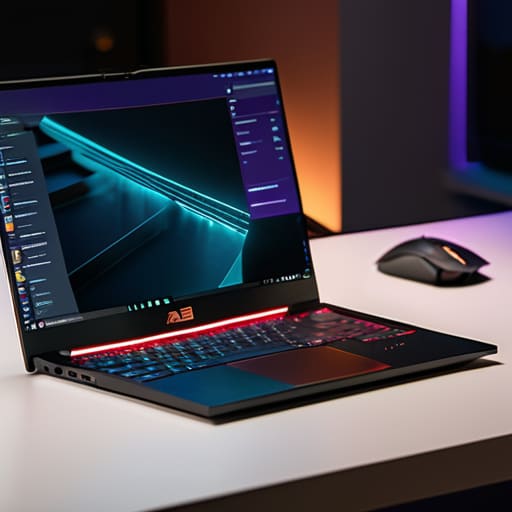
    For those of us who balance a professional career with a serious gaming life, the ASUS ROG Zephyrus is a breath of fresh air. It manages to bridge the gap between a high-performance gaming rig and a machine capable of handling heavy technical writing or complex data sets. I find the balance of power and portability to be its greatest psychological advantage, allowing me to transition from work to play without a mental “reset” period.

    The Unapologetic Powerhouse

    MSI Raider: The Unapologetic Powerhouse gaming laptop.

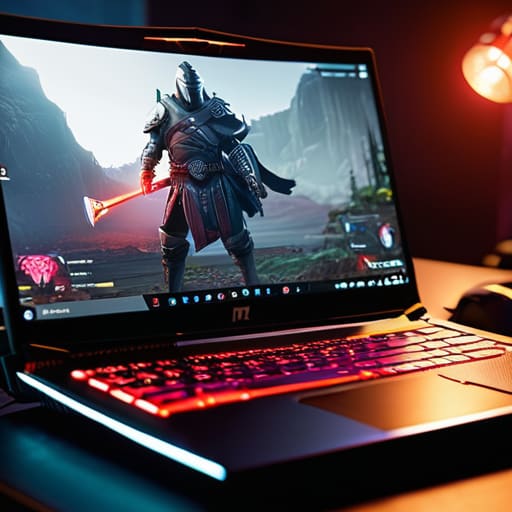
    Sometimes, you don’t want a compromise; you want a sledgehammer. The MSI Raider series is built for the player who refuses to lower their settings for the sake of frame rates. From a psychological perspective, having “overkill” specs can actually reduce gaming anxiety, because you know the hardware will never be the bottleneck to your skill.

    The Balanced Architect’s Choice

    The Lenovo Legion series has always stood out to me for its remarkably sensible design philosophy. It avoids the flashy, neon-soaked aesthetic that often characterizes gaming gear, opting instead for a more sophisticated and understated look. This makes it much easier to use in a professional setting or a quiet cafe without feeling like you’re drawing unnecessary attention to yourself.

    The Versatile Companion

    The HP Omen offers a unique kind of flexibility that I find incredibly useful when my schedule is in constant flux. It hits that “sweet spot” where the hardware is powerful enough to tackle modern AAA titles, yet the price point remains accessible enough to justify the investment. It’s a practical choice for those who view gaming as a lifelong pursuit rather than a temporary obsession.

    Finding Your Edge: Beyond the Spec Sheet

    Stop chasing the highest numbers on a box; prioritize the hardware that actually supports your specific style of play and mental flow.

    View your laptop as a long-term tool for mastery, not a disposable gadget, by investing in build quality and thermal stability.

    Remember that the best machine is the one that disappears into the background, letting you focus entirely on the mechanics of the game.

    Beyond the Specs

    A gaming laptop shouldn’t just be a collection of high-end components; it should be an extension of your intent, a reliable tool that disappears the moment you enter a state of flow.

    Delia Okonkwo

    Choosing Your Tool for Mastery

    Selecting the right laptop isn’t just about chasing the highest frame rates or the most expensive GPU on the market. It’s about finding the specific balance that suits your personal style of play—whether that means the raw, unbridled power of a desktop replacement or the nimble portability of a machine that lets you play anywhere. We’ve looked at how thermal management, display accuracy, and build quality all converge to create a stable environment for your skills to flourish. Remember, your hardware is the bridge between your intent and the game’s mechanics; if that bridge is shaky, your ability to achieve true flow will always be compromised.

    At the end of the day, don’t let the specs overwhelm your passion. A laptop is a tool, and like any tool—from a vintage arcade cabinet to a modern high-end rig—it is only as effective as the person wielding it. Use your machine to explore deeper systems, to challenge your cognitive limits, and to find that elusive sense of mastery that makes gaming so rewarding. Invest in hardware that respects your intentionality, and then get out there and play with purpose. The next level is waiting, and it’s up to you to meet it.

    Frequently Asked Questions

    How much do I actually need to invest in a dedicated GPU versus relying on integrated graphics for more casual, intentional play?

    If your goal is true mastery, don’t let hardware bottlenecks break your flow. For casual, intentional play—think indie gems or strategic titles—integrated graphics are often sufficient. However, if you want to engage with complex systems that demand visual clarity and high frame rates, a dedicated GPU is a non-negotiable investment. It’s the difference between fighting your machine and finally being able to focus entirely on the mechanics of the game itself.

    Is it better to prioritize a high refresh rate screen or raw processing power when I'm trying to achieve a flow state?

    It’s a classic tug-of-war. If you’re chasing flow, I’d argue for the refresh rate. Raw power is great for high-fidelity textures, but stuttering or input lag acts like a constant, jarring interruption to your cognitive rhythm. A high refresh rate smooths out the feedback loop between your brain and the screen. You want that seamless connection where the machine disappears, leaving only your intent and the game’s mechanics. Focus on fluidity to stay in the zone.

    How can I balance the need for high-performance hardware with the practical reality of portability and long-term thermal management?

    It’s the classic tension between raw power and physical reality. I’ve learned that chasing peak specs often leads to a brick that throttles itself into oblivion within twenty minutes. Don’t just look at benchmarks; look at thermal design. I prefer a slightly less powerful machine with superior airflow over a powerhouse that runs hot enough to fry an egg. True mastery requires a tool that stays stable, so prioritize cooling and weight over vanity numbers.

  • Understanding the Latest Shifts in Gaming Trends

    Understanding the Latest Shifts in Gaming Trends

    I was hunched over my workbench last night, the smell of isopropyl alcohol heavy in the air as I swapped a capacitor on a dusty Game Boy, when I realized how much the industry has shifted since the days of simple bit-rates and arcade cabinets. Nowadays, every headline screams about the latest “revolutionary” gaming trends, treating every minor software update or microtransaction model like it’s a fundamental shift in human consciousness. It’s exhausting. Most of the discourse feels like it’s designed to trigger FOMO rather than to actually understand the mechanics of play, leaving us chasing shadows instead of mastering the systems in front of us.

    I’m not here to feed you the marketing fluff or tell you which shiny new gimmick you need to buy to stay relevant. Instead, I want to strip away the noise and look at how these shifts actually impact our cognitive engagement and long-term skill acquisition. My goal is to provide you with a grounded perspective on how to navigate these changes with intention. We aren’t just consumers; we are players, and I promise to help you find the real substance behind the hype so you can keep playing with purpose.

    Table of Contents

    Mastering the Nuance of Cloud Gaming Advancements

    Mastering the Nuance of Cloud Gaming Advancements

    When I look at the shift toward cloud-based play, I don’t just see a way to bypass expensive hardware; I see a fundamental change in how we access complex systems. The recent cloud gaming advancements are finally moving past the “laggy gimmick” stage, allowing us to engage with high-fidelity titles on devices we previously thought were incapable. For someone like me, who spent years tinkering with the limited processing power of vintage handhelds, the ability to stream a massive, open-world epic to a tablet feels almost surreal. It’s about removing the hardware barrier so the focus remains on the mechanics and the mastery rather than the specs of your console.

    However, we shouldn’t mistake accessibility for simplicity. As we lean more into these streaming services, the subscription model impact becomes something we have to navigate with intention. We are moving away from the ownership model of the 80s and 90s toward a way of playing that is more fluid, yet arguably more ephemeral. It requires a different kind of mental approach to how we curate our libraries and value our time. We aren’t just buying a box anymore; we are subscribing to an evolving ecosystem.

    Navigating the Complex Impact of Subscription Models

    We’ve moved far beyond the era of buying a single cartridge and owning that experience forever. Today, the subscription model impact is reshaping our relationship with our libraries, shifting us from collectors to curators. While the sheer volume of titles available for a monthly fee is intoxicating, I find myself questioning what we lose in this transition. When we stop owning the software, we risk becoming passive consumers of a service rather than active masters of a medium. It’s easy to get lost in the endless scrolling, but we need to be more intentional about the time we invest.

    Instead of letting these platforms dictate our habits through sheer convenience, we should look at how they influence our playstyles. These services often prioritize engagement metrics over deep, systemic mastery. However, if we use them correctly, they offer a unique opportunity to experiment with diverse genres that we might otherwise never touch. The goal isn’t just to consume more content, but to use this newfound accessibility to broaden our tactical understanding of different game systems.

    Intentional Play: How to Navigate the Shifting Landscape

    • Look past the convenience of subscriptions; prioritize the games that actually challenge your cognitive load rather than just filling your backlog.
    • Don’t let cloud latency dictate your skill ceiling; learn to adjust your mechanical expectations when the connection isn’t perfect.
    • Treat every new social mechanic as a psychological study; understand how much of your “fun” is genuine mastery and how much is just dopamine from digital social validation.
    • Guard your time against “live service” fatigue by setting strict boundaries on daily login rewards that aim to turn your hobby into a chore.
    • Invest in understanding the systems, not just the graphics; as hardware evolves, the ability to deconstruct game logic remains the most valuable skill a player can possess.

    Intentional Play in a Changing Landscape

    Don’t let convenience dictate your mastery; while cloud gaming and subscriptions offer easy access, true skill comes from understanding the specific mechanics of the games you actually choose to play.

    Look past the “all-you-can-eat” buffet mentality of subscription models and focus on the value of deep, intentional engagement with individual titles rather than just skimming the surface of a library.

    Treat every new technological shift as a new system to be decoded, ensuring you remain the master of your gaming experience instead of just another consumer in a streamlined ecosystem.

    Beyond the Surface of the Trend

    “Don’t mistake a shift in how we access games for a shift in why we play them; a new delivery system or a subscription model is just a new layer of the ecosystem, not the soul of the experience itself.”

    Delia Okonkwo

    Finding Your Rhythm in the Shift

    Finding Your Rhythm in the Shift.

    Looking back at how far we’ve come, it’s clear that the landscape is shifting beneath our feet. Between the technical hurdles of cloud gaming and the psychological weight of subscription-based libraries, the way we access and own our experiences is fundamentally changing. It’s easy to feel overwhelmed by the sheer volume of content or the shifting delivery methods, but the core remains the same: we are navigating complex, evolving systems. Whether you are streaming a title from a server halfway across the world or managing a monthly budget for a digital catalog, the goal is to ensure these tools serve your play, rather than letting the industry dictate your habits.

    As I sit here with my tea, watching the light fade on my latest handheld restoration, I’m reminded that trends are just the weather—they change constantly, but the landscape stays. Don’t let the noise of “newness” distract you from the actual act of mastery. Whether the medium is a physical cartridge or a digital stream, play with intention. The true value of gaming isn’t found in how much content you consume, but in the skill you cultivate and the moments of deep, focused joy you find within the mechanics. Keep seeking that mastery, and you’ll find that the evolution of the industry only offers more ways to grow.

    Frequently Asked Questions

    As subscription models continue to dominate, how do we ensure we're actually mastering games rather than just cycling through them like mindless content?

    It’s easy to fall into the “buffet trap”—sampling a dozen titles but mastering none. To combat this, I suggest setting intentional boundaries. Instead of letting the next shiny icon dictate your play session, pick a single system or mechanic to deconstruct. Commit to a game until you understand its underlying logic. Mastery requires friction and time; if you’re just scrolling through a library, you aren’t playing, you’re just consuming.

    With the shift toward cloud gaming, what happens to the tactile, intentional connection we have with our hardware and local systems?

    That’s the question that keeps me up while I’m tinkering with my old Game Boys. When we move to the cloud, we trade that physical weight—the click of a button, the heat of a local console—for sheer convenience. There’s a psychological cost to losing that tactile feedback. If we aren’t careful, we risk turning gaming into a passive stream rather than an intentional interaction with a machine we truly own.

    How can we distinguish between a meaningful evolution in game mechanics and a trend that is just designed to exploit our dopamine loops?

    Look for the “why” behind the mechanic. A meaningful evolution deepens the system, giving you more agency or a more complex way to express skill. It respects your time. On the other hand, if a mechanic feels like a repetitive chore designed solely to trigger a “just one more” reflex—usually through flashing lights or artificial scarcity—it’s likely just an exploitative dopamine loop. Play to master the system, not to feed the machine.

  • Developing the Ability to Perform Under Pressure

    Developing the Ability to Perform Under Pressure

    I remember sitting in my dim home office last Tuesday, the steam from my lukewarm Earl Grey barely rising above the desk, staring at a replay of a match I’d just lost. My hands were still shaking—that specific, frantic tremor that comes when everything is riding on a single play. Everyone online loves to talk about the clutch factor as if it’s some mystical, divine gift bestowed upon a chosen few, a sort of genetic lottery that decides who survives the final circle and who chokes. But after years of studying the psychology behind how we react to stress, I’ve realized that the “clutch” isn’t a magic spell; it’s a predictable physiological response to high-stakes systems.

    I’m not here to sell you on some expensive mental coaching seminar or a “secret” setting you can toggle in your menu. Instead, I want to pull back the curtain on what is actually happening when the pressure mounts. I’m going to show you how to move past the panic and start treating these high-intensity moments as intentional practice rather than chaotic luck. We are going to break down the mechanics of composure so you can stop playing against your own nerves and start mastering the system when it matters most.

    Table of Contents

    Mastering the Psychology of Peak Performance

    Mastering the Psychology of Peak Performance.

    When the screen flashes red and your heart rate spikes, your brain is essentially undergoing a hijack. From a psychological standpoint, what separates a panic-stricken player from a master is their ability to navigate the psychology of peak performance. It isn’t about being fearless; it’s about how you manage the physiological surge of adrenaline. If you let that energy turn into frantic, uncoordinated movement, you’ve already lost. Instead, you have to treat that tension as fuel, channeling it into a heightened state of awareness rather than letting it cloud your judgment.

    This requires a level of emotional regulation that most players never bother to practice. In my years studying how we interact with complex systems, I’ve noticed that the best performers utilize specific decision making in crisis patterns. They don’t react to the chaos; they observe it. They narrow their focus to the immediate mechanical requirements of the moment, effectively filtering out the noise of the crowd or the stakes of the match. To achieve this, you have to train your mind to remain an objective observer of the game, even when the pressure feels absolute.

    Decision Making in Crisis the Art of Precision

    Decision Making in Crisis the Art of Precision

    When the screen flashes red and your heart rate spikes, your brain begins a frantic tug-of-war. This is where decision making in crisis separates the casual player from the master. In these split seconds, the instinct is to react—to spray bullets or mash buttons—but pure instinct is often just a mask for panic. True precision requires you to override that primal urge to scramble and instead lean into the mechanics you’ve practiced a thousand times. It’s about narrowing your focus until the noise of the match fades, leaving only the essential data points.

    I’ve noticed that the most effective players don’t just have faster reflexes; they have better emotional regulation techniques. They manage to keep their cognitive load low even when the stakes are at their highest. Instead of being overwhelmed by the chaos, they treat the crisis as a series of solvable problems. It’s a form of resilience in high-stress environments that translates far beyond the console. When you stop fighting the pressure and start analyzing the system, you stop playing defensively and start playing with intention.

    Refining the Instinct: Five Ways to Cultivate Your Clutch Response

    • Normalize the high-stakes environment. If you only feel the adrenaline when the timer is at five seconds, you’ve already lost the mental battle. You need to practice in controlled, high-pressure scenarios so that when a real match hangs in the balance, your nervous system recognizes the tension as a familiar friend rather than a threat.
    • Tighten your sensory focus. When the chaos peaks, the temptation is to look at everything at once, which leads to cognitive overload. Instead, learn to filter the noise and anchor your attention solely on the immediate variables that dictate success—the cooldown timer, the enemy’s positioning, or your own resource management.
    • Trust your muscle memory, but don’t rely on it blindly. The “clutch” moment is where your technical training meets your intuition. You shouldn’t be thinking about which button to press; you should be thinking about the intent behind the movement, allowing your hands to execute what your brain has already mapped out.
    • Manage your physiological spikes. I’ve noticed that when my heart rate climbs too fast, my precision drops—a classic sign of losing control to the sympathetic nervous system. Developing a rhythmic breathing pattern or a specific physical reset can help keep that surge of adrenaline from turning into a tremor in your hands.
    • Analyze the “near-misses” with clinical detachment. After a high-pressure loss, don’t just vent about the frustration. Sit down with your replay and look at the exact moment your decision-making fractured. Was it a lapse in mechanics, or did you simply succumb to the panic of the situation? Understanding the “why” is how you turn a lucky win into a repeatable skill.

    The Core of the Clutch: Moving Beyond Luck

    True clutch performance isn’t a sudden burst of luck; it is the moment your deep understanding of a game’s mechanics finally stabilizes under intense psychological pressure.

    To master high-stakes moments, you must transition from reactive, panic-driven play to intentional, system-based decision-making that prioritizes precision over speed.

    Building a clutch mindset requires consistent practice in controlled environments so that when the stakes rise, your brain relies on ingrained skill rather than adrenaline-fueled impulse.

    Beyond the Reflex

    We often mistake the clutch factor for mere adrenaline, but true composure is what happens when your training finally silences the noise of the panic.

    Delia Okonkwo

    Beyond the Final Score

    Channeling adrenaline Beyond the Final Score.

    At its core, the clutch factor isn’t a mystical talent bestowed upon a lucky few; it is the culmination of psychological resilience and disciplined decision-making. We have looked at how managing your internal state allows you to bypass the paralysis of panic, and how precision in crisis is often just the result of trusting the systems you have spent hours mastering. When you stop fighting the adrenaline and start channeling it into intentional action, you move from being a passenger in the game to being the one who dictates its outcome. It is about turning that chaotic, high-stakes noise into a clear, actionable signal.

    As I sit here with my cooling tea, watching the lights flicker on a console I spent all weekend restoring, I am reminded that gaming is a constant evolution of the self. Whether you are facing a boss fight or a competitive ladder match, remember that every “clutch” moment is a chance to prove to yourself that you can hold steady when the pressure rises. Don’t just play to win; play to understand the mechanics of your own mind. If you approach every high-pressure situation with purposeful intent, you will find that the greatest reward isn’t just the victory screen, but the profound sense of mastery that comes from knowing you were ready for the moment.

    Frequently Asked Questions

    Is the ability to clutch something I can actually train, or am I just waiting for a natural talent to kick in?

    It’s a common misconception that clutching is a divine gift bestowed upon a lucky few. From a psychological standpoint, what we call “talent” is often just a highly developed pattern recognition. You can absolutely train this. It’s about moving from reactive panic to intentional execution. By practicing high-stakes scenarios in controlled environments, you’re essentially rewiring your brain to bypass the fight-or-flight response, turning raw adrenaline into focused, systemic precision.

    How do I stop my brain from spiraling into "choke" territory when the stakes get high?

    The spiral starts when you stop playing the game and start playing the consequences. You’re no longer analyzing enemy patterns; you’re analyzing your own fear of losing. To break it, you have to ground yourself in the mechanics. I call it “tactical breathing”—not just for oxygen, but to force your brain out of an emotional loop and back into a cognitive one. Focus on a single, repeatable micro-action. Reset the system.

    At what point does intentional, high-pressure play start to lead to burnout instead of mastery?

    Burnout hits when the “clutch” stops being a pursuit of mastery and starts feeling like a survival mechanism. If you’re playing solely to avoid the anxiety of failure rather than to engage with the system, you’ve crossed the line. When the dopamine hit of a high-stakes win is replaced by a hollow sense of relief, your brain is telling you the cost has become too high. Mastery requires rest; burnout is just noise.

  • How Much Memory Is Needed for Gaming

    How Much Memory Is Needed for Gaming

    I was sitting at my desk last night, nursing a lukewarm cup of Earl Grey, when a frame drop stuttered through a boss fight I’ve played a dozen times. It wasn’t a graphics issue or a slow CPU; it was the frustration of a system that simply couldn’t keep up with the data flow. We’ve all been sold this myth that you need the most expensive, glowing sticks of DDR5 to see a difference, but the truth is much more nuanced. Most people overspend on flashy aesthetics when they should be focusing on the actual architecture of their build. Finding the right ram for gaming isn’t about chasing the highest number on a box; it’s about understanding the specific equilibrium between capacity and latency that keeps your experience seamless.

    I’m not here to give you a marketing brochure or a list of overpriced hardware. Instead, I want to strip away the hype and look at these components through a psychological lens: how does hardware stability affect your cognitive flow? I’m going to share exactly what I look for when I’m upgrading my own rigs, focusing on the technical sweet spots that provide real-world performance without the nonsense. My goal is to help you master your system so you can focus on the game, not the stutter.

    Table of Contents

    Ddr5 vs Ddr4 for Gaming Choosing Your Strategic Edge

    Ddr5 vs Ddr4 for Gaming Choosing Your Strategic Edge

    When we look at the shift from DDR4 to DDR5, it isn’t just about higher numbers on a spec sheet; it’s about how much bandwidth your system can actually handle when the action gets intense. If you are building a fresh rig today, the debate of DDR5 vs DDR4 for gaming often comes down to your long-term roadmap. DDR5 offers significantly higher data rates, which helps mitigate those tiny micro-stutters that can break your immersion during high-frame-rate sessions. However, if you are working with a tight budget, a high-quality DDR4 kit can still deliver a very smooth experience, provided you understand the trade-offs in raw throughput.

    That said, speed isn’t everything. As someone who looks at the psychological flow of a game, I know that even a millisecond of delay can pull you out of “the zone.” This is why you need to pay attention to the CAS latency impact on FPS. While DDR5 provides more lanes for data to travel, its higher latency can sometimes offset those gains if you aren’t careful. Finding that sweet spot—where capacity meets responsiveness—is what truly turns a machine into a precision tool for play.

    Navigating Gaming Pc Memory Requirements With Intention

    When I look at the current landscape of hardware, it’s easy to get lost in a sea of spec sheets and marketing jargon. But if we approach our builds with intention, we realize that meeting the standard gaming PC memory requirements isn’t just about checking a box; it’s about creating a stable foundation for your performance. I’ve seen too many players chase the highest numbers only to realize they’ve ignored the actual synergy between their components. It’s not just about capacity—it’s about how that data flows when the pressure is on.

    To truly master your setup, you have to look deeper than just the total gigabytes. You need to consider how the optimal RAM frequency for PC gaming interacts with your specific CPU architecture. If your speeds are too low, you’re essentially putting a governor on your engine, creating micro-stutters that break your concentration during a crucial boss fight. I always tell people to stop viewing memory as a passive component and start seeing it as a dynamic tool for precision. When you align your frequency and timings correctly, you aren’t just playing the game; you’re removing the friction between your intent and the screen.

    Precision Tactics: Five Ways to Optimize Your Memory Setup

    • Don’t chase the highest number just because it’s on the box; focus on finding the sweet spot of latency and frequency that actually stabilizes your frame rates during intense combat.
    • Always buy your RAM in matched kits rather than mixing individual sticks, because consistency in timing is what prevents those micro-stutters that break your flow.
    • Remember that more isn’t always better; while 32GB is becoming the new standard for multitasking, overspending on 64GB won’t give you more skill if your current library doesn’t demand it.
    • Once your hardware is installed, don’t forget to actually enable your XMP or EXPO profile in the BIOS, otherwise you’re leaving significant performance on the table by running at base speeds.
    • Keep an eye on your dual-channel configuration; ensuring your sticks are in the correct slots is a simple mechanical fix that can drastically improve how your CPU communicates with your memory.

    Mastering Your Hardware: Three Pillars of Memory Strategy

    Don’t just chase high numbers; prioritize stability and capacity to ensure your hardware supports your focus rather than fracturing it.

    Choose your RAM generation based on your long-term roadmap, ensuring your current build provides the strategic foundation for future upgrades.

    Treat your memory configuration as a vital component of your system’s ecosystem, where the right balance prevents technical friction from breaking your immersion.

    ## The Cognitive Cost of Latency

    “We often treat RAM as just another line item in a build, but in reality, it’s the foundation of your flow state; when your memory stutters, your ability to master the system breaks along with it.”

    Delia Okonkwo

    Mastering Your Hardware, Mastering the Game

    Mastering Your Hardware, Mastering the Game.

    At the end of the day, selecting your RAM isn’t just about checking boxes on a spec sheet; it’s about ensuring your hardware serves your intent. Whether you’ve decided to invest in the future-proofing of DDR5 or you’re optimizing a reliable DDR4 setup, the goal remains the same: removing the friction between your mind and the machine. We’ve looked at how capacity, speed, and latency work together to create a stable environment, and we’ve discussed how to scale your memory to match your specific gaming ambitions. Don’t let a bottleneck turn a moment of pure flow into a moment of frustration. By choosing your components with deliberate precision, you are setting the stage for a much more seamless experience.

    As I sit here with my tea, watching the glow of my monitor, I’m reminded that the gear we use is simply a tool to facilitate a deeper connection to the worlds we explore. We don’t buy high-performance memory just to see higher numbers in a benchmark; we do it so that when the boss fight reaches its climax, nothing stands in our way but our own skill. Treat your setup as a complex system worth mastering, and you’ll find that the joy of the game increases alongside your technical proficiency. Build with intention, play with purpose, and never stop seeking that perfect synergy between player and platform.

    Frequently Asked Questions

    Is it actually worth the extra investment to jump to DDR5 if I'm playing older titles or indie games that don't seem to push my system?

    If you’re primarily exploring indie gems or revisiting the classics, jumping to DDR5 feels more like an expensive indulgence than a strategic necessity. Those titles aren’t hungry enough to justify the premium. However, I look at it through the lens of longevity. If you’re building a system meant to evolve alongside your library, that investment acts as a buffer. But for now? Stick to DDR4 and put that extra cash toward a better controller or a new indie backlog.

    How much does RAM speed versus RAM capacity actually impact my frame rates during intense, high-action sequences?

    It’s a classic tension between stability and speed. Think of capacity as your workspace; if you run out of room, the whole system stutters and collapses. But speed? Speed is your reaction time. In high-action sequences, higher frequency RAM reduces frame time variance, smoothing out those micro-stutters that break your flow. Capacity keeps the game running, but speed ensures it runs with the precision required to actually master the mechanics.

    If I upgrade my memory now, am I just delaying an inevitable motherboard swap, or can I build a system that grows with me?

    It’s a valid concern, and honestly, it’s about how you view your system’s lifecycle. If you’re on a DDR4 platform, adding more memory is a smart, tactical move to stabilize your current performance. It isn’t a permanent fix, but it buys you breathing room. However, if you want a foundation that evolves alongside your skill and hardware needs, investing in a DDR5-ready motherboard now ensures you aren’t just delaying the inevitable, but building for longevity.